
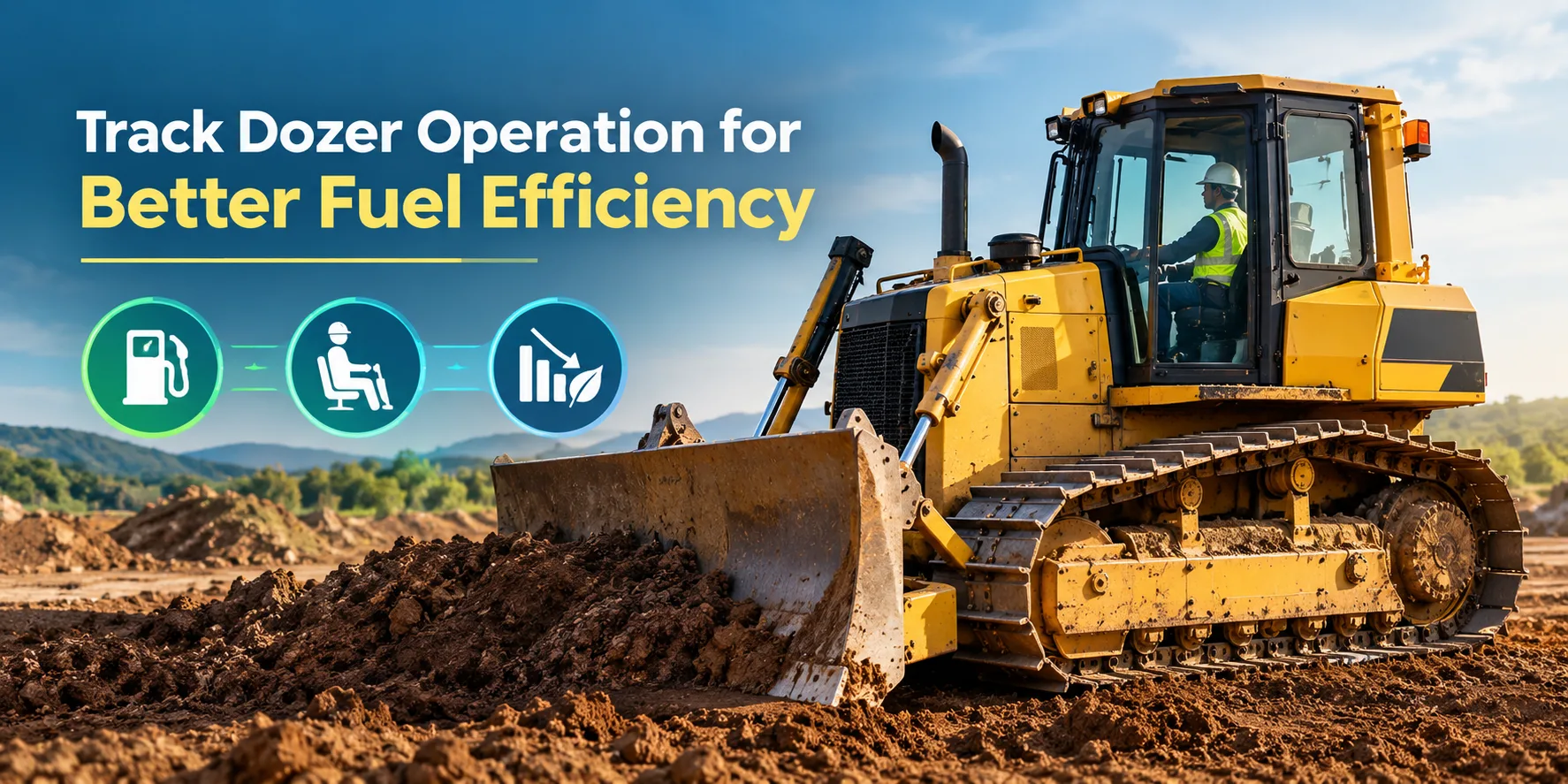
A dozer does not use the same amount of fuel during every pass. Fuel demand changes with the amount of material on the blade, ground resistance, travel speed and the way the operator controls the machine. These operating choices have a direct effect on track dozer fuel consumption and the amount of useful work achieved from each litre of fuel.
Blade Loading Sets the Engine Load
The blade load determines how much resistance the engine has to overcome. A deep cut or an overloaded blade can increase drawbar pull and cause track slip. Engine power rises, but material movement may not improve at the same rate.
The operator should control blade depth according to material type and ground conditions. A steady blade load keeps the machine within a practical working range and supports better production per fuel litre.
Travel Speed Should Match the Push
Travel speed affects both cycle time and engine load. High speed under heavy blade load can increase power demand and reduce traction. Low speed can extend the cycle when the machine has enough power to work at a higher speed. A track dozer operator should select a gear and speed based on material resistance, pushing distance and site gradient.
Throttle Control Changes Fuel Demand
Engine speed should match the work being performed. Running at high throttle during light grading or finishing work can increase fuel use without adding useful output.
During heavy pushing, the engine needs sufficient speed to maintain power and hydraulic response. During lighter work, the operator can use the machine's recommended operating range.
Track Slip Wastes Available Power
Track slip occurs when the available engine power exceeds the traction the tracks can transfer to the ground. The result is wasted power, increased track wear and reduced material movement.
Controlled blade loading and smooth machine control help maintain traction. The operator should also adjust the approach when ground conditions change.
Idle Time Adds to Fuel Use
A running engine consumes fuel even when the blade is stationary. Extended idle periods add operating cost without producing work.
Where site conditions and manufacturer instructions permit, shutting down the engine during longer waiting periods can reduce unnecessary fuel consumption.
Bottom Line
A track dozer works best when the operator understands how the machine responds to the job. Good judgement during each pass helps maintain steady production without putting unnecessary load on the machine. Over a full shift, this can make a noticeable difference to fuel use and operating cost.