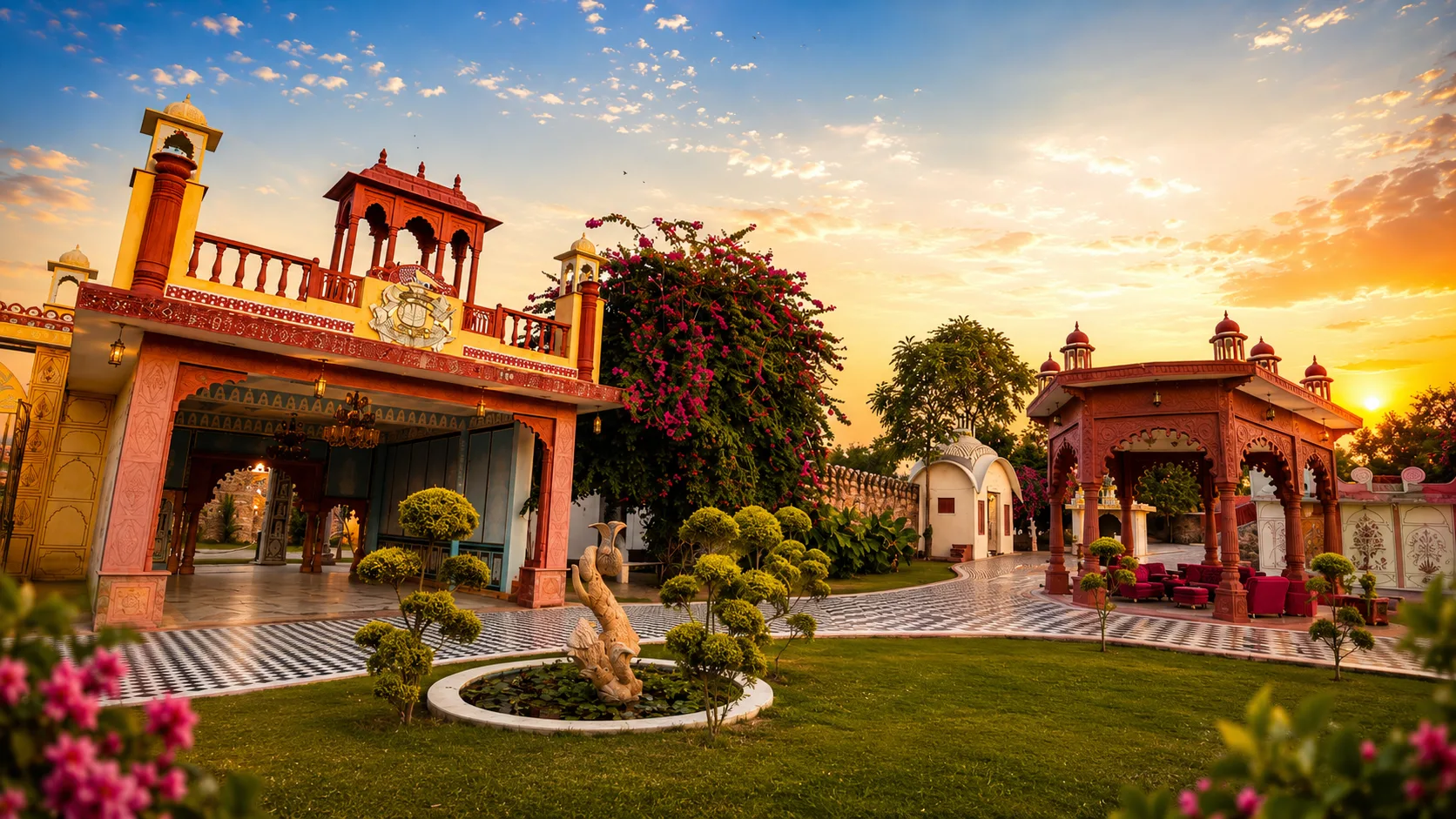
A destination wedding involves much more than selecting a beautiful ceremony venue. Guests arrive with luggage, move between rooms and functions, return to change clothes, attend meals and participate in celebrations that may continue for several days. Vendors, décor teams, catering staff and performers must also reach the correct spaces without interrupting the guest experience.
These movements can become difficult when they are treated as last-minute details. Delayed departures from rooms can postpone a ceremony, unclear directions can separate groups, and overlapping guest and service routes can create visible congestion. Lohagarh Fort Resort’s very large campus, varied accommodation and multiple event venues give wedding families the flexibility to plan these movements in advance.
For couples evaluating a Destination Wedding Resort in Jaipur, understanding how people will move through the property is as important as reviewing photographs of the décor.
What Does Guest-Movement Engineering Mean?
Guest-movement engineering is the planned coordination of people between arrival areas, accommodation, dining spaces and wedding venues. It considers where each group begins, where it needs to go, how long the movement will take and what assistance may be required.
At Lohagarh Fort Resort, a destination wedding can involve welcome celebrations, mehendi, haldi, sangeet, wedding ceremonies and receptions across different spaces. Each transition creates practical questions:
- Will guests walk or require internal transport?
- How will elderly relatives reach the venue?
- Where will the baraat assemble?
- Which route will vendors use?
- When should guests leave their rooms?
- Where will refreshments be served during a transition?
- What happens if weather changes the venue?
Answering these questions before the wedding reduces confusion on the event day.
How Does Venue Selection Influence Movement?
Lohagarh Fort Resort offers indoor and outdoor spaces with different characters and capacities. The appropriate venue should be selected according to the function, guest count, weather, décor requirements and relationship with the accommodation being used.
Swaagat Kaksh is an intimate indoor space of approximately 1,600 square feet, suitable for smaller gatherings of up to around 40 guests. Maharaja Bagh provides an outdoor area of approximately 27,880 square feet for gatherings of up to around 500 guests. Maharaja Surajmal Banquet Hall offers approximately 8,000 square feet of indoor space, accommodates up to around 500 guests and has two entry points that can support organised arrival and service movement.
The handcrafted mirror work of Sheesh Mahal provides another distinctive indoor environment, while larger lawns and garden venues can support open-air celebrations. Capacities and setups can change according to seating, staging, buffet placement and safety requirements, so the final plan should be confirmed with the resort.
Why Should Each Function Use a Thoughtful Venue Sequence?
Using different venues can give every ceremony its own visual identity, but the sequence should remain practical. A beautiful plan can become tiring if guests repeatedly travel between distant areas without enough preparation time.
At Lohagarh Fort Resort, the venue sequence can be designed around the energy of each function. An intimate event may begin indoors, followed by a larger outdoor celebration. A high-energy sangeet may require a venue that supports staging, lighting and sound, while the wedding ceremony may prioritise emotional atmosphere, guest visibility and comfortable seating.
The planning team should study the complete sequence rather than choosing each venue separately. Movement from one function to the next must allow time for clothing changes, meals, décor resets and guest rest.
How Does Room Allocation Improve Wedding Coordination?
Room allocation can reduce unnecessary movement before it begins. Close family members, elderly guests, parents with young children and members involved in rituals may require different levels of access and convenience.
Lohagarh Fort Resort offers deluxe rooms, family accommodation, luxury tents, cottages, themed suites and premium categories with selected private-pool or jacuzzi features. Wedding families can use this variety to allocate accommodation according to guest needs and celebration roles.
The bride’s and groom’s immediate families may need rooms that make preparation and coordination easier. Elderly relatives may benefit from accommodation with manageable access, while families with children may need practical space and proximity to rest areas.
Rooming lists should be finalised early and shared with the hospitality team. Frequent last-minute changes can affect luggage handling, welcome arrangements and communication.
What Should Happen When Guests Arrive?
The first movement challenge begins before the first ceremony. Multiple vehicles may reach the resort within a short period, and guests may arrive before rooms are ready or while another function is being prepared.
A structured arrival plan should include:
- Expected arrival windows
- Vehicle and luggage coordination
- Welcome and registration points
- Room-allocation information
- Assistance for elderly guests
- Refreshments during waiting periods
- Contact details for wedding coordinators
- Instructions for the first function
At Lohagarh Fort Resort, the welcome experience should introduce guests to the property as well as the wedding. A clear printed or digital schedule can show venue names, reporting times, dress guidance and contact numbers.
How Can Signage Prevent Confusion?
Venue names that are familiar to the organising family may be completely new to arriving guests. Attractive signage should therefore provide practical directions rather than functioning only as decoration.
Directional boards can be placed near accommodation areas, junctions, dining spaces and event entrances. Different colours or symbols may be assigned to separate functions. Digital messages can be sent before guests begin moving, but they should support physical signage rather than replace it.
Lohagarh’s campus provides space for multiple celebrations, making clear wayfinding especially important. Guests should not need to call the bride, groom or immediate family for basic directions while those individuals are preparing for ceremonies.
How Should Elderly Guests and Children Be Supported?
Movement must be planned around the guests who require the most assistance, not only around those who can walk quickly. Elderly relatives may need seating during transfers, shorter routes or vehicle support. Parents with infants may require extra time, while young children can become tired after several consecutive functions.
At Lohagarh Fort Resort, wedding planners can identify suitable waiting areas and rest points before the celebration begins. Families should also keep water, basic medical information and essential medicines accessible.
Event schedules should provide realistic gaps between ceremonies. A fifteen-minute interval on paper may disappear once guests leave a venue, locate transport, return to their rooms, change clothes and travel to the next event.
Why Should Guest and Vendor Routes Be Separated?
A wedding venue must often be prepared while guests are enjoying another part of the property. Florists, technicians, caterers, performers and logistics teams may need to transport equipment, food and materials across the campus.
Whenever operationally possible, service movement should be separated from main guest routes. This improves safety, protects the visual experience and helps vendors work without repeatedly stopping for crowds.
The two entry points of Maharaja Surajmal Banquet Hall can support organised circulation when used according to an approved event plan. One entry may assist guest arrival while another supports service access, although the exact arrangement must be decided with the resort according to the setup.
How Does Timing Protect the Wedding Schedule?
Destination weddings often lose time through small delays that accumulate. A late breakfast affects preparations, delayed transport affects guest arrival, and a postponed entry can reduce the time available for photography, rituals or entertainment.
Movement timing at Lohagarh Fort Resort should therefore be calculated backwards from each important moment. If a ceremony begins at a particular time, the plan must account for guest assembly, travel, seating and final venue checks.
Coordinators can send reminders in stages rather than waiting until departure time. One message can announce that guests should begin preparing, followed by another confirming when transport or guided movement starts.
What Happens When the Weather Changes?
Outdoor weddings require a movement plan for heat, rain, wind or unexpected conditions. A weather response involves more than identifying an indoor hall. Guests, décor, catering equipment, sound systems and ceremonial elements may all need to move.
Lohagarh Fort Resort’s combination of indoor and outdoor spaces provides options for weather-conscious planning. Maharaja Surajmal Banquet Hall, Sheesh Mahal and other indoor areas can form part of a contingency strategy depending on availability, capacity and setup.
The backup venue should be identified before the wedding, and the family should know what decision will trigger the change. Guests must then receive one clear instruction instead of several conflicting updates.
How Does Movement Planning Reduce Emotional Pressure?
The bride, groom and their immediate families already manage ceremonies, relatives and personal emotions. They should not also be responsible for directing vehicles, locating guests or explaining venue routes throughout the celebration.
A movement plan transfers these operational duties to identified coordinators. Each side of the family can nominate responsible contacts, but instructions should flow through one central system.
This approach allows families to experience Lohagarh Fort Resort as a celebration destination rather than constantly treating it as a logistics problem.
Can the Resort Remain Enjoyable Outside Wedding Functions?
Guests often have free time between ceremonies. Lohagarh Fort Resort’s natural surroundings, accommodation choices, dining and recreational facilities can help these intervals feel like part of the wedding holiday.
Families may relax, walk through the property or participate in available activities, depending on their schedule and booking arrangements. Guests extending their visit can also explore why the property is considered among the Best Resort in Jaipur options for complete leisure stays.
If a family wants a separate recreational visit before or after the celebration, it can also review Lohagarh Fort Resort as a Best Day Outing Resort in Jaipur. Current package inclusions and operational availability should be confirmed directly.
Conclusion
Guest movement is one of the invisible systems that determines whether a destination wedding feels effortless or exhausting. Venue selection, room allocation, arrival planning, signage, transport, vendor access and weather contingencies must operate as one connected plan.
Lohagarh Fort Resort provides a large and varied setting where different wedding functions can receive distinctive identities. Its accommodation and multiple indoor and outdoor venues also give families the flexibility to organise celebrations around guest comfort and operational requirements.
When movement is planned carefully, guests spend less time searching, waiting and rushing. They can direct their attention towards the ceremonies, relationships and emotions that brought everyone to Lohagarh Fort Resort in the first place.