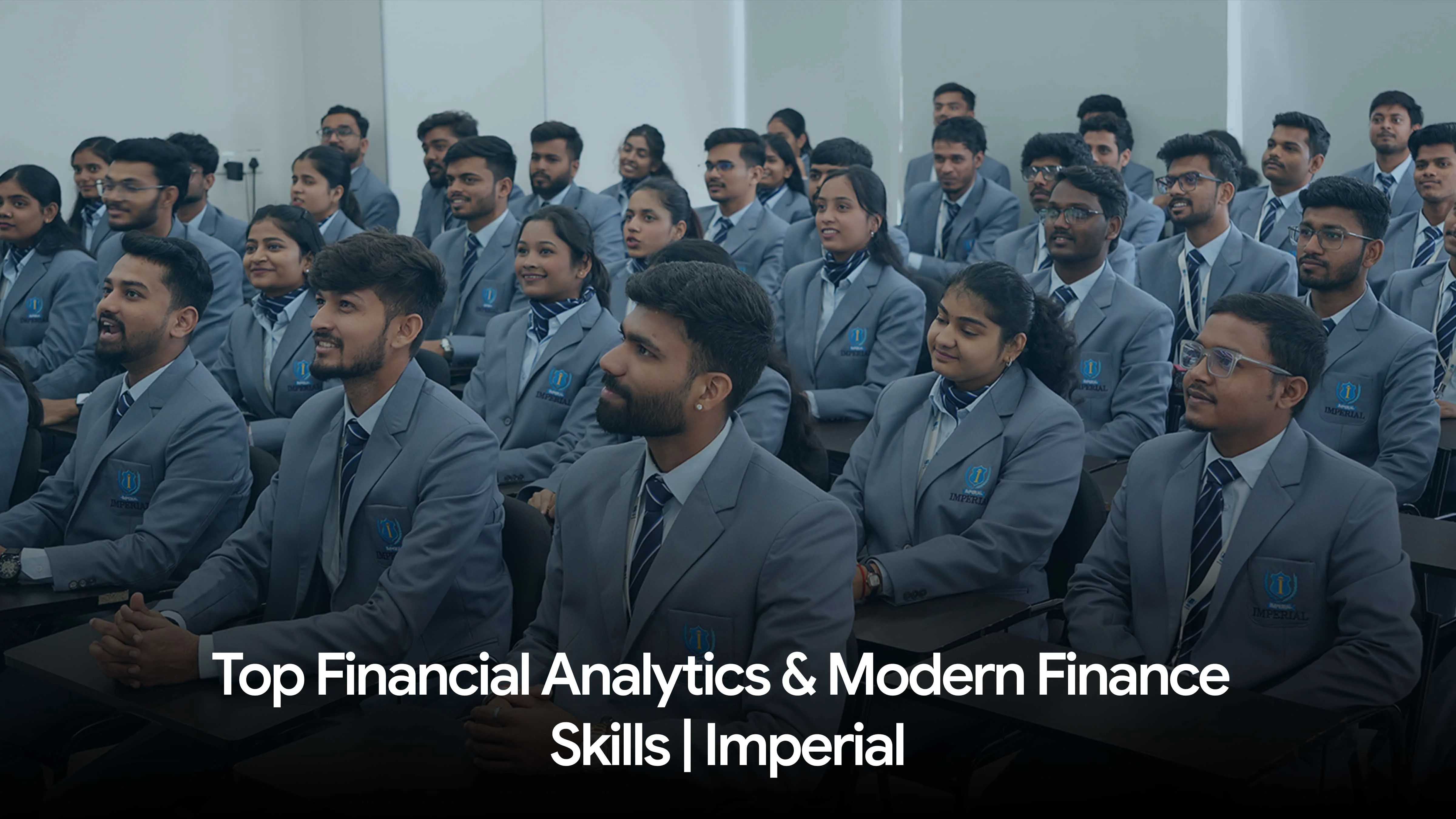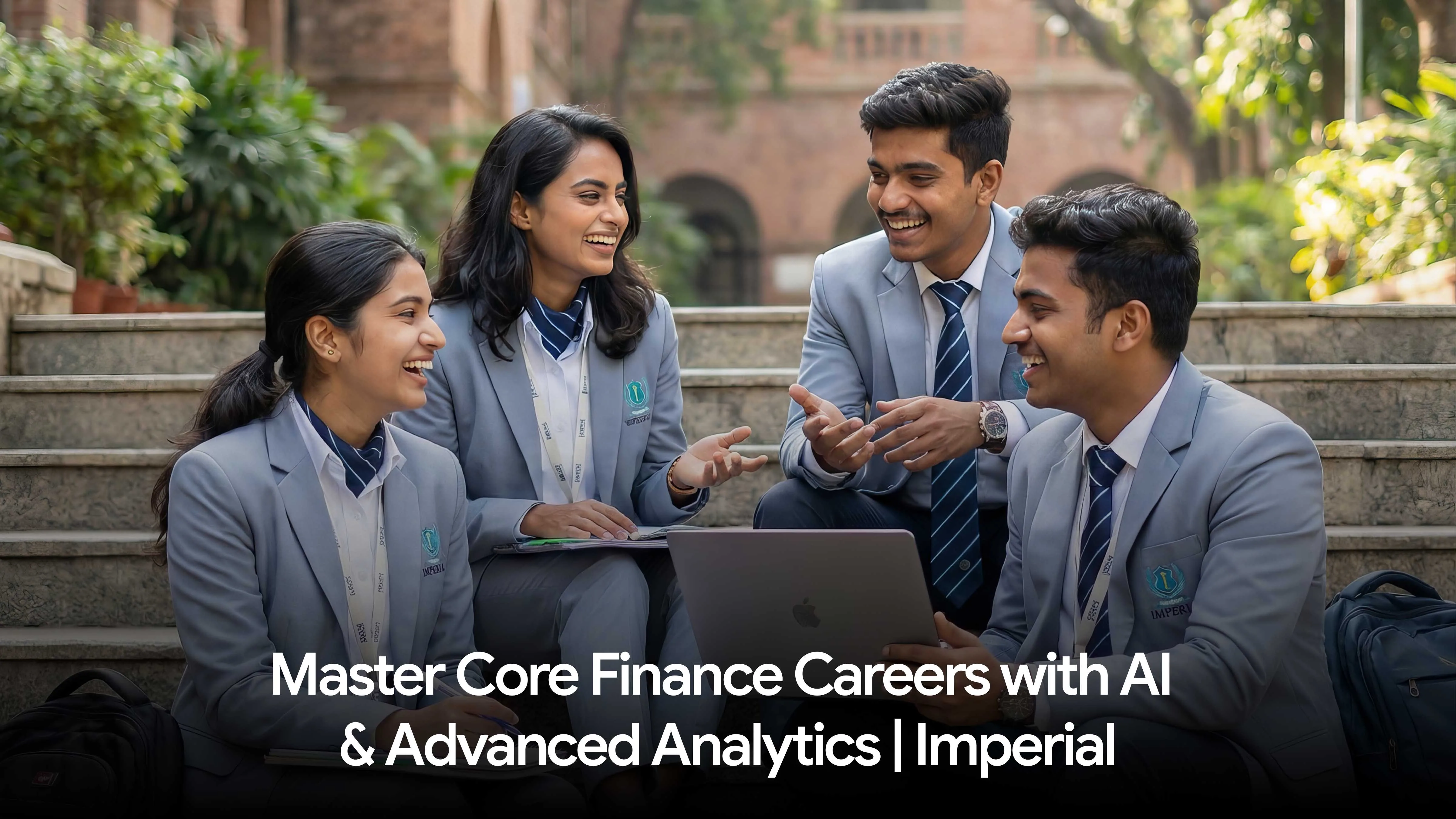
The finance industry offers opportunities across investment banking, corporate finance, financial analysis, risk management, and financial reporting. However, entering these fields requires more than theoretical financial knowledge. Students need analytical abilities, practical exposure, and specialised expertise.
Core Finance Careers increasingly demand professionals who can interpret financial data, assess investments, and manage financial risks. A specialised finance education can help students develop these abilities. Imperial School of Banking and Management Studies offers focused PGDM pathways in Applied Finance and Risk Management. Its programmes combine finance subjects, professional qualifications, industry-led learning, and practical projects. These pathways help students develop skills relevant to different financial sector roles.
Key Takeaways
- Finance offers opportunities in investment banking, corporate finance, risk management, and financial reporting.
- Financial modelling, valuation, investment research, and risk assessment are important industry skills.
- Imperial offers four super-specialised PGDM pathways combining finance with professional qualifications.
- Its learning model includes assignments, capstone projects, internships, and industry interaction.
- Students can pursue pathways involving CFA®, FRM®, SAP FICO, or CPA.
- The institute provides access to 200+ recruiters and placement assistance.
1. Understanding the Skills Required for Core Finance Careers
Finance professionals work with financial statements, investments, budgets, and business risks. Their responsibilities depend on their chosen specialisation.
Important skills include:
- Financial analysis: Understanding company performance through financial statements.
- Financial modelling: Preparing models to evaluate business performance and investments.
- Investment research: Studying securities, market movements, and investment opportunities.
- Risk assessment: Identifying financial risks and evaluating their possible impact.
- Financial reporting: Preparing accurate reports for business and regulatory requirements.
These skills help graduates explore Core Finance Careers across banking and financial services.
2. Imperial's Super-Specialised PGDM Pathways in Finance
Imperial offers four super-specialised PGDM pathways designed around specific financial functions and professional qualifications. These programmes combine management education with specialised industry learning.
- PGDM in Applied Finance + CFA® Level I (USA) + EY: Focuses on investment, valuation, financial analysis, and core finance. It includes CFA® Level I preparation, EY certification, financial modelling, and equity research training.
- PGDM in Risk Management + FRM® (GARP, USA) + INSEAD + EY: Covers financial and non-financial risk, analytics, cybersecurity risk, cloud risk, and enterprise risk management. The pathway includes FRM® Part I and II preparation and international learning exposure.
- PGDM in Applied Finance + SAP FICO (Global) + EY: Combines finance with enterprise technology. It prepares students for accounting, financial operations, and ERP-related roles through SAP FICO training.
- PGDM in Applied Finance + CPA (AICPA-USA) + EY: Focuses on accounting, auditing, international taxation, and financial reporting. It incorporates CPA preparation aligned with AICPA-USA.
These specialised pathways allow students to focus on different areas of finance instead of following a conventional general management curriculum.
3. How These Specialisations Connect with Finance Careers
Each pathway develops knowledge relevant to specific professional roles. Students can select a programme based on their career interests.
- Applied Finance + CFA®: Investment Banking Analyst, Equity Research Analyst, Financial Analyst, Valuation Analyst, and Investment Associate.
- Risk Management + FRM®: Risk Analyst, Credit Risk Analyst, Market Risk Analyst, Enterprise Risk Analyst, and Risk Advisory Associate.
- Applied Finance + SAP FICO: SAP Finance Consultant, Financial Operations Analyst, ERP Finance Associate, and SAP FICO Analyst.
- Applied Finance + CPA: Audit Associate, Tax Associate, International Accounting Associate, and Financial Reporting Analyst.
These career pathways illustrate how specialised qualifications can support different core finance jobs after PGDM. Actual roles depend on skills, hiring requirements, and experience.
4. Practical Learning Through Projects and Industry Exposure
Understanding financial concepts requires practical application. Imperial's learning model combines academic subjects with industry-oriented activities.
Its learning approach includes:
- 50% assignment-based learning.
- 15+ capstone projects.
- Live projects and case studies.
- Summer internships.
- Research papers and practical assignments.
- Mentorship and corporate interactions.
Students also learn from industry professionals, including CIOs, CROs, CXOs, investment bankers, and global SAP leaders. These activities help students understand workplace expectations and apply classroom knowledge.
5. Professional Certifications and Technology Skills
Imperial integrates professional qualifications and technology-oriented learning into its finance programmes.
The institute provides opportunities and value-added learning in:
- CFA® Level I and FRM® Part I and II pathways.
- SAP FICO Global certification.
- CPA preparation aligned with AICPA-USA.
- EY, IIM, and NISM certifications.
- Python, Power BI, AI in Finance, and Advanced Excel.
These learning opportunities help students strengthen their analytical and technical capabilities.
6. How Imperial Connects Students with Employment Opportunities
Imperial provides placement assistance and access to more than 200 recruiters.
Its placement highlights include:
- 100% placement assistance.
- Access to 200+ recruiters.
- Highest package of ₹16.4 LPA.
- The average salary package of ₹9.8 LPA.
- Recruiters featured include Morgan Stanley, Blackstone, CRISIL, BNY Mellon, Finastra, and SS&C GlobeOp.
These placement highlights demonstrate the institute's industry connections and employment support.
7. Why Choose Imperial for Finance Education?
Imperial's distinguishing features include:
- India's first super-specialised finance business school: Focuses exclusively on finance-oriented management education.
- Four specialised PGDM pathways: Offers dedicated programmes in Risk Management, CFA-integrated Applied Finance, SAP FICO, and CPA-integrated Applied Finance.
- Professional qualification pathways: Integrates internationally recognised finance-related qualifications.
- Industry-oriented learning: Includes assignments, capstone projects, internships, and corporate interactions.
- Technology-focused training: Incorporates Python, Power BI, AI in Finance, and Advanced Excel.
- International exposure: Offers international immersion opportunities, including INSEAD Singapore for the Risk Management pathway.
- Industry mentorship: Students engage with experienced financial sector professionals.
Conclusion
Building a finance career requires subject knowledge, analytical thinking, and practical experience. A specialised PGDM can help students develop these capabilities. Imperial combines finance-focused education with professional qualifications through its four super-specialised pathways. Its practical projects, technology training, industry mentorship, and placement support further strengthen its learning approach. Students exploring core finance jobs after PGDM can evaluate these specialised pathways according to their career goals.