
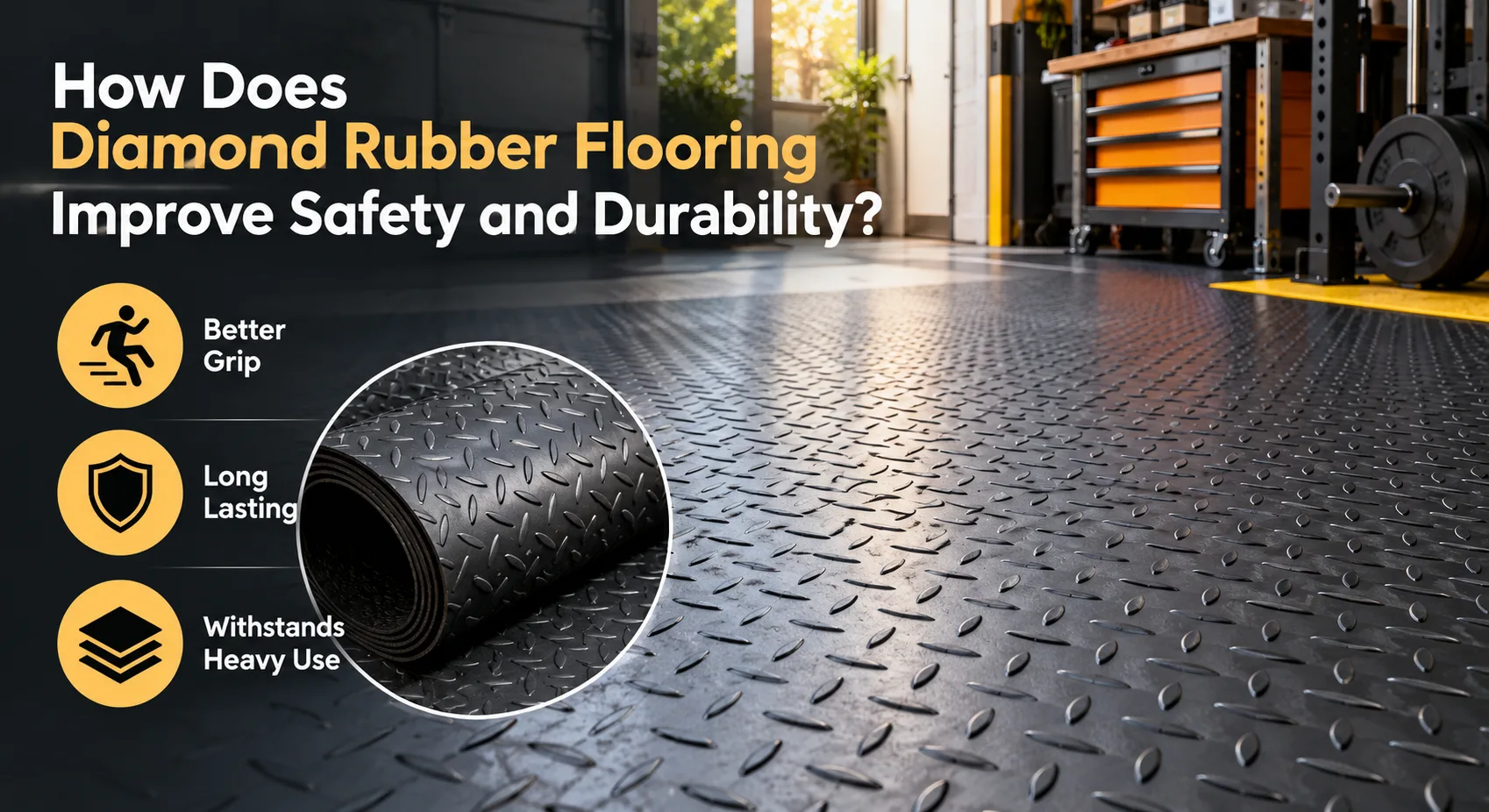
Choosing the right flooring is important for areas that experience regular foot traffic, equipment movement, or demanding working conditions. A suitable floor should provide safety, comfort, durability, and easy maintenance while also maintaining a professional appearance. Flooring materials with textured surfaces are often preferred in environments where slip resistance and long-term performance are important. Understanding the features and applications of a flooring solution can help property owners and businesses make a practical decision based on their specific requirements.
Diamond rubber flooring is designed with a raised diamond-patterned surface that can provide improved grip and traction. This textured design can help reduce the risk of slipping, particularly in areas where moisture, dust, or frequent movement may affect floor safety. Rubber also has natural flexibility, allowing the surface to provide a degree of cushioning underfoot. These qualities make it a practical option for commercial, industrial, fitness, transport, and utility environments where both safety and durability are important considerations.
What Makes the Surface Design Useful?
The diamond pattern is one of the most noticeable features of this type of flooring. Instead of having a completely smooth surface, the raised pattern creates additional contact points between footwear and the floor. This can improve traction and provide greater stability when walking or standing.
The textured design can also contribute to the visual appearance of a space. Its practical pattern can give floors a clean and structured look while serving a functional purpose. Depending on the installation environment, the flooring may be available in different thicknesses, colours, and surface finishes to suit specific requirements.
How Does Rubber Flooring Improve Durability?
Rubber is known for its resilience and ability to withstand regular use. A well-made rubber floor can handle repeated foot traffic and moderate mechanical activity without quickly losing its functional properties. This makes it suitable for environments where replacing flooring frequently would be inconvenient or expensive.
Another advantage is its resistance to everyday wear. Rubber surfaces can absorb some impact from dropped objects and moving equipment, helping reduce damage to the underlying floor. However, the actual performance depends on factors such as rubber quality, thickness, installation method, and the conditions in which the flooring is used.
Where Can It Be Used?
This flooring solution can be useful in several types of spaces. Workshops and industrial areas can benefit from its textured surface and resilient construction. Gyms and fitness facilities may use rubber flooring because it offers cushioning and can tolerate regular activity.
It can also be considered for garages, storage areas, corridors, utility rooms, commercial spaces, and other locations where people need a stable walking surface. The appropriate product should always be selected according to expected traffic, equipment weight, moisture exposure, and cleaning requirements.
Maintenance and Cleaning Considerations
Regular maintenance is essential for keeping any flooring in good condition. Rubber flooring generally requires routine sweeping or vacuuming to remove dust and loose particles. Depending on the manufacturer's recommendations, the surface can also be cleaned using a suitable mild cleaning solution and water.
Harsh chemicals or unsuitable cleaning products may affect the appearance or performance of the material. It is therefore important to follow the manufacturer's maintenance instructions. Promptly cleaning spills can also help maintain a safer walking surface and prevent dirt from becoming embedded in textured areas.
Installation and Product Selection
Proper installation plays an important role in the overall performance of rubber flooring. The underlying surface should be clean, dry, level, and properly prepared before installation. Poor preparation can lead to movement, unevenness, or premature deterioration.
When selecting a product, buyers should consider thickness, surface texture, dimensions, colour, expected traffic, and installation requirements. It is also useful to check whether the product is suitable for the intended environment and whether professional installation is recommended.
Conclusion
A well-designed rubber floor can combine traction, resilience, comfort, and practical maintenance requirements. Its textured surface can support safer movement, while the flexible and durable nature of rubber makes it suitable for areas exposed to regular activity. Selecting the correct thickness and quality, preparing the installation surface properly, and following suitable maintenance practices can help extend the flooring's useful life. For businesses looking for dependable flooring solutions, Z&S Carpets can be considered when evaluating options for practical and durable flooring needs.