
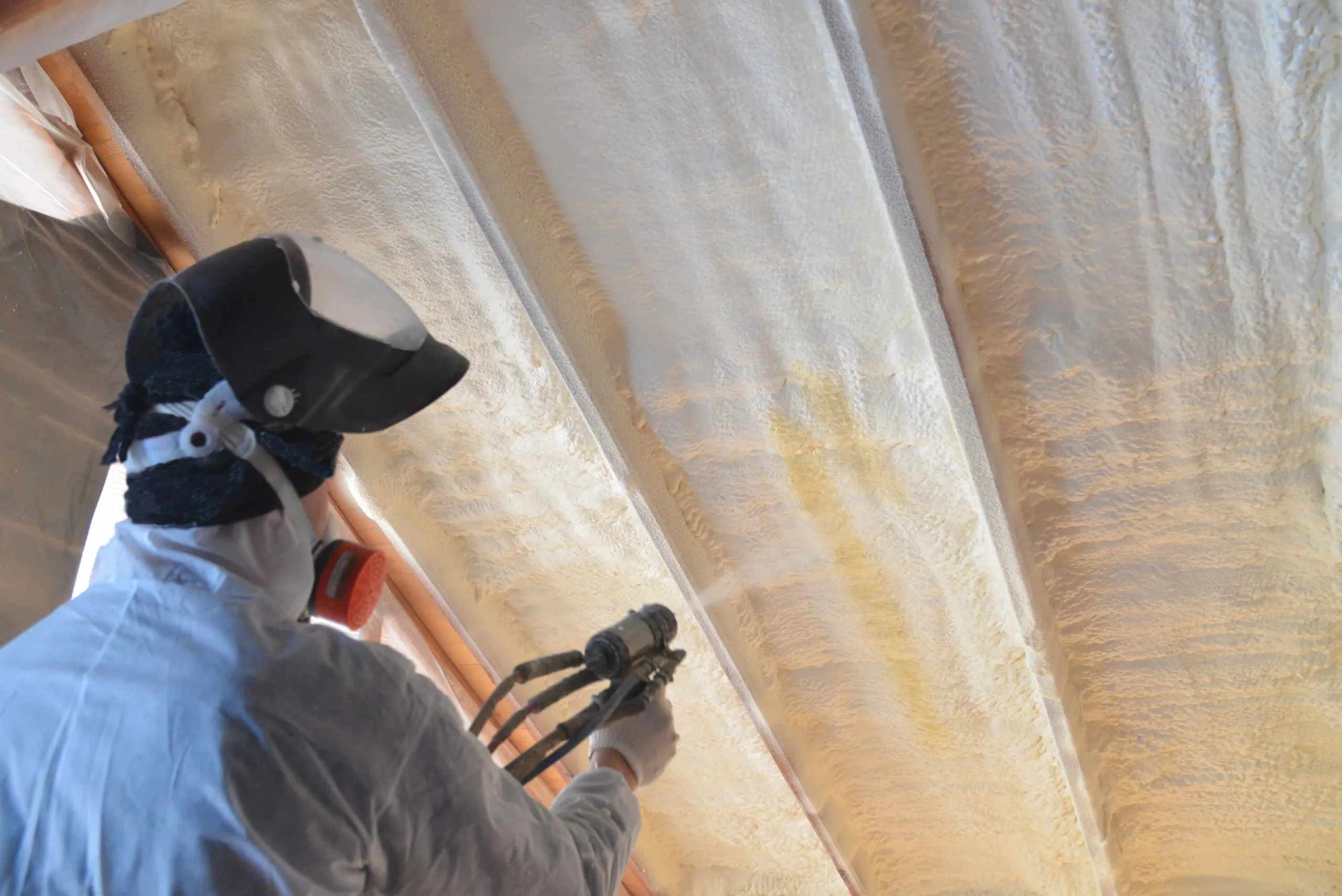
Closed-cell spray foam at slab edges can help create a continuous insulation and air-control layer at selected foundation transitions, slab perimeters, and irregular concrete-to-framing connections. Its closed-cell structure provides insulation and resistance to moisture vapor movement, but it should be used as part of a properly designed foundation assembly rather than as a replacement for drainage, waterproofing, structural work, or required slab-edge insulation. DOE Building Science Education guidance on slab-edge insulation

For Raleigh properties, slab edges and foundation transitions can be challenging because concrete, framing, soil, and exterior materials meet at the same area. Raleigh Excel Spray Foam can assess these connections to determine where closed-cell foam may help with air sealing, thermal control, and selected moisture-related concerns.
Why Slab Edges And Foundation Transitions Matter?
Slab edges sit at an important point in the building envelope. Heat can move through the concrete perimeter, while gaps at connections can allow unwanted air movement between conditioned and unconditioned areas.
Foundation transitions can also involve several materials with different properties. Concrete may meet wood framing, rigid insulation, sealants, flashing, or other components. A poorly detailed transition can leave a break in the thermal or air-control layer.
The DOE's Building Science Education guidance explains that poorly insulated slab edges can contribute to energy loss and moisture-control problems. Proper slab-edge insulation helps maintain the intended thermal performance of the foundation assembly.
Common Transition Areas
Several locations may require careful detailing:
- Slab-To-Foundation Connections: The junction between the concrete floor and foundation wall can create a difficult transition for insulation and air control.
- Slab Perimeters: The outer edge of a slab can transfer heat toward surrounding soil when it lacks suitable insulation.
- Foundation Step-Downs: Changes in foundation elevation can create irregular surfaces that need careful continuity between insulation layers.
- Wall-To-Foundation Connections: Wood framing above a concrete foundation can create an air-sealing transition that needs a compatible material.
- Penetrations and Joints: Pipes, wiring, cracks, and construction joints can create openings that require a specific sealing method.
How Closed-Cell Spray Foam Works At Slab Edges?
Closed-cell spray foam expands after application and adheres to suitable substrates. At an appropriate foundation transition, it can fill irregular spaces and create contact between adjacent components.
The material can provide both insulation and air-sealing functions in selected assemblies. Its relatively low vapor permeance compared with open-cell foam also makes it useful in locations where moisture vapor movement needs to be considered.
That does not mean foam alone provides complete moisture protection. Foundation drainage, exterior waterproofing, grading, capillary breaks, and other water-control measures still have separate roles.
Air Sealing at Concrete Joints
Air leakage can occur where concrete meets another building component. A continuous air-control layer needs to account for these changes in material.
Closed-cell foam can sometimes bridge suitable gaps between concrete and adjacent insulation or framing. The substrate must be clean and suitable for adhesion, and the installation needs to follow the foam manufacturer's requirements.
Foundation Step-Downs
A foundation step-down can create an irregular transition between different elevations. Building Science Corporation has documented foundation assemblies where closed-cell spray foam is used to connect insulation and air-control layers around foundation transitions and slab edges.
The exact detail depends on the foundation design, moisture-control strategy, and location of the air barrier.
Benefits Of Closed-Cell Spray Foam Around Slab Edges
Closed-cell foam can provide several useful functions when the assembly is appropriate.
- Air Sealing: Foam can close suitable gaps and irregular openings where air could move through the foundation transition.
- Thermal Control: Insulating the transition can reduce heat flow through exposed portions of the foundation assembly.
- Moisture Vapor Resistance: Closed-cell foam generally has lower vapor permeance than open-cell foam, which can matter in selected foundation applications.
- Irregular Surface Coverage: Spray application can conform to some uneven areas that are difficult to address with rigid materials alone.
- Connection Between Materials: Foam can sometimes help connect separate insulation or air-control layers at a difficult transition.
These benefits depend on correct product selection, thickness, substrate preparation, installation conditions, and the complete assembly.
Slab Edge Insulation Options Compared
Closed-cell spray foam is only one possible material. The best choice depends on the location and design of the foundation.
MethodTypical RoleKey ConsiderationClosed-Cell Spray FoamInsulation and air sealing at suitable transitionsRequires compatible substrate and correct installationRigid Foam BoardContinuous slab-edge or foundation insulationRequires careful fitting and protectionMineral WoolSelected foundation insulation applicationsMust be suitable for the specific moisture and exposure conditionsCaulk or SealantSmall joints and cracksBetter suited to narrow joints than large cavitiesFoam Backer RodLarger joints before sealantUsually works as part of a joint-sealing system
For slab-edge insulation, rigid insulation is commonly specified in building-science guidance, especially for slab-on-grade foundations. Closed-cell spray foam can have a different role at transitions, connections, and selected foundation assemblies.
Pros And Cons Of Closed-Cell Spray Foam
Pros
- Good fit for irregular areas: Spray foam can conform to uneven surfaces and complicated transitions where rigid boards may leave small gaps.
- Combines insulation and air sealing: Suitable applications can address both heat transfer and unwanted air movement in one material.
- Lower vapor permeance: Closed-cell foam can limit vapor movement more effectively than open-cell foam in many applications.
- Useful around difficult connections: Selected slab, foundation, and framing transitions can benefit from a continuous foam connection.
Cons
- Not a drainage system: Foam cannot correct poor grading, foundation drainage, or active bulk-water leaks.
- Not a structural repair: Cracked or damaged concrete may require structural assessment and repair before insulation work.
- Installation matters: Poor substrate preparation or incorrect application can reduce adhesion and performance.
- Exposure may require protection: Foam exposed to occupied spaces or certain exterior conditions may require an approved protective system.
Real Problems Around Slab Edges
Homeowners may notice several signs that point toward a foundation transition or slab-edge concern.
Cold Floors Near Exterior Walls
A floor can feel colder near exterior walls when heat moves through an inadequately insulated slab perimeter. The cause can also involve the wall assembly, air leakage, or floor-covering conditions.
Drafts at Foundation Connections
Small gaps where framing meets concrete can create air paths. These openings can be noticeable during colder weather when indoor and outdoor pressure differences increase airflow.
Moisture Near the Foundation
Damp areas should not automatically be treated as insulation problems. Standing water, groundwater intrusion, drainage failures, or plumbing leaks need to be identified and corrected before insulation is installed.
Uneven Foundation Transitions
Older properties can contain changes in foundation elevation or construction methods. These areas may require a combination of insulation, sealant, flashing, drainage, or other materials.
How Raleigh Weather Affects Slab Edges?
Raleigh experiences warm, humid summers along with cooler periods during winter. Those conditions make building-envelope continuity relevant throughout the year.
Warm and Humid Conditions
Outdoor moisture can enter through air leaks when humid exterior air moves into cooler building assemblies. Air sealing can help limit unwanted air movement, but it does not replace a complete moisture-control design.
Cooler Weather
During colder periods, exposed foundation areas can conduct heat away from conditioned spaces. Gaps at slab and foundation transitions can also contribute to drafts.
Wet Weather
Heavy rain makes exterior drainage especially important. Gutters, downspouts, grading, foundation drainage, and waterproofing should direct bulk water away from the structure.
Spray foam should not be used to cover an active water problem. The source of the moisture needs to be addressed first.
What R-Value Means At Slab Edges?
R-value measures resistance to heat flow through an insulation material. A higher R-value generally means greater resistance to conductive heat transfer.
At a slab edge, the stated insulation R-value is only part of the picture. Gaps, thermal bridges, installation quality, and the continuity of the insulation layer also affect how the complete assembly performs.
For this reason, a contractor should look at the entire transition instead of focusing only on the foam's rated R-value.
Concrete Joints And Air Sealing
Concrete joints can serve different purposes, so they should not all be treated the same way. Some joints are intentional movement joints, while others result from construction sequencing or connections between separate components.
A suitable sealant may be more appropriate for a narrow moving joint. Closed-cell spray foam may be useful for an irregular cavity or transition that needs insulation and air sealing.
The joint's size, expected movement, moisture exposure, and position within the building envelope should guide material selection.
When Closed-Cell Foam May Not Be The Right Choice?
Closed-cell spray foam may not be the correct solution for every slab edge or foundation transition.
A different approach may be needed when:
- The foundation has active water intrusion.
- Concrete requires structural repair.
- A movement joint needs a flexible sealant system.
- The area requires rigid insulation designed for ground contact.
- A large opening needs physical blocking.
- Exterior drainage or waterproofing is incomplete.
- The assembly requires a specific code-prescribed insulation method.
The goal is to build a continuous and properly controlled foundation assembly, not simply to fill every opening with foam.
How Raleigh Excel Spray Foam Evaluates Slab Edges?
Raleigh Excel Spray Foam reviews the surrounding assembly before recommending closed-cell spray foam slab edges as part of an insulation or air-sealing project.
The evaluation can consider:
- Foundation Type: The team identifies the slab, foundation wall, crawlspace, or basement configuration.
- Transition Condition: Concrete joints, framing connections, and irregular surfaces are reviewed for potential air paths.
- Moisture Conditions: Visible moisture, drainage concerns, and active leaks need attention before insulation work.
- Existing Insulation: Existing rigid insulation or other materials can affect the recommended approach.
- Air-Control Layer: The intended path of the air barrier needs to remain continuous through the transition.
- Product Requirements: Foam type, thickness, substrate condition, and application requirements need to match the location.
- Code Requirements: Applicable North Carolina requirements should be considered for the specific project and assembly.
This process helps separate an insulation problem from a structural, drainage, or moisture-control problem.
Why Choose Raleigh Excel Spray Foam?
Raleigh Excel Spray Foam is led by Daniel Harper, who has more than 10 years of experience in the insulation industry and specializes in spray foam applications for residential and commercial projects.
The company focuses on assessing the actual building assembly instead of treating every foundation gap in the same way. That includes looking at the relationship between concrete, framing, insulation, air sealing, and moisture conditions.

For slab-edge and foundation-transition work, this type of assessment can help identify where closed-cell foam fits into the assembly and where another material or repair may be more appropriate.
Conclusion
Closed-cell spray foam slab edges can help address selected foundation transitions, irregular cavities, and concrete-to-framing connections where insulation and air sealing are needed.
The material can provide useful thermal and air-control properties, and its closed-cell structure offers greater resistance to vapor movement than open-cell foam. Still, slab-edge performance depends on the entire foundation assembly.
Drainage, waterproofing, structural condition, insulation continuity, joint movement, and local requirements all need to be considered before installation.
Get Help With Slab Edges And Foundation Transitions
Raleigh Excel Spray Foam can assess slab-edge conditions, foundation transitions, concrete joints, and potential air-leakage paths for residential and commercial properties.
Property owners can contact Raleigh Excel Spray Foam at (919) 301-9435 or [email protected] to discuss a foundation insulation or air-sealing project.
FAQs
Is Closed-Cell Spray Foam Good For Slab Edges?
Closed-cell spray foam can be useful at selected slab edges and foundation transitions where the product is compatible with the substrate and the assembly calls for insulation and air sealing. The correct solution depends on the foundation design.
Can Spray Foam Seal a Gap Between Concrete and Framing?
Suitable closed-cell spray foam can seal some gaps between concrete and framing. The surfaces must be suitable for adhesion, and the foam should connect to the intended air-control layer without interfering with other building components.
Does Closed-Cell Spray Foam Resist Moisture?
Closed-cell foam has a structure that provides greater resistance to water vapor movement than open-cell foam. It can help manage vapor movement in suitable assemblies, but it should not be treated as a replacement for foundation drainage or waterproofing.
Can Spray Foam Stop Water From Entering A Foundation?
Spray foam should not be treated as the primary solution for active bulk-water intrusion. Drainage, grading, waterproofing, flashing, or foundation repairs may be needed to address the source of the water.
Does Slab-Edge Insulation Need a High R-Value?
The required insulation level depends on the applicable code, climate zone, foundation design, and assembly. The insulation also needs to be installed continuously enough to limit thermal bridging and gaps.
Is Closed-Cell Foam Better Than Rigid Foam at a Slab Edge?
The materials serve different purposes. Rigid foam is commonly used for dedicated slab-edge insulation, while closed-cell spray foam can be useful for irregular transitions and selected air-sealing details. The appropriate material depends on the assembly.
Can Closed-Cell Spray Foam Be Applied Directly to Concrete?
Closed-cell spray foam can be applied to suitable concrete surfaces in some foundation applications. Surface condition, moisture, temperature, product specifications, and the intended assembly all need to be checked before application.
Can Spray Foam Fix Cracks In A Concrete Foundation?
Spray foam should not be used as a substitute for structural concrete repair. A significant crack, movement, or active water problem may require a qualified assessment and a repair method designed for that condition.
Author & Reviewer
Author: Daniel Harper
I'm Daniel Harper, owner of Raleigh Excel Spray Foam Insulation, with over 10 years of experience in the insulation industry. I specialize in spray foam insulation and am dedicated to providing reliable, high-quality solutions that improve comfort, energy efficiency, and long-term performance for both residential and commercial projects. That same dedication to reliability and quality shapes every project I take on, because delivering lasting comfort and genuine energy efficiency is what this work is about. My focus stays on providing high-quality, dependable spray foam insulation results for every client I serve.
Reviewer: William Harris
With nearly a decade in the spray foam insulation field, William Harris reviewed this post and provided guidance that reflects both technical understanding and real-world marketing experience.