In Texarkana, Arkansas, where hot, humid summers demand a lot from an air conditioner, homeowners are often focused on the R-value of the insulation between their wall studs. What they often overlook is a major source of hidden energy loss called thermal bridging.
A thermal bridge is a pathway for heat to travel through the less-insulated parts of a home's structure, primarily the wooden studs and joists themselves. A professional insulation installation in Texarkana, AR addresses thermal bridging by creating a more continuous, unbroken layer of insulation that either covers these framing members or significantly reduces their impact. This is most effectively done by using advanced materials like spray foam or by applying a layer of rigid foam insulation to the exterior of the home's sheathing.
This focus on creating a complete thermal barrier is a key difference between a standard insulation job and a high-performance professional installation. This guide, based on building science principles and the experience of professional insulation contractors, will explain what thermal bridging is, why it's a problem in Texarkana, and how a professional approach can solve it.
What is Thermal Bridging and Why Does it Matter?
Heat, like water, will always follow the path of least resistance. In a standard wall, the insulation in the cavities has a high resistance to heat flow (a high R-value). The wooden studs, however, have a much lower R-value.
A typical wood stud has an R-value of only about R-4, while the insulation next to it might be R-13 or R-15. This means that heat can travel through the wood framing much more easily than it can through the insulation. These studs act as a "bridge" for heat to move from the hot exterior to the cool interior of the home.
In Texarkana's climate, this is a major problem in the summer. The framing of a house can make up about 25% of the total wall area. When the sun is beating down on the walls, a significant amount of heat is conducted directly through these studs into the house, bypassing the insulation. This forces the HVAC system to work harder, raising energy bills and reducing comfort.
Bonus Tip: On a hot day, place your hand on an interior wall. Areas over the studs often feel warmer than the spaces between them. A thermal camera makes this effect clearly visible.
Professional Solution Using Spray Foam Insulation
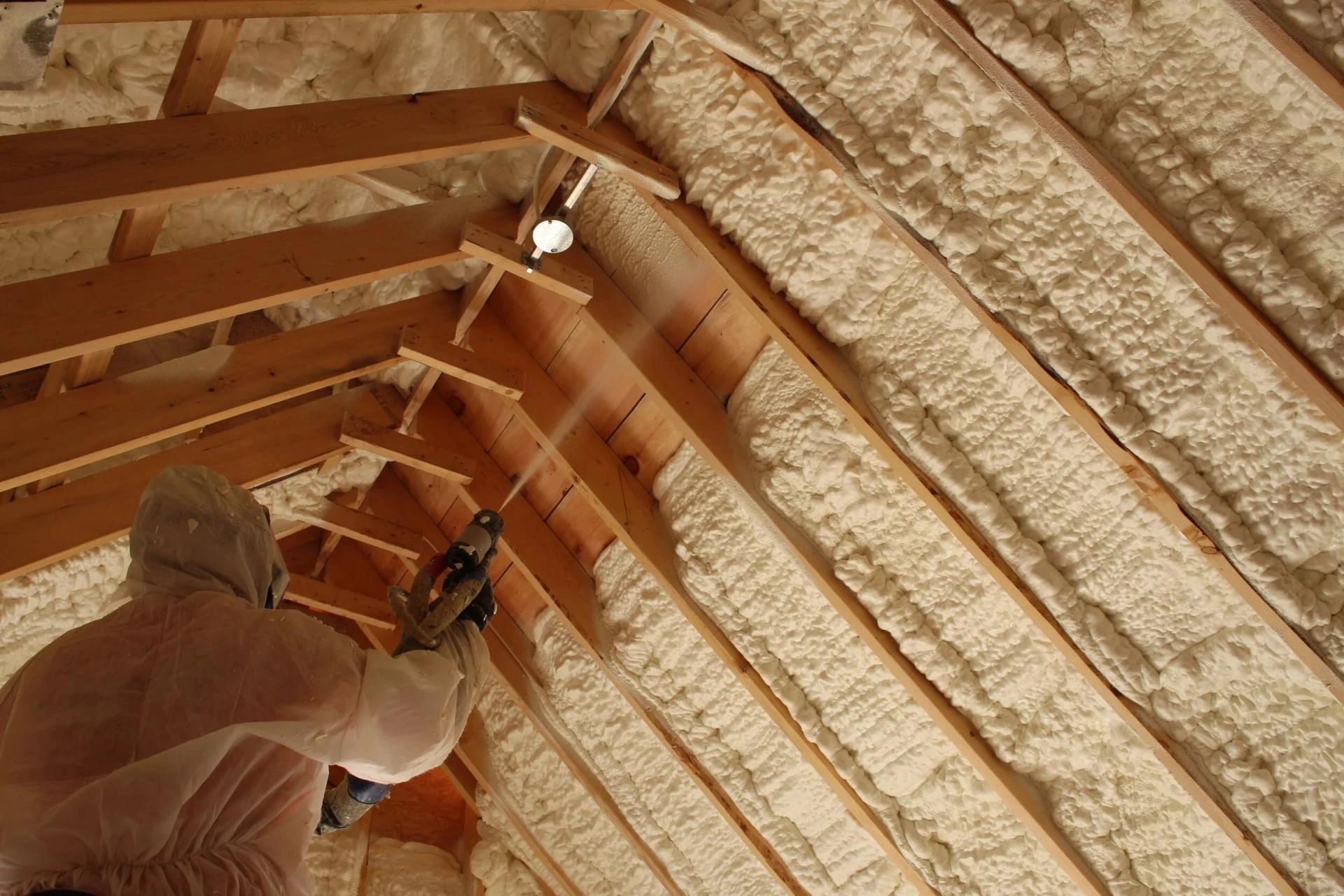
One effective way a professional installer can reduce thermal bridging from the inside is by using spray foam insulation.
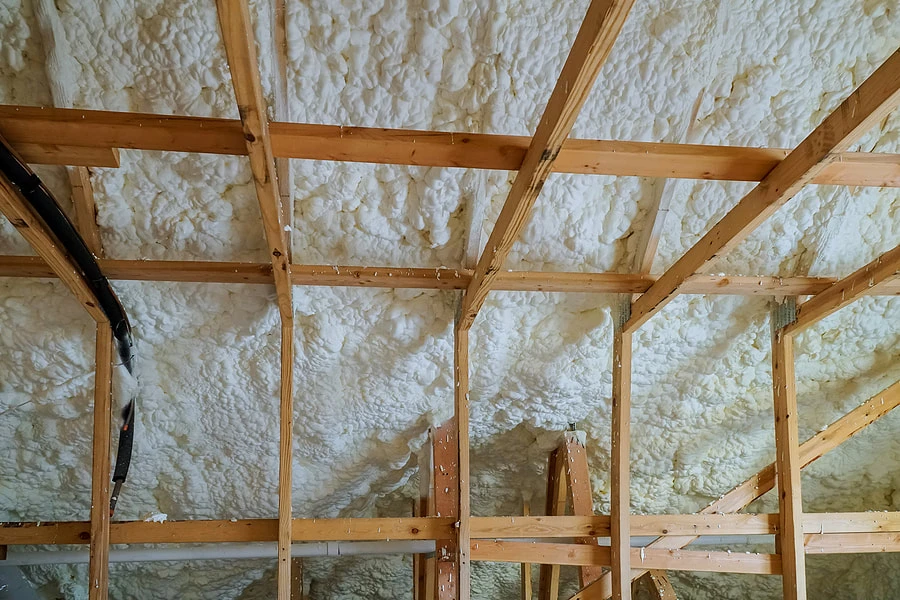
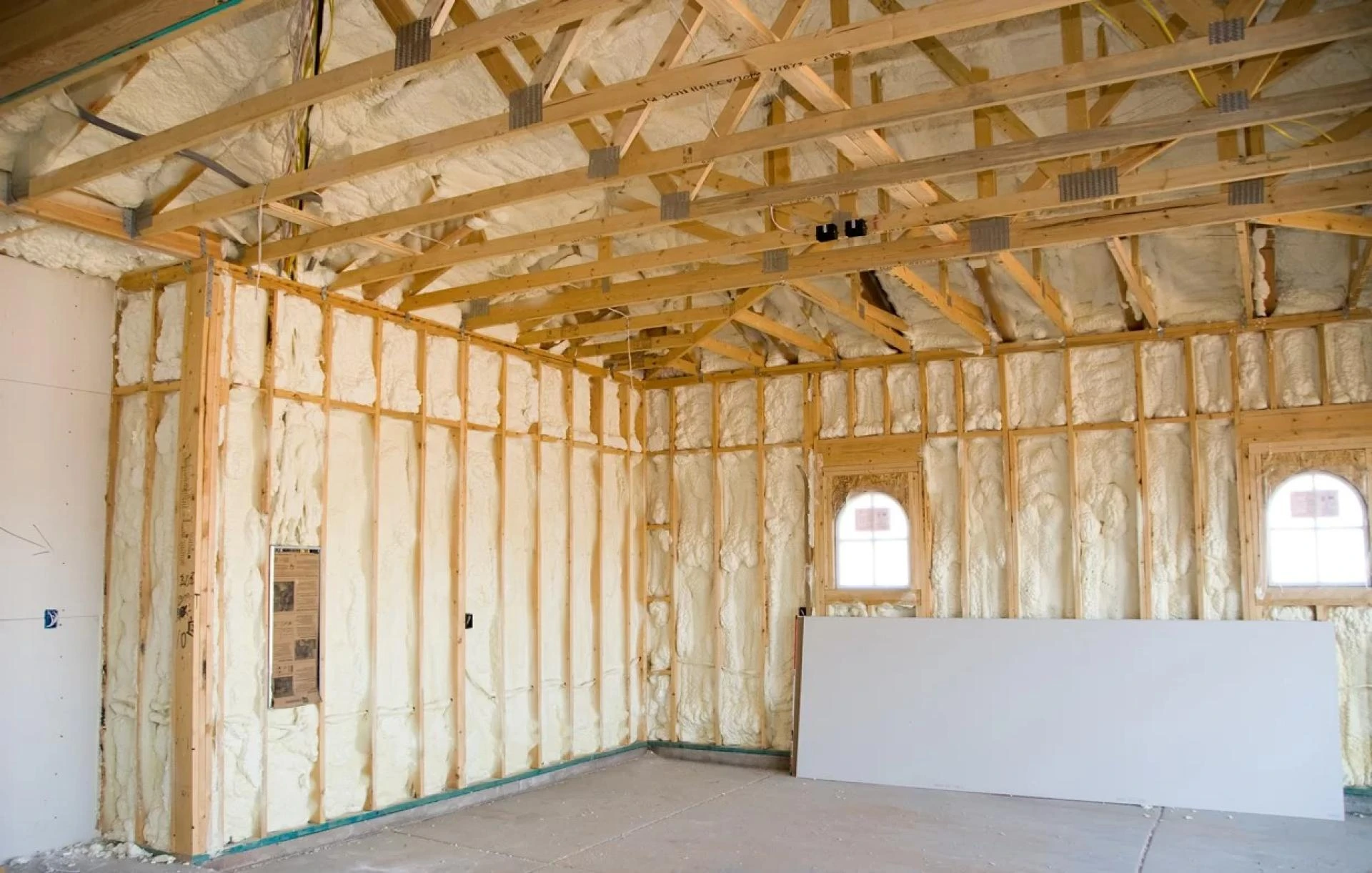
When applied, spray foam expands and adheres tightly to the sides of the studs, creating an airtight seal around the framing. While it doesn’t stop heat conducted through the stud, it blocks air leakage in the small gaps and cracks where traditional insulation falls short.
More importantly, a professional spray foam installation is often part of a larger strategy. For example, applying spray foam to the underside of the roof deck creates a thermal barrier that covers the rafters, eliminating thermal bridges in the attic.
Exterior Insulation Solution
For new construction or major remodels, the most effective way to eliminate thermal bridging is to install continuous insulation on the exterior.
In this method, rigid foam board insulation is added over the exterior wall sheathing before siding. This layer completely covers the studs, stopping heat before it reaches the wood framing.
This approach significantly improves the "whole-wall" R-value of the home and is common in high-performance construction. It is also becoming more popular in climates like Texarkana’s as energy codes grow stricter.
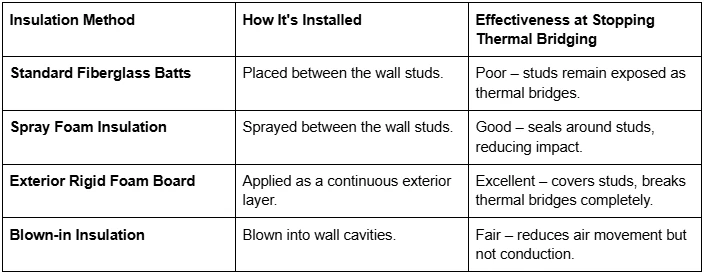
How Different Installation Methods Address Thermal Bridging
The Impact of a Continuous Thermal Barrier
Benefits for Homeowners
- Consistent Temperatures: Eliminates hot and cold spots for even comfort
- Reduced Moisture Issues: Lowers risk of condensation and mold in Texarkana’s humid climate
- True R-Value Performance: Ensures the wall’s effective R-value matches the insulation’s rating
Bonus Tip: The rim joist (where the house framing meets the foundation) is a major thermal bridge. Professional installers often seal it with spray foam for better results.
Things to Consider Before Your Project
- Ask About Their Approach: A knowledgeable contractor should explain how they address thermal bridging
- Understand the Whole-Wall R-Value: Don’t just focus on product R-value—ask for the wall assembly’s effective R-value
- Weigh Costs and Benefits: Exterior rigid foam adds upfront cost but delivers long-term savings and comfort
- Look Beyond Walls: Ceilings and floors also need attention for thermal bridging
Frequently Asked Questions
How much energy am I really losing through my studs?
Thermal bridging can reduce a wall’s effective R-value by 15% or more (Oak Ridge National Laboratory). In Texarkana’s cooling-heavy climate, this is significant.
Is spray foam better than fiberglass at stopping thermal bridging?
Yes. Spray foam seals air leaks around studs, reducing heat transfer. But for conduction through the stud, only continuous exterior insulation fully solves the problem.
Can I fix thermal bridging without removing siding?
Yes. Options include upgrading wall cavities with spray foam and improving attic insulation to cover joists.
Do metal studs have the same problem?
Even worse. Metal studs conduct heat much faster than wood, making exterior continuous insulation essential.
Do all insulation contractors know how to address this?
Not always. Look for a high-performance contractor who understands building science and focuses on thermal bridging solutions.
A Key to True Home Performance
A professional insulation contractor goes beyond filling stud cavities. By addressing thermal bridging, contractors deliver a home that’s more energy-efficient, comfortable, and durable.
Get an Expert Assessment of Your Home's Thermal Envelope
To identify where your home is losing energy through thermal bridging, schedule a professional evaluation.
For Texarkana homeowners, LMC Insulation provides building science–based solutions. Contact them at: [email protected] (479) 351-6175