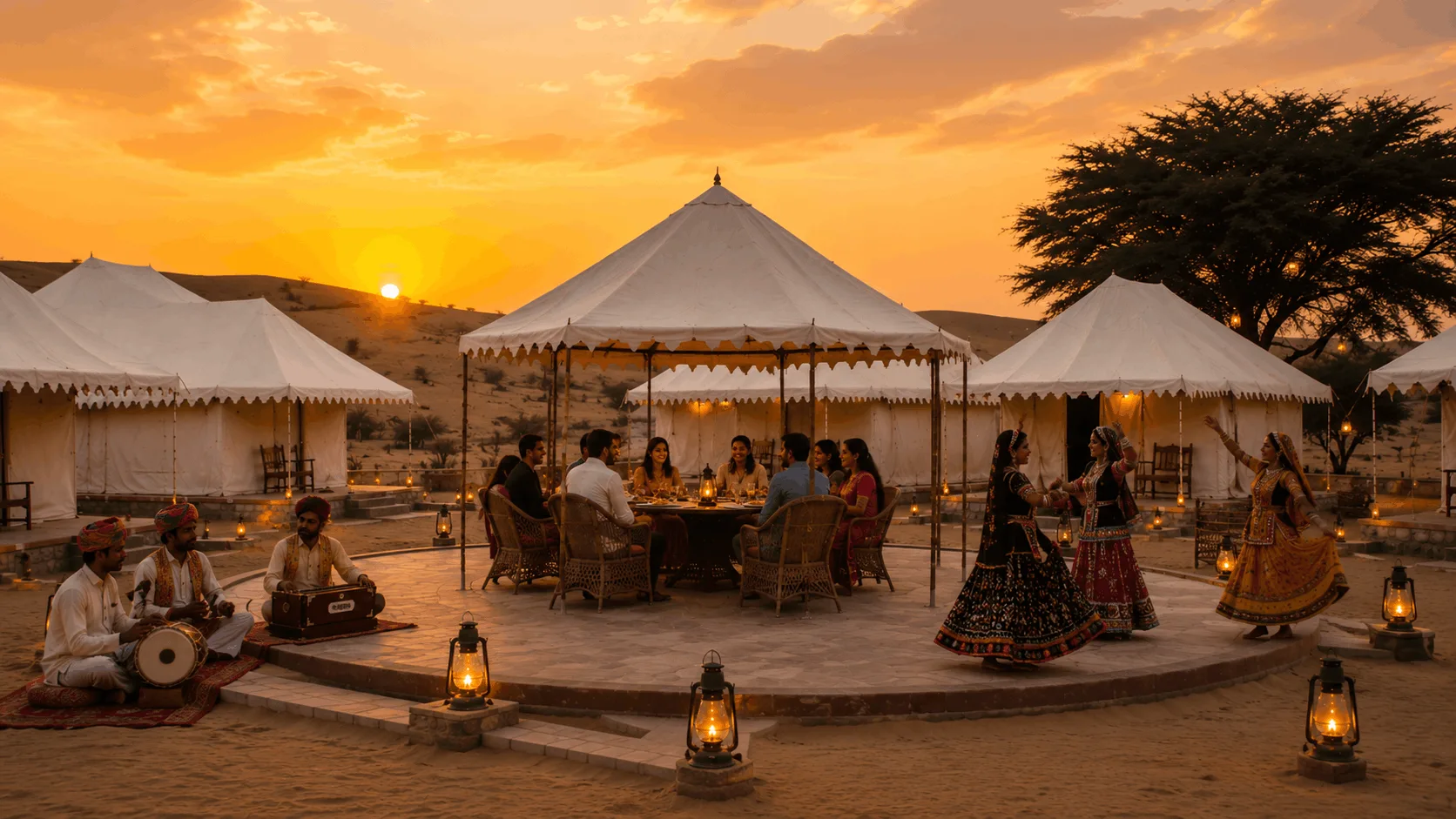
A desert journey is often planned around visible attractions: golden sand, camel rides, jeep safaris and sunset photographs. These experiences reveal the landscape of Jaisalmer, but they do not fully explain the cultural life of the region. Music, dance, food, clothing and hospitality are equally important parts of Rajasthan’s desert identity.
A cultural evening brings these different elements together after sunset. The dunes are no longer treated only as a daytime sightseeing location. They become the setting for local performances, conversations, dining and unhurried time beneath the night sky.
At Lohagarh Desert Resort, guests can combine Swiss-tent accommodation with folk performances, desert activities and Rajasthani dining. For travellers seeking a Heritage Desert Resort in Jaisalmer, the evening programme can provide a meaningful introduction to traditions that cannot be understood through architecture or landscapes alone.
The Desert Experience Changes After Sunset
During the day, the Thar Desert is defined by strong sunlight, wide horizons and changing patterns across the sand. As sunset approaches, the light softens and temperatures often become more comfortable.
The arrival of evening changes the atmosphere completely. The landscape becomes quieter, artificial city light decreases and the sky becomes more prominent.
A cultural programme fits naturally into this transition. Instead of returning immediately to the city after taking sunset photographs, guests remain in the desert and experience another part of its character.
This continuity is one of the main advantages of staying overnight rather than booking only a short excursion.
Why Folk Music Belongs to the Desert Story
Rajasthan has diverse musical traditions shaped by communities, languages, local histories and performance practices. Songs may communicate stories of love, devotion, separation, courage and everyday life.
The desert has influenced how this music is performed and experienced. Vocal styles and instruments developed in environments where oral traditions were important for preserving stories and community knowledge.
A cultural evening gives visitors an opportunity to listen to these traditions in a setting connected with their origins. Guests may not understand every word, but rhythm, expression and performance can communicate beyond language.
The programme should be treated as a cultural presentation rather than background noise.
Dance as a Form of Living Heritage
Traditional dance is frequently one of the most visually engaging parts of a Rajasthani evening. Movement, clothing, jewellery and music combine to create a performance that reflects years of practice.
Visitors should avoid reducing folk dance to a short video made only for social media. The performers are presenting skills maintained through teaching, repetition and community participation.
Watching attentively and responding respectfully can make the interaction more meaningful. If guests are invited to participate, they should follow the guidance of the performers rather than turning the stage into an unrelated activity.
Photography and recording should remain respectful and should not interfere with the programme.
A Bonfire as a Gathering Point
A bonfire can create a natural centre for a desert evening during suitable weather. Guests gather around the warmth, talk with their companions and watch the cultural programme.
Bonfires are seasonal and should depend on temperature, wind, fire-safety requirements and resort operations. They should not be assumed to be available during every stay.
When arranged responsibly, the fire contributes to the atmosphere without becoming the main attraction. Its value comes from bringing people together and creating a relaxed transition between performance, dining and the rest of the night.
Guests should follow safety instructions and keep children supervised around the area.
Rajasthani Food Extends the Cultural Experience
Culture is experienced not only through music and dance but also through food. Ingredients, cooking techniques and flavour combinations can reveal how communities adapted to climate, geography and available resources.
Lohagarh Desert Resort lists Rajasthani dining among its experiences. Depending on the current menu and package, guests may be introduced to regional preparations alongside other suitable choices.
The meal should be seen as part of the complete evening rather than a service unrelated to the performance. Food gives travellers another way to understand the region.
Menus can change according to season, occupancy and ingredient availability, so guests should confirm current arrangements rather than expecting every online photograph to represent a fixed buffet.
Respecting Dietary Requirements
A group may include vegetarian guests, children, senior citizens and travellers with medical or religious dietary restrictions.
Preferences should be communicated before arrival. Serious allergies need to be explained with specific information because phrases such as “special meal” or “simple food” may not give the kitchen team enough detail.
Guests should also ask what is included in their package. Barbecue service, special dining arrangements or private meals may follow different conditions and should not be assumed to be available automatically.
Clear communication helps the resort prepare more responsibly.
Cultural Evenings for Families
Families can use the programme to introduce children to Rajasthan beyond facts found in a textbook. Music, movement, traditional clothing and live performance make culture easier for younger travellers to observe.
Parents can explain that folk traditions are connected with real communities rather than created only for tourism. This helps children approach the evening with curiosity and respect.
Senior family members may appreciate the music and shared atmosphere, while adults can enjoy the opportunity to spend time together without a demanding schedule.
Families should select comfortable seating and supervise children throughout the programme, particularly when a bonfire is present.
A Meaningful Experience for Couples
Couples frequently visit Jaisalmer for anniversaries, honeymoons or short holidays. A cultural evening can add depth to the trip without requiring an artificial or heavily staged romantic arrangement.
Watching sunset, listening to live music and dining beneath the open sky can create a memorable shared experience. The value comes from the setting and unhurried time together rather than from exaggerated decoration.
Couples requesting a particular arrangement should discuss it before booking. Private seating, celebration décor, cake or special dining should never be assumed to be part of a regular accommodation package.
Why Staying Overnight Makes a Difference
Travellers who attend a short cultural programme and immediately return to the city may experience only the scheduled performance. Overnight guests can remain connected with the environment after the music ends.
They can spend time beneath the open sky, return to their tents without a long late-night drive and experience the desert again the following morning.
This continuity helps the evening feel like part of a complete journey rather than a standalone attraction. It also allows families to follow a more relaxed schedule.
A Luxury Tent Stay in Jaisalmer combines this access to the desert with private accommodation and essential comfort.
Swiss Tents Support a Comfortable Cultural Stay
Lohagarh Desert Resort currently offers Deluxe Swiss Tents and Super Deluxe Swiss Tents. These categories allow guests to remain close to the desert setting while having a personal space in which to rest.
The Super Deluxe Swiss Tent is listed with air conditioning, a private washroom, a double bed and other practical facilities. Travellers should compare categories before booking because features may differ.
Tent accommodation also brings guests closer to natural sounds and temperature changes than a large city hotel. Packing suitable seasonal layers can make the experience more comfortable.
The Night Sky After the Performance
When weather and lighting conditions are suitable, the desert sky can reveal more stars than travellers typically see in a city.
Stargazing provides a quiet contrast to the energy of music and dance. Guests can sit with family, identify constellations or simply observe the sky without following another organised activity.
Visibility depends on cloud cover, moonlight, dust and local lighting, so it cannot be guaranteed. Travellers interested in night photography may bring a tripod, while casual observers can use a recognised astronomy application.
Bright lights should be used carefully to avoid affecting the experience of other guests.
Photography with Cultural Sensitivity
Cultural evenings naturally attract photographers, but the comfort and dignity of performers must remain more important than obtaining a particular image.
Guests should avoid blocking other people’s view, using intrusive flashes or entering performance areas without permission. Close portraits should be taken only when appropriate.
Children and other guests should not be photographed without consent. Professional equipment or organised shoots may require advance approval from the resort.
Responsible photography allows travellers to preserve their memories while respecting the people who make the programme possible.
Cultural Presentation Versus Cultural Understanding
A single evening cannot explain all the traditions of Rajasthan. The state includes many communities and regional variations, and no short programme should be treated as a complete representation.
Instead, the performance can become a starting point. Curious travellers may learn about the instruments, dance styles or communities associated with the programme through respectful questions and reliable sources.
This approach turns entertainment into cultural engagement. Guests leave not only with videos but with greater interest in the people and traditions of the region.
Combining the Evening with Desert Activities
A balanced resort day may include a period of rest after arrival, followed by a camel or jeep safari and sunset observation. Guests can then return for the cultural programme and dinner.
The schedule should not contain so many activities that every experience feels rushed. Families with children or senior citizens may need longer breaks.
Travellers staying for two nights can separate the experiences. One day may focus on a safari, while the next allows more time for photography, rest and the cultural evening.
Exact timings should be confirmed with the resort because sunset, weather and operational requirements change seasonally.
The Role of Hospitality
Hospitality helps connect the different parts of the evening. Guests need clear information about activity times, seating, meals and safety.
Warm service can make unfamiliar traditions feel approachable. International travellers or first-time visitors may have questions about food, performances or local customs, and clear explanations can improve their understanding.
The purpose is not to make guests feel like spectators separated from the destination. Good hospitality gives them confidence to appreciate the programme respectfully.
Responsible Cultural Tourism
Cultural tourism should support rather than exploit local traditions. Visitors contribute positively when they treat performers with dignity, avoid disruptive behaviour and value the work behind the presentation.
The desert environment also requires respect. Guests should use waste bins, minimise disposable plastic and avoid leaving food or packaging in open areas.
Responsible behaviour protects both the cultural and natural setting that attracts travellers to Jaisalmer.
Selecting the Right Resort Experience
Before choosing a Top Resort in Jaisalmer, travellers should ask what the stay actually includes.
Important questions include:
- Is the cultural programme held on the selected date?
- Are dinner and breakfast included?
- Is a camel or jeep safari part of the package?
- Which tent category is confirmed?
- Does the tent have a private washroom?
- Is the bonfire seasonal?
- What are the check-in and check-out times?
- Can dietary requirements be accommodated?
- What cancellation conditions apply?
Written confirmation helps prevent misunderstandings.
A Suggested Two-Night Cultural Itinerary
On the first day, guests can arrive with enough time to settle into their tent and understand the resort layout. They may experience sunset, attend the cultural evening, have dinner and spend time observing the night sky.
The second day can begin slowly. A scheduled desert activity can be arranged according to weather and the guest’s preferences. The afternoon can remain free for rest or photography before another relaxed evening.
This itinerary provides more breathing room than arriving shortly before sunset and leaving early the next morning.
Conclusion
A cultural evening transforms a desert stay by connecting Jaisalmer’s landscape with its music, dance, food and hospitality. Sunset may introduce visitors to the visual beauty of the Thar, but the evening programme helps them encounter the people and traditions that give the region its living identity.
Lohagarh Desert Resort combines this experience with Swiss-tent accommodation, desert activities and time beneath open skies. Families, couples and other travellers can enjoy the programme most meaningfully when they remain attentive, communicate their requirements and respect both performers and the environment.
The result is more than an evening of entertainment. It becomes a cultural chapter within the wider Jaisalmer journey.