
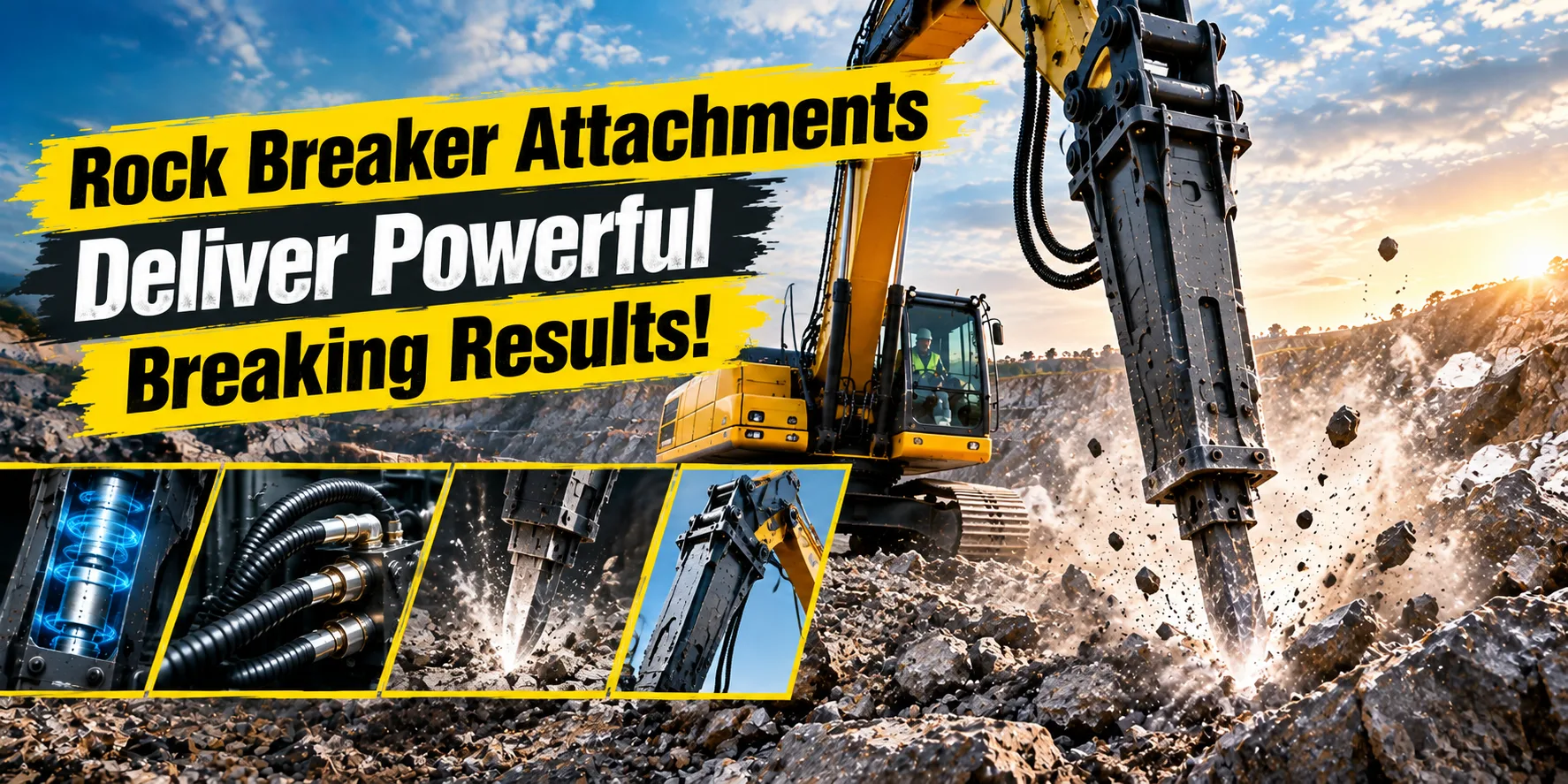
Construction, demolition and quarrying projects often involve hard rock, concrete and other tough materials. Breaking these surfaces efficiently requires equipment that can deliver consistent impact energy while working within the excavator's operating limits. The right attachment, suitable hydraulic settings and proper operating techniques all contribute to better results.
A rock breaker attachment helps excavators handle demanding breaking tasks without relying entirely on manual methods or separate demolition equipment. However, achieving reliable performance depends on selecting the right model, maintaining the hydraulic system and following suitable operating practices.
How Does a Rock Breaker Attachment Work?
A hydraulic breaker uses pressurised hydraulic oil from the excavator to drive an internal piston. The piston transfers impact energy to a tool, which strikes the target material repeatedly to fracture and break it.
This process allows operators to work on rock formations, concrete structures and other hard surfaces. The effectiveness of each impact depends on factors such as material hardness, tool condition, hydraulic compatibility and the energy delivered during operation.
Selecting a rock breaker attachment that matches the excavator's specifications helps maintain effective performance across different applications.
Choose the Right Attachment for the Job
Not every breaking task requires the same equipment. A breaker suitable for a large excavator working in a quarry may not be the right choice for a smaller machine handling concrete demolition.
Before selecting an attachment, contractors should consider:
- Excavator operating weight: The attachment must suit the machine's size and lifting capacity.
- Material hardness: Dense rock and reinforced concrete may require different breaking approaches.
- Hydraulic requirements: Oil flow and operating pressure must meet the manufacturer's specifications.
- Tool configuration: The appropriate tool shape and diameter depend on the material and application.
- Working environment: Quarrying, road construction and demolition can place different demands on the equipment.
Matching these factors helps operators achieve effective breaking while reducing unnecessary stress on the excavator and attachment.
Maintain Proper Hydraulic Flow and Pressure
Hydraulic performance directly affects the efficiency of breaking operations. If the excavator supplies insufficient oil flow, the breaker may not perform as intended. Excessive flow or incorrect operating pressure can increase heat, create additional stress and contribute to premature component wear.
Operators and maintenance teams should verify hydraulic compatibility before installation. They should also inspect hoses, connections and hydraulic oil condition at appropriate intervals.
A correctly configured rock breaker attachment can operate more consistently when the excavator's hydraulic system remains within the recommended operating range.
Follow Effective Operating Techniques
Even advanced equipment can lose efficiency when operators use unsuitable techniques. Maintaining the correct tool angle and firm contact with the material helps transfer impact energy where it is needed.
Operators should avoid applying excessive side pressure, using the attachment to pry apart material or continuing to fire when the tool has lost contact with the surface. These practices can increase stress on the tool, bushings and other internal components.
When repeated strikes produce limited progress, moving to another suitable breaking point may improve results. Controlled operation also helps reduce unnecessary impact cycles and supports longer component life.
Inspect and Maintain the Attachment Regularly
Routine maintenance helps identify wear before it develops into a more serious problem. The tool, bushings, retaining pins, hydraulic connections and other serviceable components should be inspected according to the manufacturer's recommendations.
Proper lubrication is equally important for components that require it. Operators should also monitor unusual vibration, hydraulic leaks, abnormal noise and changes in breaking performance.
Addressing these warning signs early can help prevent unexpected downtime. Regular servicing also allows the maintenance team to assess component condition and plan repairs more effectively.
Which Applications Benefit From Rock Breaker Attachments?
These attachments support a range of heavy-duty operations, including:
- Quarrying: Breaking rock formations and oversized material.
- Construction: Preparing hard ground for foundations and infrastructure.
- Demolition: Breaking concrete structures and reinforced surfaces.
- Roadwork: Removing damaged concrete and hard pavement.
- Mining support: Handling selected rock-breaking tasks where the equipment is suitable for the site requirements.
The attachment must always be selected according to the application, machine compatibility and site safety requirements.
Final Thoughts
Powerful breaking performance depends on more than impact energy alone. Equipment selection, correct hydraulic settings, effective operator techniques and preventive maintenance all contribute to reliable operation.
By choosing a suitable rock breaker attachment and following the manufacturer's operating guidelines, contractors can improve breaking efficiency, manage avoidable wear and support productive work across demanding construction and demolition projects.