
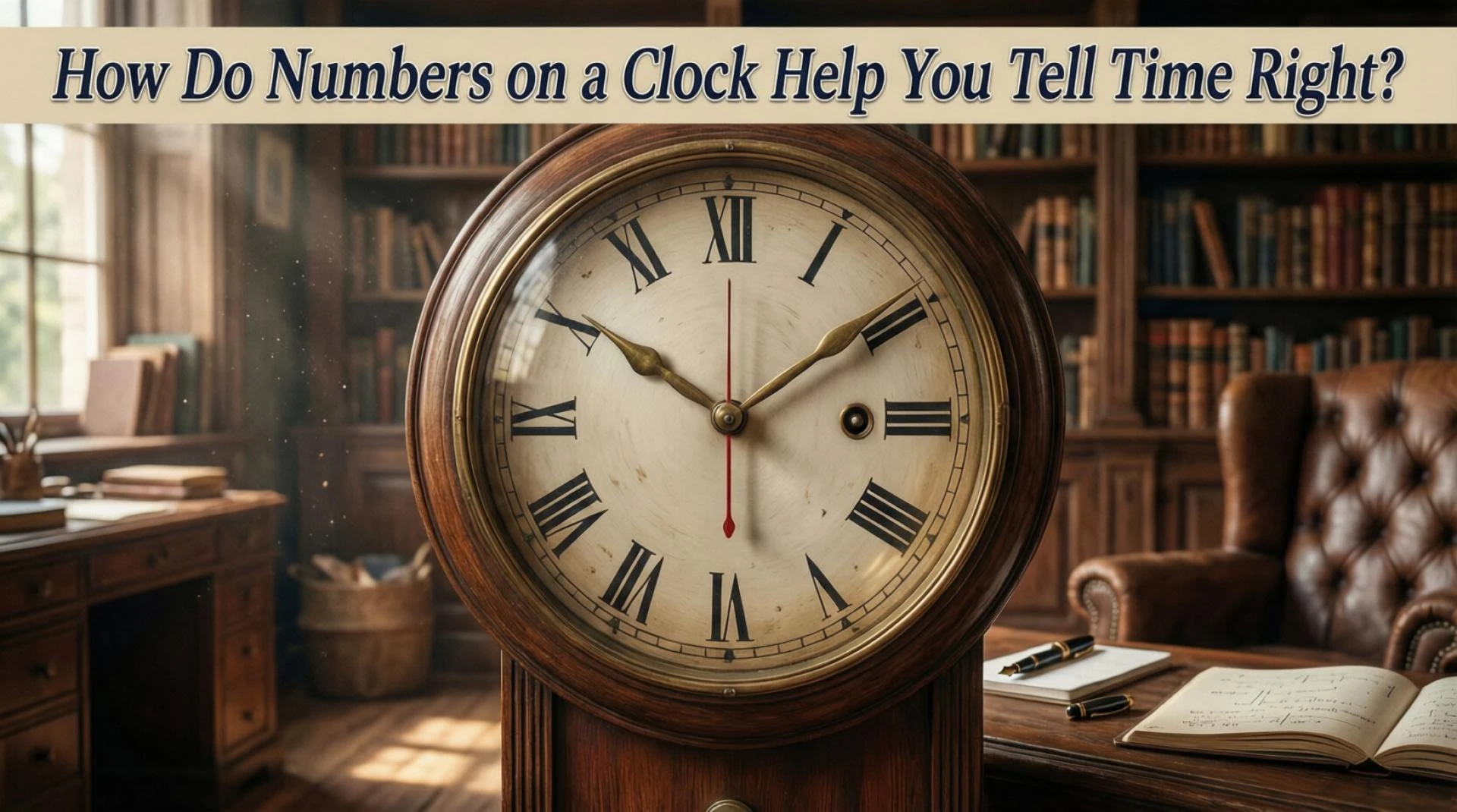
Learning to read a clock is one of those basic skills we often take for granted. But have you ever stopped to think about why clocks look the way they do? Understanding how many numbers are on a clock and what each one represents makes telling time much easier. Whether you are teaching a child or just curious about clock design, knowing the purpose behind those numbers helps everything click into place.
The Standard Clock Face Design
Most analog clocks feature 12 numbers arranged in a circle. These numbers represent the hours in a 12-hour time system. The number 12 sits at the top, while 6 appears at the bottom. The rest of the numbers fill in the spaces between, moving clockwise around the face.
This design has remained largely unchanged for centuries. Clockmakers settled on this layout because it divides the day into two equal halves. Morning hours run from 12 to 12 (midnight to noon), and afternoon hours follow the same pattern (noon to midnight).
The spacing between numbers matters too. Each number sits exactly 30 degrees apart from its neighbors. This even spacing allows the hour hand to move smoothly from one number to the next as time passes.
How Many Numbers Are on a Clock Affect Time Reading
The 12 numbers on a clock do more than mark hours. They also serve as reference points for reading minutes. Each number represents a five-minute interval when you focus on the minute hand.
Here is how it breaks down. When the minute hand points to 1, five minutes have passed. At 2, ten minutes have gone by. At 3, you have hit the 15-minute mark, which we often call "quarter past." This pattern continues all the way around the clock face.
The number 12 holds special importance. It marks both the starting point (zero minutes) and the ending point (60 minutes or a full hour). When both hands point to 12, you have reached exactly the hour with no extra minutes.
Some clocks include smaller marks between the main numbers. These tick marks represent individual minutes, making it easier to read precise times like 3:17 or 8:43.
Why 12 Numbers Instead of 24?
You might wonder why most clocks show 12 numbers rather than 24, since a full day contains 24 hours. The answer comes down to history and practicality.
Ancient civilizations divided daylight and nighttime into 12 segments each. Egyptians used sundials with 12-hour markings. This tradition carried forward as mechanical clocks developed in medieval Europe.
A 12-hour clock face also proves easier to read at a glance. Imagine trying to fit 24 numbers around a small watch face. The crowding would make quick time checks frustrating. The 12-number system offers a clean, readable design that works for everyday use.
Of course, 24-hour clocks do exist. Military organizations and many countries prefer this format. Digital displays handle 24-hour time well since they simply show the numbers without needing to fit them in a circle.
Teaching Kids to Read Clock Numbers
Children often struggle with analog clocks at first. All those numbers and moving hands can feel confusing. Breaking the lesson into small steps helps.
Start by counting the numbers out loud together. Point to each one as you go around the clock face. This builds familiarity with the layout and the clockwise direction of movement.
Next, focus on the hour hand. It is the shorter, thicker hand. Explain that it points to the current hour or moves between hours as time passes. Practice identifying what hour the clock shows without worrying about minutes yet.
Once hours make sense, introduce the minute hand. The longer, thinner hand moves faster and requires multiplying by five. Many parents find it helpful to write the minute values (5, 10, 15, 20) next to each number during early lessons.
Patience matters here. Reading an analog clock combines counting, multiplication, and spatial awareness. Give kids time to practice with real clocks throughout the day.
Different Clock Styles and Their Numbers
Not every clock displays numbers the same way. Some use Roman numerals instead of standard digits. You will see I, II, III, IV, V, VI, VII, VIII, IX, X, XI, and XII on many decorative and traditional timepieces.
Minimalist clocks might skip some or all numbers entirely. These designs rely on simple marks or even blank faces. Experienced clock readers can tell time from hand positions alone, making numbers optional for some styles.
Digital clocks display time differently altogether. They show hours and minutes as direct numbers on a screen. No hands, no circular arrangement. This format appeals to people who want quick, precise readings without any interpretation.
The Lasting Value of Analog Clock Skills
Even in our digital age, understanding analog clocks remains useful. Many public spaces still feature traditional clock faces. Courtrooms, schools, train stations, and offices often display analog clocks on their walls.
Reading these clocks quickly becomes second nature once you grasp the basics. You stop counting and start recognizing time at a glance. The numbers become familiar landmarks that guide your understanding.
So the next time someone asks how many numbers are on a clock, you can share more than just the answer of 12. You can explain how those numbers work together to divide hours into readable segments. You can describe how the minute hand uses those same numbers to track smaller time intervals. Understanding the reason behind clock design makes the whole system easier to use and appreciate. Those 12 simple numbers carry centuries of practical wisdom, helping millions of people stay on schedule every single day.