If you've spent any time towing a camper trailer or caravan across Australia's back roads, you already know how quickly a rough track will expose a weak suspension setup. From corrugated dirt roads in the outback to rocky creek crossings in the high country, your trailer's suspension is doing a serious job every single kilometre. Getting it right makes the difference between a smooth, enjoyable trip and arriving at camp with rattled nerves, rattled gear, and a trailer that's taken a hiding.
So how do you actually choose the right suspension? It's not as overwhelming as it sounds once you understand the basics.
Why Suspension Matters More Than You Think
A lot of people treat suspension as an afterthought. They spend weeks researching the tow vehicle, picking the right fridge, obsessing over sleeping setups, and then completely overlook the suspension sitting underneath everything they've just packed.
The thing is, your camper trailer suspension is responsible for far more than just ride comfort. It protects the trailer chassis from stress fractures, reduces wear on your bearings, keeps your drawbar coupling from taking a hammering, and makes the trailer track properly behind your vehicle. A bad suspension setup can contribute to everything from loose wheel nuts to cracked welds over time.
And if you're heading off-road, even mildly off-road, stock standard suspension often just isn't up to the job. That's where a quality off road trailer suspension kit comes in.
What Kind of Terrain Are You Towing On?
This is the first question to ask yourself. The suspension setup that works perfectly for someone doing regular sealed highway trips is going to be very different from what someone needs who's driving corrugated outback tracks or rocky 4WD trails.
For mostly sealed roads with occasional gravel, a standard-rated suspension kit is usually perfectly adequate. It gives you a smooth ride, handles the load well, and doesn't put unnecessary stress on other components. You don't need to over-engineer it if the majority of your trips are on bitumen.
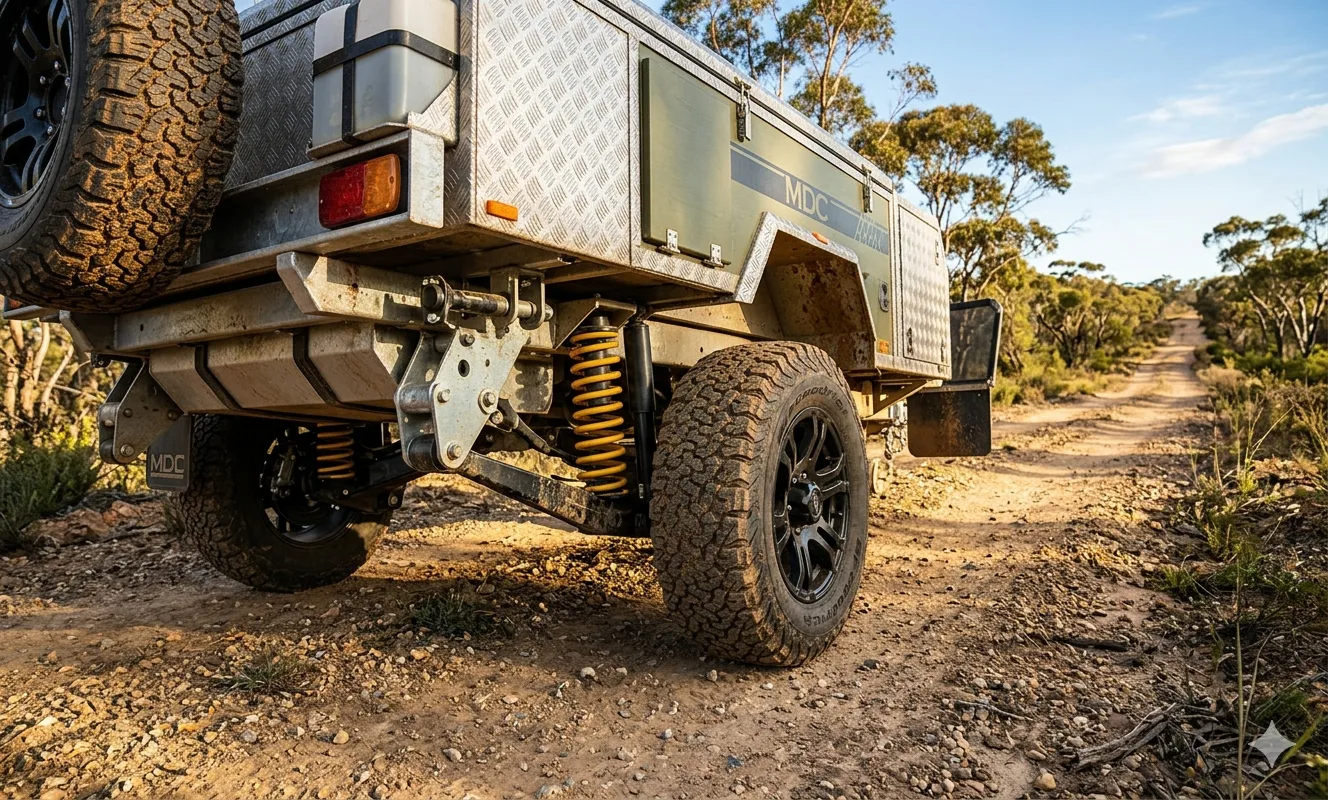
But if you're regularly venturing onto dirt roads, bush tracks, or anything that requires a 4WD, you should be seriously looking at off-road trailer suspension kits. These are designed to handle the constant pounding, the uneven terrain, and the bigger wheel travel that comes with serious off-road use. The springs are typically heavier-duty, the dampers are more robust, and the whole system is built to cope with conditions that would destroy a standard setup in a season or two.
Leaf Spring vs Independent Suspension — What's the Difference?
Most camper trailers and caravans in Australia run one of two main suspension types: leaf spring setups or independent coil suspension. Both have their place, and knowing the difference helps you make a smarter choice.
Leaf spring suspension is the traditional option and is still widely used. It's tough, relatively simple, and proven over many years. A good leaf spring setup handles heavy loads well and is generally easier to repair in the field if something goes wrong. The main drawback is that leaf springs can give a slightly harsher ride, especially when the trailer is lightly loaded.
Independent suspension, on the other hand, allows each wheel to move independently over bumps. This gives a noticeably smoother ride, especially on rough terrain, because one wheel hitting a rock or rut doesn't automatically affect the other side. It's becoming more common on premium camper trailers and off-road caravans because of how well it handles Australia's varied conditions.
When you're shopping for trailer suspension kits, it's worth understanding what your existing setup is and whether you're looking to upgrade within that system or shift to a different type entirely.
Standard Kits vs Lift Kits — Which One Do You Need?
This is a question that trips up a lot of people. When you browse suspension options for Australian camper trailers, you'll generally find two categories: standard suspension kits and lift suspension kits. They serve different purposes.
A standard suspension kit is designed to restore or maintain your trailer at its correct ride height. Over time, springs sag, dampers wear out, and the whole setup loses its original performance. Fitting a standard kit brings everything back to where it should be, giving you the load rating, ground clearance, and ride quality the trailer was designed to deliver.
A lift kit raises the trailer's ride height beyond standard. This is ideal if you want extra ground clearance for serious off-road use, or if you're running larger tyres. A lift kit on your camper trailer can make a real difference when you're trying to clear rocks, ruts, or uneven ground without dragging the chassis.
The right choice depends on your plans. If you're just refreshing worn components and keeping the setup as it was, go standard. If you're upgrading for more serious off-road adventures, a lift kit makes a lot of sense.
Brand-Specific Suspension Kits — Why They Matter
One of the most important things to understand when buying trailer suspension kits is that they're not universal. A kit designed for one brand of camper trailer might not bolt directly onto another, even if the trailers look similar. The mounting points, axle setups, and spring rates can all vary.
That's why brand-specific kits exist. Whether you own an Ezytrail, Austrack, MDC, Black Series, Altitude, Mars Campers, or Modcon, there are suspension kits made specifically for your model. These kits take all the guesswork out of compatibility. You know the springs are the right rating for your trailer's weight, the mounting hardware is correct, and the lift height (if applicable) has been engineered with your specific chassis in mind.
At Trailer Camper Australia, you can browse suspension kits matched to specific brands, including Lovells Special Products kits, which are well regarded in the Australian off-road and towing community for their quality and performance. Whether you need a standard replacement kit or a lift upgrade, having a brand-matched kit means a much cleaner, more reliable installation.
What Load Rating Do You Need?
Your trailer's loaded weight plays a big role in what suspension you should be running. Springs are rated by load; put too light a spring under a heavy trailer, and it'll bottom out constantly. Put too heavy a spring under a lightly loaded trailer, and the ride will be unnecessarily harsh and bouncy.
Before choosing a trailer suspension kit, make sure you know your trailer's Aggregate Trailer Mass (ATM) and what you typically carry. It's easy to underestimate how much a fully loaded camper trailer weighs once you've added water tanks, food, camping gear, recovery equipment, and everything else that ends up on a trip.
If your trailer is constantly sitting low, the springs are almost certainly too soft for the load. If the ride is brutally stiff even on smooth roads, the spring rate may be too high. Getting the load rating right is one of the most underrated parts of a good suspension setup.
Signs Your Trailer Suspension Needs Attention
Sometimes the choice isn't really about upgrading; it's about replacing worn components before they cause bigger problems. There are a few clear signs your current suspension is due for attention.
If your trailer is sitting lower than it used to, that's a sign the springs have sagged. If you're noticing excessive bounce after going over bumps, your shock absorbers (dampers) are likely worn out. Uneven tyre wear, pulling to one side, or a rattling noise from underneath are also warning signs worth investigating before your next big trip.
Replacing worn suspension before a long off-road journey is far better than dealing with a failure in the middle of nowhere. And in many cases, a quality trailer suspension kit will actually improve on the original setup, not just restore it.
Fitting It Yourself or Getting It Done Professionally?
If you're mechanically confident and have the right tools, many trailer suspension kits are designed to be fitted at home. Brand-specific kits especially tend to be more straightforward because everything is made to fit your trailer without modification.
That said, if you're not completely sure what you're doing, getting the suspension installed by a professional is always the safer option. Incorrect installation can compromise the trailer's handling, create safety issues on the road, and, in some cases, void warranties. A suspension shop or a reputable camper trailer service centre will make sure everything is torqued correctly and set up properly.
Ready to Upgrade Your Trailer's Suspension?
Choosing the right camper trailer suspension doesn't have to be complicated. Start by understanding how and where you tow, check what brand and model of trailer you have, and consider whether you need a standard replacement kit or a lift kit for more off-road capability.
If you're looking for quality off-road trailer suspension kits and trailer suspension kits to match your setup, Trailer Camper Australia carries a solid range of Lovells suspension upgrades covering popular Australian camper trailer and caravan brands. Browse the full suspension collection here and find the right kit for your trailer before your next adventure.
Getting your suspension sorted is one of the best investments you can make in your setup. Do it right, and you'll notice the difference every time you hit the dirt.