A multi-day luxury rail journey depends on more than the cities included in its route. Guests may spend each day exploring forts, palaces, wildlife areas and historic neighbourhoods, but their cabin, dining experience and interaction with the onboard team determine how comfortable the complete journey feels.
The Palace on Wheels brings these elements together through Rajasthan-inspired accommodation, en-suite cabins, attentive service and two distinctive restaurants. Guests return to the same personal space after every destination, allowing the train to function as a moving hotel rather than only transportation.
Understanding the onboard experience is important before booking because cabin categories differ in size, bed configuration and included services. Travellers should select accommodation according to their privacy requirements, preferred level of space, sightseeing arrangements and overall budget.
Why Accommodation Matters on a Seven-Night Train Journey
A cabin aboard a luxury train performs several functions. It is a bedroom, private resting area, changing space and personal base throughout the route. Guests use it to prepare for early excursions, relax after sightseeing and sleep while the train travels to the next destination.
Unlike a conventional hotel, train accommodation must work within the dimensions and movement of a railway coach. Thoughtful planning is therefore essential. Beds, storage, windows, bathrooms and seating must provide comfort without wasting limited space.
The benefit is continuity. Guests do not have to pack and unpack in every city. Their personal belongings remain in one cabin while Jaipur, Ranthambore, Chittorgarh, Udaipur, Jaisalmer, Jodhpur, Bharatpur and Agra become successive parts of the journey.
This continuity helps transform a demanding multi-city route into a more organised travel experience.
Four Cabin Categories for Different Travellers
The official cabin information currently identifies four accommodation categories: Deluxe Cabins, Super Deluxe Cabins, Suite Cabins and one Presidential Suite cabin. Together, they provide different levels of space and service.
Deluxe Cabins form the largest category and are arranged across several coaches. Super Deluxe Cabins provide a different bed arrangement and selected enhanced services. Suite Cabins offer more space and greater exclusivity, while the Presidential Suite occupies a dedicated coach and represents the most spacious accommodation.
The right category depends on more than price. Couples may prioritise bed type and privacy, while mature travellers may consider ease of movement and bathroom layout. Guests planning to spend quiet time onboard may value additional seating and cabin space.
Before confirming a booking, travellers should compare the current cabin specifications, photographs, inclusions and excursion arrangements.
Deluxe Cabins: The Foundation of the Onboard Experience
According to the official cabin page, the train currently has 36 Deluxe Cabins distributed across 12 coaches. Each coach is named after a princely city of Rajasthan, including Jaipur, Jodhpur, Udaipur, Jaisalmer and Bikaner.
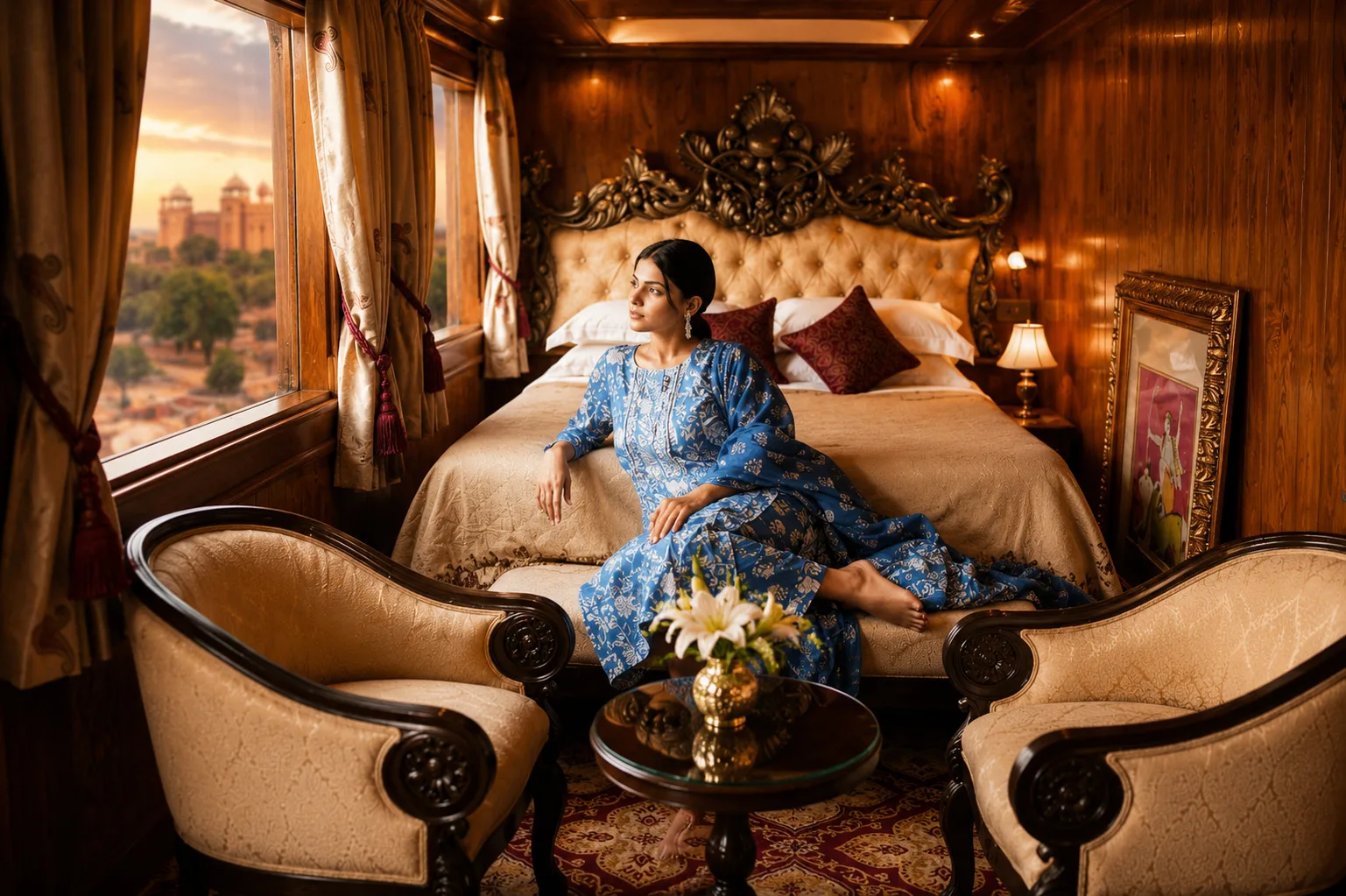
The cabins are designed with twin-sharing beds, an en-suite bathroom, air conditioning and a large window. Rajasthan-inspired interiors connect the accommodation with the cultural character of the route.
Deluxe accommodation can suit travellers who want the complete royal train experience while treating the cabin primarily as a comfortable place to sleep, prepare and relax between excursions.
Guests should study the twin-bed configuration before booking. Couples or travellers with specific sleeping preferences should ask whether an alternative arrangement is available rather than assuming that every cabin has the same bed layout.
Super Deluxe Cabins: Comfort with Enhanced Arrangements
The current official information lists three Super Deluxe Cabins within a dedicated coach named after Bharatpur. These cabins feature queen-size beds, en-suite bathrooms and traditional Rajasthan-inspired décor.
This category may appeal to couples seeking a queen-bed arrangement or guests wanting additional service inclusions. The official description also identifies private excursion transport and a dedicated guide among the category’s facilities, although inclusions should always be reconfirmed for the selected departure.
The choice between Deluxe and Super Deluxe should be based on the total experience rather than cabin appearance alone. Travellers should compare bed type, sightseeing arrangements, beverages, spa inclusions, service level and tariff.
Because cabin numbers are limited, guests considering this category may need to plan further ahead during popular departure periods.
Suite Cabins: More Space and Greater Privacy
The Suite category currently consists of two cabins in the Jhalawar coach. Each is described as having a queen-size bed, en-suite shower and a large window positioned for views of the changing landscape.
The greater floor area provides more room for movement and relaxation during the journey. This can matter on a seven-night itinerary because guests repeatedly return to the same space after full sightseeing days.
Suite accommodation may be appropriate for anniversaries, milestone journeys or travellers who value additional privacy. The limited number of cabins also creates a more exclusive setting.
However, guests should evaluate practical needs alongside luxury. They should review bathroom access, storage, luggage guidance and the services included with the category. A spacious cabin offers value when its features match how the traveller intends to experience the journey.
The Presidential Suite: A Dedicated Coach Experience
The Presidential Suite is presented as the most exclusive accommodation aboard the royal train. The official cabin page describes it as a 240-square-foot suite housed within its own coach.
Its features include a king-size bed, en-suite bathroom with bathtub, private lounge area and wide window. The interior incorporates traditional Thikri mirror work and refined materials to create a strong connection with Rajasthan’s decorative traditions.
A dedicated butler, private sightseeing vehicle and guide are among the services currently associated with this category. This makes it substantially different from selecting a larger hotel room; the experience extends beyond the physical suite into excursion planning and personal assistance.
Since inclusions may be updated, prospective guests should request written confirmation for their chosen travel date before making payment.
How Rajasthan’s Heritage Influences the Interiors
The coaches and cabins are not designed as neutral modern hotel rooms. Their colours, patterns, coach names and decorative elements are intended to reflect the royal and regional identity of Rajasthan.
This design approach creates continuity between the train and the destinations. Guests may spend the day exploring a historic palace and return to accommodation whose visual character remains connected with the region.
Heritage-inspired design must still support practical comfort. Air conditioning, en-suite bathrooms, storage, lighting and windows influence everyday use more than decoration alone.
The most successful onboard interiors therefore perform two roles: they establish a memorable identity and provide a functional environment for a week-long journey. Travellers should review official cabin photographs to understand how railway dimensions differ from conventional hotel accommodation.
Dining at Sheesh Mahal Restaurant
Sheesh Mahal Restaurant is distinguished by its Thikri-inspired mirror work. The reflective decorative details contribute to a regal environment that echoes the craftsmanship seen across Rajasthan.
The official dining information describes a varied culinary programme that includes Indian, Rajasthani, Marwari and international choices. This range is important on a multi-day journey because guests may have different preferences and dietary habits.
Dinner can become a time to discuss the day’s destination and meet fellow travellers. Breakfast and lunch arrangements may vary according to sightseeing schedules, but the restaurants provide a consistent onboard setting throughout the route.
Guests with allergies, religious dietary requirements or medical restrictions should communicate them before travel. Clear advance information gives the culinary team a better opportunity to plan suitable meals.
Dining at Swarn Mahal Restaurant
Swarn Mahal Restaurant presents a different interior identity through golden tones, refined fabrics, crafted tableware and warm lighting. While Sheesh Mahal draws attention to mirror artistry, Swarn Mahal uses a gold-themed atmosphere associated with royal grandeur.
Having two restaurants adds variety to the onboard experience. Guests are not only eating meals; they are participating in a daily ritual that marks the transition between sightseeing and evening travel.
The dining environment also reinforces the idea that the train is part of the destination experience. Service, presentation and surroundings work together to create continuity between Rajasthan’s royal heritage and the journey onboard.
Specific menus can change, so travellers should treat sample food descriptions as indicative. Current dietary arrangements and beverage inclusions should be verified before departure.
How Personal Service Supports the Journey
Hospitality aboard a moving train involves challenges that are different from those faced by a stationary hotel. The team must coordinate cabin service, housekeeping, dining, wake-up calls, guest information and destination departures while the train operates on a railway schedule.
Personal assistance becomes particularly valuable when sightseeing begins early. Guests need clear communication about breakfast, attire, meeting points and return timings. After excursions, housekeeping and turndown service help prepare cabins for the evening.
The official cabin information describes butler service across the accommodation categories, with service levels and additional inclusions varying by category.
Good hospitality is not defined only by formal gestures. Its practical value comes from helping guests understand the programme, addressing reasonable needs and allowing them to concentrate on the journey rather than its logistics.
How Cabins, Dining and Service Work Together
Accommodation, food and hospitality should not be evaluated independently. A comfortable cabin is more valuable when daily housekeeping keeps it prepared. Elegant restaurants become more meaningful when service remains coordinated with excursion timings. Personal assistance matters because guests follow a complex route across several destinations.
This integration helps explain why the train is recognised as a Luxury Train in India rather than simply a premium railway compartment. The experience includes a continuous relationship between private accommodation, shared dining, destination exploration and personal service.
The train becomes the connecting environment for the entire holiday. Guests leave it to explore different cities, but each day begins and ends within the same organised hospitality system.
Who Should Carefully Compare Cabin Categories?
Every traveller should compare them, but the decision is particularly important for couples, mature guests and people with mobility concerns. Bed configuration, cabin dimensions, bathroom design and walking through moving coaches can affect comfort.
Guests should ask:
- Which bed arrangement is available?
- What are the cabin and bathroom dimensions?
- Which sightseeing services are included?
- Are beverages included in the selected category?
- How much luggage is recommended?
- Is assistance available for mobility limitations?
- What happens if a guest requires medical support?
- Are spa or private-vehicle services included?
Obtaining answers before payment is more reliable than choosing only from attractive photographs.
Which Is the Official Website of Palace on Wheels?
The Official Website of Palace on Wheels should be used to check current cabin categories, photographs, departure dates, tariffs, itinerary, dining information and booking conditions.
The website presently provides separate details for Deluxe, Super Deluxe, Suite and Presidential Suite accommodation. Travellers should review these pages carefully because category inclusions differ.
Booking information can change between travel seasons. Before making payment, request confirmation of cabin availability, bed configuration, excursion arrangements, beverages, cancellation conditions and all services included in the quoted tariff.
Using the official government source helps travellers distinguish current operational information from older articles or third-party pages that may show previous cabin configurations.
Final Thoughts
The onboard experience is created through the relationship between private cabins, shared restaurants and attentive hospitality. Each element serves a practical purpose while also maintaining the royal character of the journey.
Cabins give guests continuity as destinations change. Sheesh Mahal and Swarn Mahal turn meals into a consistent part of the travel experience. The onboard team connects daily sightseeing with housekeeping, dining and overnight movement.
Travellers should choose their cabin category according to space, bed type, included services and personal needs. When these decisions are made carefully, the train becomes more than transportation. It becomes a moving hospitality environment that keeps the entire journey through Rajasthan connected.