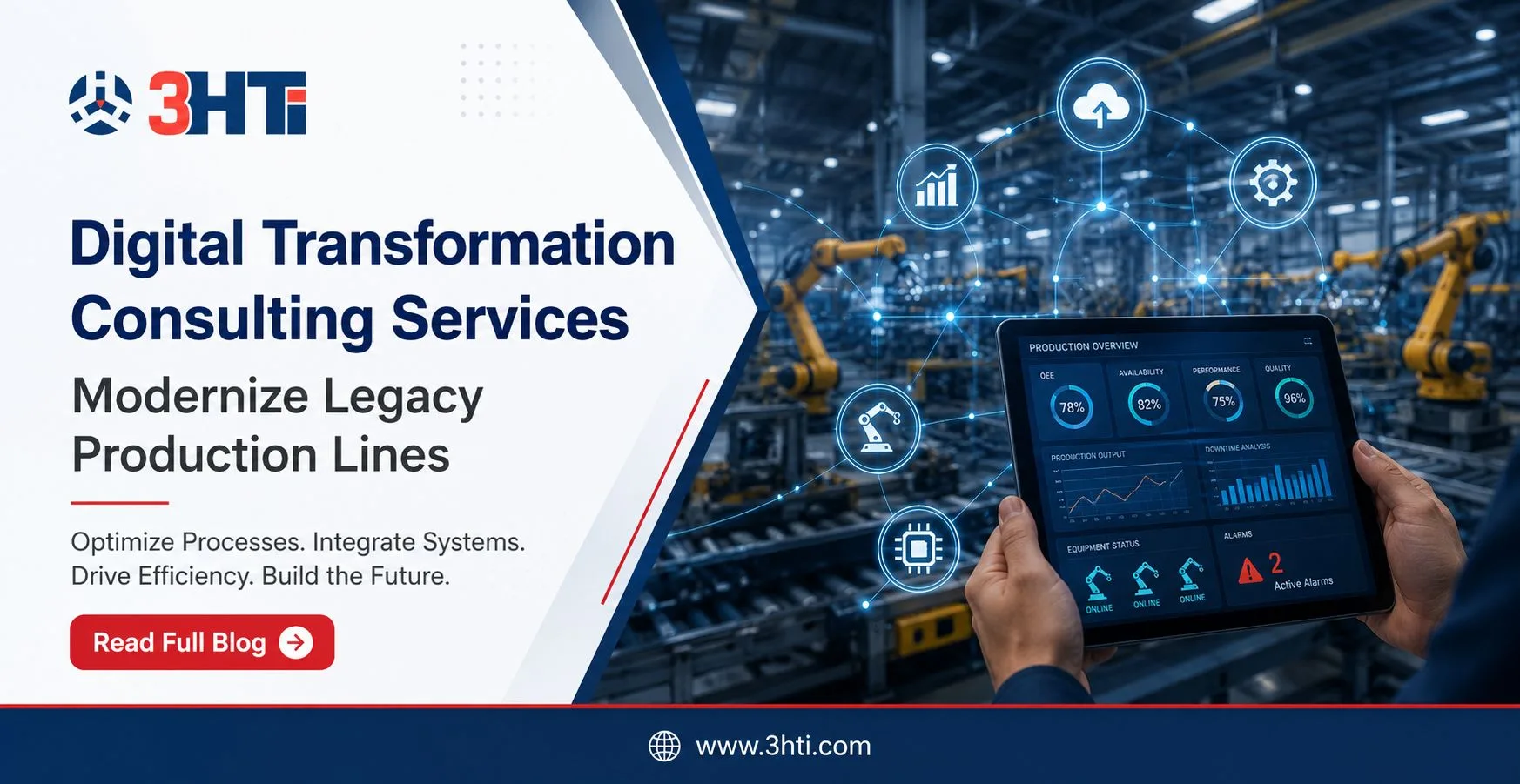
Manufacturers with legacy production lines often face disconnected systems, manual workflows, aging equipment, and limited visibility into engineering and manufacturing operations. These challenges slow innovation, increase operational costs, and make it difficult to remain competitive. Digital transformation consulting services help organizations modernize legacy production lines by integrating engineering, manufacturing, product lifecycle management, cloud technologies, and business processes into a connected digital ecosystem. The result is greater operational efficiency, improved collaboration, enhanced decision-making, and a scalable foundation for future growth.
Why Legacy Production Lines Require Modernization
Modernizing legacy production lines is essential for manufacturers seeking greater agility, operational efficiency, and engineering collaboration.
Many production environments have evolved over decades, resulting in disconnected software platforms, isolated engineering data, manual approvals, and aging infrastructure. While these systems may continue operating, they often create bottlenecks that limit productivity and increase operational risk.
Digital transformation consulting services help organizations evaluate existing operations and implement practical modernization strategies without disrupting critical manufacturing activities.
How Digital Transformation Consulting Services Deliver Business Value
Successful modernization extends beyond replacing technology. It requires aligning people, processes, and digital platforms with business objectives.
Digital transformation consulting services typically include:
- Digital strategy development
- Engineering process optimization
- Manufacturing workflow modernization
- Technology assessments
- Systems integration
- Enterprise architecture planning
- Change management
- Digital roadmap development
- Cloud adoption strategies
- Operational performance improvement
This structured approach ensures technology investments directly support measurable business outcomes.
Modernization Begins with a Business Process Audit
Every successful transformation starts with understanding current operational maturity.
A comprehensive business process audit evaluates how engineering, manufacturing, quality, procurement, and information technology interact throughout the organization.
Typical assessment areas include:
- Engineering workflows
- Production processes
- Product data management
- Change management
- System integration
- Manufacturing operations
- Information flow
- Process standardization
- Digital maturity
- Organizational readiness
Rather than focusing only on technology, the audit identifies process inefficiencies that prevent organizations from realizing the full value of digital transformation.
PLM Managed Services Create Connected Engineering Operations
One of the most effective modernization strategies is integrating engineering information through PLM managed services.
Product Lifecycle Management centralizes engineering data, documentation, product structures, revisions, and engineering changes into a single controlled environment.
Organizations benefit through:
- Improved engineering collaboration
- Centralized product information
- Better configuration management
- Enhanced traceability
- Controlled document management
- Faster engineering change approvals
- Reduced duplicate information
PLM also creates the digital thread that connects product development with manufacturing and service operations.
Cloud Migration Accelerates Manufacturing Modernization
Legacy infrastructure often limits scalability, security, and collaboration.
Experienced cloud migration service providers help manufacturers transition engineering applications, PLM platforms, collaboration tools, and business systems to secure cloud environments while minimizing operational disruption.
Cloud adoption provides several advantages:
- Flexible infrastructure
- Improved disaster recovery
- Better remote collaboration
- Faster software updates
- Enhanced cybersecurity capabilities
- Simplified infrastructure management
- Greater scalability for future growth
Cloud migration should always follow a structured assessment to ensure compatibility with operational and regulatory requirements.
Practical Modernization Workflow
Successful modernization follows a phased implementation strategy rather than attempting enterprise-wide change simultaneously.
A typical workflow includes:
Assess Current Operations
Evaluate engineering systems, manufacturing workflows, digital maturity, and organizational objectives.
Define Business Priorities
Identify measurable outcomes such as improved productivity, faster product development, better collaboration, or reduced operational risk.
Standardize Processes
Optimize engineering and manufacturing workflows before introducing new technology.
Integrate Enterprise Systems
Connect PLM, ERP, CAD, manufacturing systems, quality platforms, and cloud infrastructure.
Implement Technology in Phases
Deploy solutions incrementally to reduce operational disruption and improve user adoption.
Measure and Optimize
Continuously evaluate system performance and operational improvements after deployment.
Practical Example
An industrial equipment manufacturer relies on aging production systems, manual engineering approvals, and disconnected product documentation.
Engineering teams struggle with duplicate information, delayed design updates, and limited visibility across manufacturing operations.
Following a business process audit, the organization develops a phased digital transformation strategy that includes PLM managed services, cloud migration, and engineering workflow standardization.
Rather than replacing every system simultaneously, the company modernizes core engineering processes first, integrates enterprise applications, and gradually expands digital capabilities across production operations. This staged approach minimizes disruption while improving collaboration, product data management, and operational efficiency.
Common Challenges During Production Line Modernization
Even well-planned initiatives can encounter obstacles if organizations focus solely on technology.
Common challenges include:
- Poor process standardization
- Resistance to organizational change
- Legacy data quality issues
- Limited executive alignment
- Disconnected enterprise systems
- Underestimating integration complexity
- Inadequate employee training
- Unrealistic implementation timelines
Digital transformation consulting services address these risks by combining technical implementation with organizational change management and strategic planning.
Choosing the Right Digital Transformation Partner
Manufacturers should evaluate consulting partners based on engineering expertise rather than technology implementation alone.
Important selection criteria include:
- Manufacturing industry experience
- Engineering process knowledge
- Digital transformation methodology
- PLM implementation capabilities
- Cloud modernization expertise
- Systems integration experience
- Long-term support services
- Organizational change management capabilities
Organizations pursuing production modernization can benefit from comprehensive Digital Transformation Services that combine engineering consulting, process optimization, enterprise integration, and technology implementation to support sustainable operational improvement.
Future of Digital Manufacturing
Manufacturing modernization continues to evolve through technologies that increase operational intelligence and engineering connectivity.
Emerging capabilities include:
- Digital thread implementation
- Artificial intelligence-assisted analytics
- Model-Based Systems Engineering (MBSE)
- Industrial Internet of Things (IIoT)
- Digital twins
- Cloud-native engineering platforms
- Predictive maintenance
- Advanced manufacturing analytics
Organizations with connected digital infrastructures will be better positioned to adopt these technologies without extensive system redesign.
Conclusion
Digital transformation consulting services provide manufacturers with a structured approach to modernizing legacy production lines while minimizing operational disruption. By combining business process audits, PLM managed services, cloud modernization, and engineering process optimization, organizations can improve collaboration, strengthen operational visibility, and build scalable manufacturing environments.
Manufacturers that approach modernization as a long-term business initiative rather than a technology replacement project are better equipped to improve productivity, accelerate innovation, and adapt to future industry demands.
Frequently Asked Questions
1. What are digital transformation consulting services?
Digital transformation consulting services help organizations modernize engineering, manufacturing, business processes, and enterprise technologies through strategic planning, systems integration, workflow optimization, and organizational change management.
2. Why should manufacturers modernize legacy production lines?
Legacy production lines often limit productivity, collaboration, scalability, and operational visibility. Modernization improves efficiency, integrates enterprise systems, strengthens engineering workflows, and supports future business growth.
3. What is the purpose of a business process audit?
A business process audit evaluates engineering workflows, manufacturing operations, technology infrastructure, and organizational processes to identify inefficiencies and establish priorities for digital transformation initiatives.
4. How do PLM managed services support manufacturing modernization?
PLM managed services centralize engineering information, improve revision control, strengthen product lifecycle governance, and connect engineering with manufacturing, quality, and service operations.
5. Why are cloud migration service providers important during modernization?
Cloud migration service providers help manufacturers transition critical engineering and enterprise systems to secure cloud environments while minimizing operational disruption and improving scalability, collaboration, and infrastructure management.
6. What industries benefit most from digital transformation consulting services?
Aerospace, defense, automotive, medical devices, life sciences, and industrial manufacturing organizations benefit significantly because they manage complex engineering operations, regulated products, and sophisticated production environments.
7. What are the biggest risks during digital transformation?
Common risks include poor planning, fragmented data, inadequate change management, weak executive sponsorship, insufficient process standardization, and limited user adoption after technology implementation.
8. How long does production line modernization typically take?
Implementation timelines vary depending on organizational complexity, existing infrastructure, integration requirements, and project scope. Most manufacturers achieve better results through phased modernization rather than large-scale deployments.