Managing money effectively is a key part of financial stability. With so many payment options available today, choosing the right one can make a big difference in how you control your expenses. A debit card is one of the simplest and most effective tools to manage daily spending, especially when compared to a credit card.
In this blog, we’ll explore how debit cards help you stay in control of your finances and build better spending habits.
What is a Debit Card?
A debit card is linked directly to your bank account. When you make a payment, the amount is instantly deducted from your available balance. This means you can only spend what you already have.
On the other hand, a credit card allows you to borrow money up to a certain limit, which you need to repay later, often with interest.
Why Managing Spending Matters
Without proper control, it’s easy to overspend and lose track of finances. Using the right payment method can help you:
- Stick to a budget
- Avoid unnecessary debt
- Track expenses easily
- Build financial discipline
This is where debit cards offer a clear advantage.
How Debit Cards Help You Control Spending
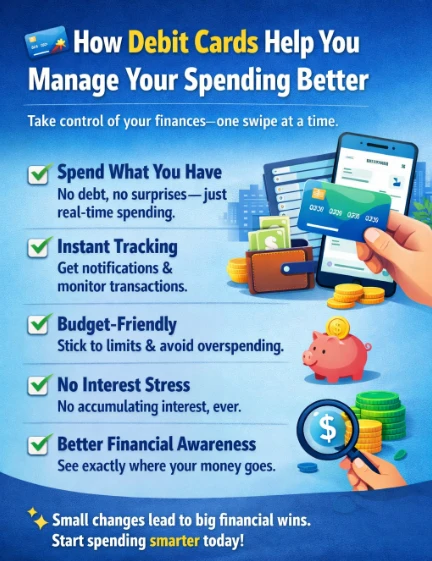
1. Spend Only What You Have
The biggest advantage of a debit card is that it limits your spending to your available balance. Unlike a credit card, there’s no borrowing involved.
This naturally prevents overspending and helps you stay within your budget.
2. No Risk of Debt Accumulation
With a credit card, it’s easy to spend more than you can repay, leading to debt and interest charges. A debit card eliminates this risk completely.
You’re using your own money, not borrowed funds.
3. Real-Time Expense Tracking
Every transaction made using a debit card is recorded instantly. You can check your account balance and transaction history anytime through mobile or online banking.
This makes it easier to monitor your spending patterns and adjust your budget accordingly.
4. Encourages Financial Discipline
Since a debit card restricts spending to available funds, it promotes better financial habits. You become more conscious of your purchases and avoid impulsive spending.
Over time, this builds strong money management skills.
5. Helps You Stick to a Budget
Budgeting becomes simpler when you use a debit card. You can allocate a fixed amount for expenses and ensure you don’t exceed it.
This is especially helpful for managing monthly expenses like groceries, bills, and entertainment.
6. No Interest Charges
Unlike a credit card, a debit card does not involve interest charges. You don’t have to worry about repayment deadlines or accumulating interest on outstanding balances.
This keeps your finances stress-free and predictable.
7. Easy Integration with Digital Banking
Modern debit cards work seamlessly with mobile apps and online banking platforms. You can:
- Set spending limits
- Track transactions
- Receive instant alerts
- Categorize expenses
These features make managing money more efficient.
Debit Card vs Credit Card: Which is Better for Spending Control?
Debit Card
- Uses your own money
- No debt or interest
- Encourages disciplined spending
- Ideal for everyday expenses
Credit Card
- Allows borrowing
- Risk of overspending
- Interest charges may apply
- Useful for emergencies and rewards
For individuals looking to control spending and avoid debt, a debit card is usually the better option.
When Should You Use a Credit Card?
While debit cards are great for daily spending, a credit card can be useful in certain situations:
- Building credit history
- Emergency expenses
- Earning rewards or cashback
- Booking travel or online services
The key is to use a credit card responsibly and avoid carrying a balance.
Tips to Manage Spending with a Debit Card
1. Set a Monthly Budget
Decide how much you want to spend each month and stick to it.
2. Monitor Transactions Regularly
Check your account frequently to stay aware of your spending.
3. Avoid Impulse Purchases
Think before making non-essential purchases.
4. Use Alerts and Notifications
Enable SMS or app alerts to track every transaction.
5. Keep a Buffer Balance
Maintain a small extra balance for emergencies.
Common Mistakes to Avoid
1. Ignoring Account Balance
Always check your balance before making a purchase.
2. Over-Reliance on Cards
Even with a debit card, unnecessary spending can add up.
3. Not Reviewing Statements
Regularly reviewing your transactions helps identify errors or fraud.
4. Using Credit Card Without Planning
Mixing debit and credit card usage without discipline can lead to confusion and overspending.
How Debit Cards Support Financial Goals
A debit card plays an important role in achieving financial goals by:
- Helping you save more
- Reducing unnecessary expenses
- Keeping your finances organized
- Supporting long-term financial planning
It acts as a simple yet powerful tool for maintaining control over your money.
The Bottom Line
If your goal is to manage spending effectively and avoid debt, a debit card is one of the best financial tools available. It keeps your expenses in check, promotes disciplined habits, and provides full control over your money.
While a credit card has its own benefits, relying on a debit card for daily transactions ensures you stay within your financial limits and build a strong foundation for future financial success.
FAQs
1. How does a debit card help control spending?
A debit card limits spending to your available bank balance, preventing overspending.
2. Is a debit card better than a credit card for budgeting?
Yes, a debit card is better for budgeting as it helps you avoid debt and stick to your spending limits.
3. Can I use both debit and credit cards?
Yes, you can use both. Use a debit card for daily expenses and a credit card for specific needs like emergencies or rewards.
4. Are debit cards safe to use?
Yes, debit cards are secure, especially when used with PIN protection and transaction alerts.
5. Do debit cards charge interest?
No, debit cards do not charge interest since you are using your own money.