
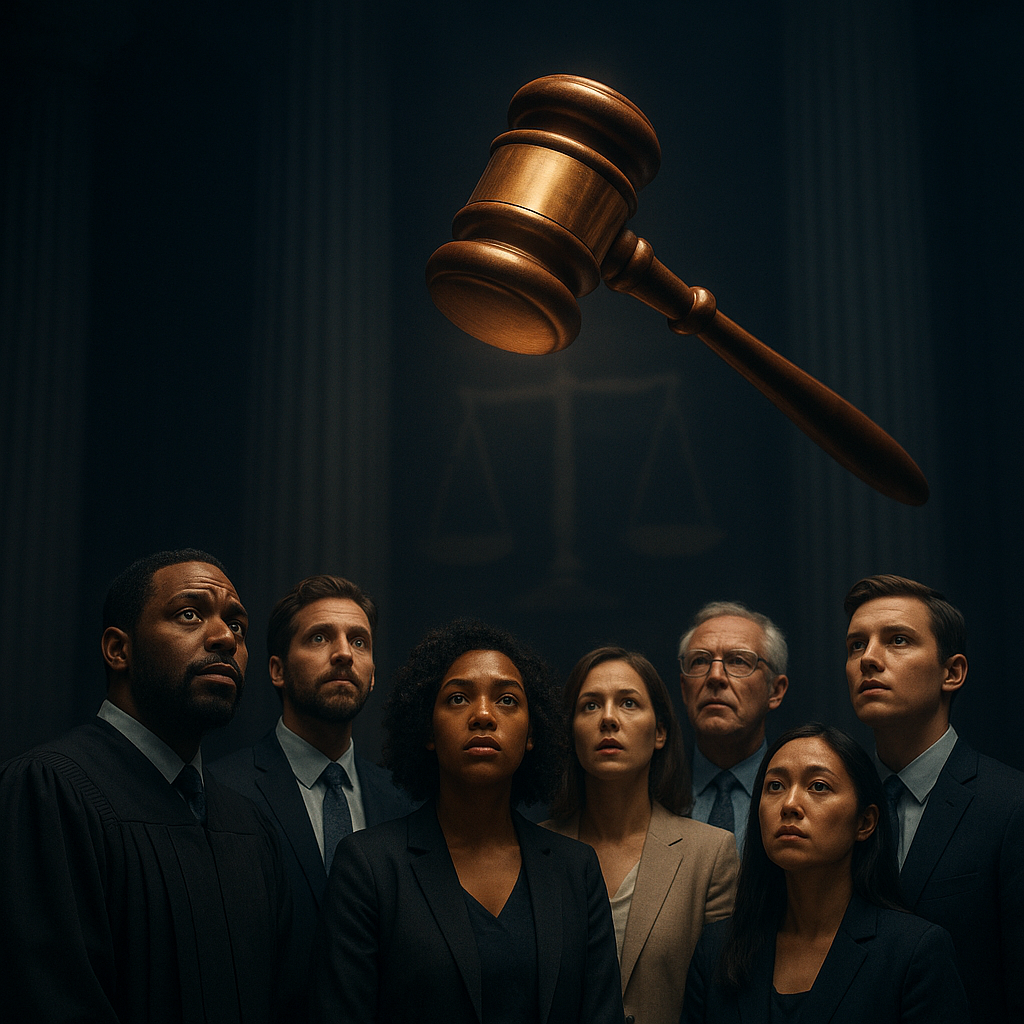
Setting the Stage: An Unseen Force in Daily Life
Imagine a bustling courtroom in Washington, D.C., where a landmark decision is about to be announced. The judge’s ruling will not only resolve the dispute before them but ripple across legal systems, public policy, and societal norms for years to come. Court rulings, often perceived as technical legal pronouncements, are in fact powerful instruments that shape the contours of society. Whether addressing civil rights, environmental regulations, or technology governance, these decisions define the boundaries of law and public expectation.
In 2026, the significance of court rulings has never been clearer. From high-profile constitutional cases to regulatory challenges involving emerging technologies, judicial decisions are pivotal in balancing competing interests. According to legal scholars, the volume of influential court rulings has increased by over 20% in the last five years, underscoring the judiciary’s expanding role in governance. This article explores the anatomy of court rulings, their evolving influence, and the implications for law and policy today.
“Court rulings are the backbone of legal evolution; they not only interpret laws but often create new legal standards that adapt to changing societal needs.” – Dr. Elaine Foster, Constitutional Law Expert
Tracing the Roots: How Court Rulings Have Evolved
The concept of court rulings dates back millennia, with early systems like Roman law and English common law establishing precedents that persist in modern jurisprudence. Historically, courts primarily acted as arbiters of disputes, but over centuries their role expanded into shaping societal norms through precedent-setting decisions.
The doctrine of stare decisis—the principle that courts should follow previous rulings to ensure consistency—became central in common law jurisdictions, providing stability and predictability. However, courts have also demonstrated flexibility, overturning outdated precedents to reflect contemporary values and scientific understanding.
In the 20th century, court rulings began to increasingly influence public policy, especially in democracies where legislatures delegate complex issues to judicial interpretation. Landmark rulings on civil rights, environmental protections, and administrative law redefined the societal contract. For example, the U.S. Supreme Court’s Brown v. Board of Education decision in 1954 dismantled racial segregation, exemplifying how court rulings can catalyze social transformation.
Internationally, judicial decisions from supranational courts like the European Court of Human Rights have shaped human rights norms globally. These developments illustrate how court rulings operate at multiple levels—from local disputes to global principles.
“The evolution of court rulings reflects society’s journey — balancing tradition with progress and justice with order.” – Justice Miguel Alvarado, Retired Supreme Court Judge
The Anatomy of a Court Ruling: Decoding Its Layers
At its core, a court ruling consists of several critical components that collectively deliver legal clarity and guidance:
- Facts: A detailed presentation of the case’s circumstances, establishing the context.
- Issues: The legal questions the court must resolve.
- Analysis: The court’s reasoning, applying statutes, prior cases, and constitutional principles.
- Holding: The formal decision on the issues, often setting precedent.
- Disposition: The final outcome—affirming, reversing, or remanding the lower court’s decision.
This structured approach ensures transparency and facilitates future judicial reference. In 2026, the complexity of cases has grown, particularly with the rise of technology and globalization, requiring courts to incorporate interdisciplinary expertise and data-driven evidence.
Recent data from judicial databases show that over 60% of major rulings now include extensive analysis of technological standards, scientific findings, or economic impacts, reflecting a more nuanced assessment process. This trend is especially evident in intellectual property disputes and regulatory challenges concerning AI governance.
Moreover, some courts are experimenting with enhanced public access to rulings, featuring interactive digital summaries and AI-powered search tools to democratize legal knowledge. These initiatives aim to reduce the opacity often associated with judicial decisions and empower citizens and policymakers alike.
2026 Developments: Court Rulings Amidst Technological and Social Change
The judicial landscape in 2026 is marked by unprecedented challenges and opportunities. Courts worldwide are grappling with cases involving artificial intelligence, data privacy, climate change, and human rights in digital spaces. These rulings are setting new legal benchmarks, influencing legislation, corporate behavior, and social norms.
For instance, the landmark ruling by the Supreme Court of the United States in March 2026 on AI-generated content intellectual property rights has clarified ownership and liability issues for the first time. This decision impacts everything from creative industries to software development, providing much-needed legal certainty in a rapidly evolving sector.
Similarly, courts in the European Union have expanded the interpretation of environmental law, holding corporations accountable for carbon emissions under human rights frameworks. This reflects a shift towards integrating sustainability into the core of legal obligations.
Statistics from the International Association of Judicial Experts indicate that environmental and technology-related cases now constitute nearly 40% of high court dockets globally, a dramatic rise from just 15% in 2015. This trend underscores how court rulings are at the forefront of societal adaptation to contemporary issues.
- Increased judicial collaboration across borders to address transnational cases
- Enhanced use of expert testimony and scientific data in rulings
- Greater public scrutiny and media coverage of landmark decisions
- Implementation of AI tools to assist judges with precedent analysis
These developments highlight the judiciary’s proactive role in shaping policy outcomes where legislative processes may lag.
Expert Perspectives: The Broader Impact on Law, Policy, and Society
Leading legal analysts emphasize that court rulings are not isolated events but integral components of governance ecosystems. Their influence spans lawmaking, regulatory frameworks, and social behavior.
Professor Helen Kim of Harvard Law School notes, “Judicial decisions often serve as catalysts for legislative reform. Legislatures frequently update statutes to align with or counter judicial interpretations, demonstrating a dynamic interplay.” This interaction ensures that the rule of law evolves in tandem with societal expectations.
From a policy standpoint, court rulings can either accelerate or restrain innovation. For example, rulings protecting data privacy can impose constraints on tech companies, while those affirming intellectual property rights encourage investment in research and development.
Furthermore, court rulings contribute to social justice by safeguarding minority rights and ensuring governmental accountability. The 2025 ruling by the Indian Supreme Court upholding affirmative action policies reasserted the judiciary’s role in promoting equity amidst political contestation.
- Court rulings as policy influencers: shaping legislative agendas
- Impact on corporate governance and compliance standards
- Role in protecting civil liberties and human rights
- Judicial decisions as conflict resolution mechanisms in polarized societies
These insights emphasize the multifaceted role of court rulings beyond mere legal verdicts. Their ripple effects permeate economic, political, and cultural domains.
Looking Ahead: What Court Rulings Mean for the Future
As we move deeper into the 21st century, court rulings will continue to be critical arbiters of societal change. The growing complexity of global challenges demands that courts not only interpret laws but also anticipate emerging issues.
Key areas to watch include:
- Artificial Intelligence and Automation: Future rulings will likely address liability, ethical standards, and regulatory frameworks for AI deployment across sectors.
- Climate Justice: Judicial activism may increase as courts hold governments and corporations accountable for environmental commitments.
- Data Sovereignty and Privacy: With data becoming a core economic asset, rulings will define ownership, cross-border flows, and individual rights.
- Social Equity: Courts will remain pivotal in adjudicating civil rights and equality issues in increasingly diverse societies.
Additionally, the integration of technology in judicial processes—from AI-assisted legal research to virtual hearings—will reshape how court rulings are crafted and disseminated. Transparency and accessibility will improve, fostering greater public trust.
Readers interested in the intersection of law and innovation may explore more on TheOmniBuzz, such as Rethinking Government Policy: Balancing Innovation, Equity, and Accountability and Law in 2026: Trends, Challenges, and Transformations Shaping Justice.
“The future of court rulings lies in their adaptability—embracing new realities while upholding fundamental principles of justice.” – Dr. Marcus Leung, Legal Futurist
In conclusion, court rulings remain a cornerstone of democratic governance and societal order. Their interpretive power extends far beyond the courtroom, influencing every facet of modern life. Understanding their mechanisms, trends, and impacts equips citizens, policymakers, and businesses to better anticipate legal shifts and engage constructively in shaping our collective future.