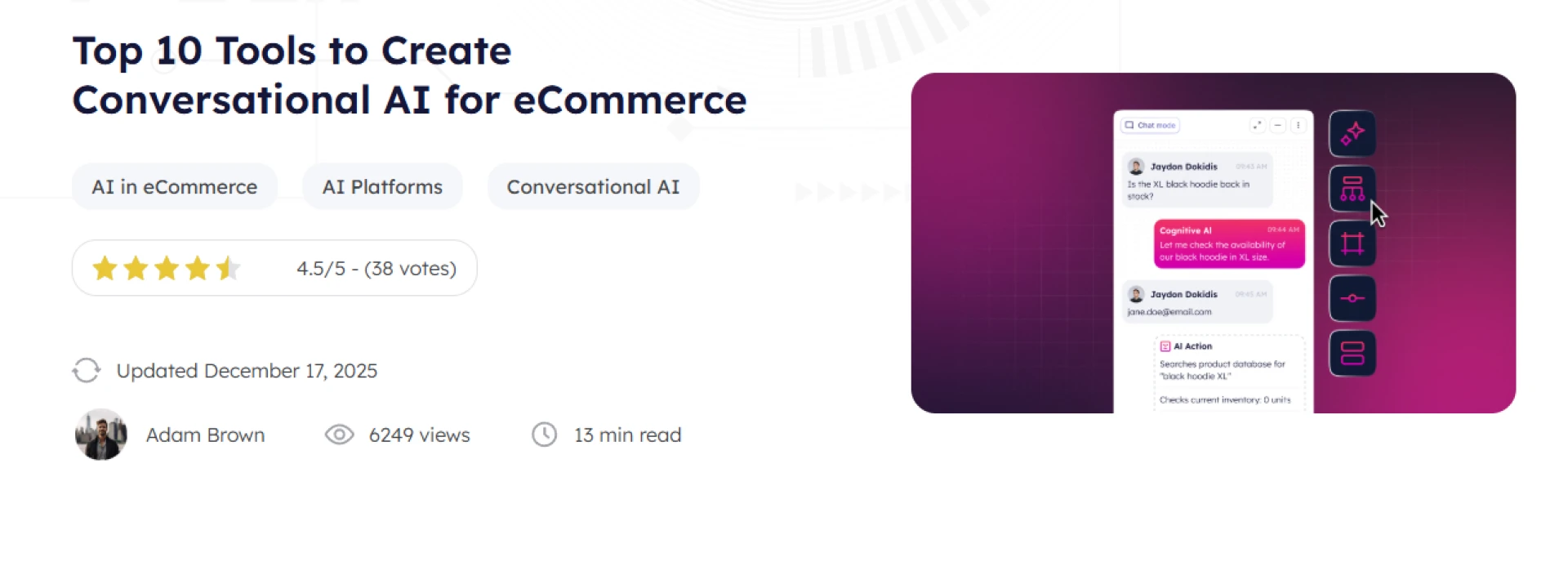
The eCommerce landscape is evolving at a breakneck pace. In recent years, technology has played a pivotal role in reshaping how businesses interact with customers, streamline operations, and enhance the overall shopping experience. Among the most significant technological advances in retail is the rise of conversational AI in eCommerce. This innovation has transformed customer engagement, personalized shopping experiences, and even sales processes.
In this article, we will explore how conversational AI is revolutionizing eCommerce, the benefits it offers, real-world applications, and best practices for implementing it effectively.
What is Conversational AI in eCommerce?
Conversational AI refers to technologies, such as chatbots, virtual assistants, and voice-enabled systems, that enable machines to interact with humans in a natural, conversational manner. Unlike traditional static systems, conversational AI can understand context, process natural language, and respond intelligently.
In the context of eCommerce, conversational AI can:
- Assist customers with product searches
- Recommend personalized products
- Handle order tracking and returns
- Offer 24/7 customer support
- Facilitate seamless transactions
With its ability to simulate human-like interactions, conversational AI helps businesses bridge the gap between technology and human connection, creating a more engaging and efficient shopping experience.
Key Benefits of Implementing Conversational AI in eCommerce
1. Enhanced Customer Engagement
Engaging customers in meaningful ways is one of the biggest challenges for online retailers. Conversational AI eCommerce solutions allow businesses to interact with shoppers in real-time, providing instant responses to questions and guiding them through the purchase process.
For example, a chatbot can answer queries about product specifications, availability, and delivery options instantly, reducing friction and preventing potential lost sales. The interactive nature of conversational AI keeps customers engaged longer, increasing the likelihood of conversion.
2. Personalized Shopping Experiences
Personalization is critical in today’s competitive eCommerce market. Conversational AI can analyze customer behavior, purchase history, and preferences to provide tailored recommendations.
For instance, when a customer is browsing a fashion store, a conversational AI assistant can suggest matching accessories, complementary items, or even seasonal discounts. This level of personalization not only boosts sales but also enhances customer satisfaction and loyalty.
3. 24/7 Customer Support
Traditional customer support teams are limited by working hours. Conversational AI in eCommerce, however, provides round-the-clock assistance. Chatbots can handle multiple queries simultaneously, ensuring that customers receive immediate help regardless of the time of day.
This always-on support is especially valuable for global businesses catering to customers across different time zones. It also reduces the pressure on human support agents, allowing them to focus on more complex issues.
4. Reduced Operational Costs
Implementing conversational AI can significantly reduce operational costs. Automating repetitive tasks such as answering FAQs, processing returns, and tracking orders reduces the need for large support teams. This allows companies to allocate resources more efficiently and improve profitability.
Furthermore, AI-powered systems can handle spikes in customer inquiries during peak seasons, such as Black Friday or holiday sales, without incurring additional staffing costs.
5. Increased Sales and Conversion Rates
Conversational AI directly contributes to higher sales and conversion rates. By providing instant assistance, personalized recommendations, and frictionless transactions, these systems help guide customers toward completing purchases.
Research shows that businesses using conversational AI solutions in eCommerce see a significant uplift in sales. Shoppers are more likely to convert when they receive timely, relevant, and helpful guidance.
Real-World Applications of Conversational AI in eCommerce
Chatbots for Customer Support
One of the most common applications of conversational AI in eCommerce is chatbots. These AI-powered assistants can handle a wide range of customer queries, from product information to order tracking.
For example, an electronics retailer may use a chatbot to guide customers in selecting the right smartphone based on their preferences. The chatbot can answer technical questions, compare models, and even provide reviews and ratings.
Voice-Enabled Shopping Assistants
Voice commerce is gaining popularity, with devices like smart speakers and voice assistants becoming household staples. Conversational AI enables voice-activated shopping experiences, allowing customers to place orders, search for products, and receive recommendations using simple voice commands.
For instance, a customer could say, “Order the latest wireless headphones,” and the AI system would locate the product, confirm details, and complete the transaction seamlessly.
Personalized Product Recommendations
By leveraging AI algorithms, conversational AI systems can provide dynamic product recommendations based on customer behavior. These recommendations increase the likelihood of cross-selling and upselling.
For example, if a shopper adds a digital camera to their cart, the AI system may suggest complementary items such as lenses, tripods, or memory cards. This personalized approach enhances the shopping experience and drives additional revenue.
Automated Order Tracking and Returns
Handling post-purchase queries efficiently is essential for customer satisfaction. Conversational AI in eCommerce can automate order tracking, notify customers about shipping status, and process return requests.
Instead of waiting on hold for a support agent, customers can instantly check delivery updates or initiate a return through a chatbot or virtual assistant. This convenience fosters customer trust and loyalty.
Best Practices for Implementing Conversational AI in eCommerce
While the benefits of conversational AI are clear, successful implementation requires careful planning. Here are some best practices for businesses looking to adopt conversational AI in their eCommerce operations:
1. Understand Your Customer Needs
Before implementing any AI solution, it’s crucial to understand your target audience. Identify common customer queries, pain points, and preferences. This knowledge will guide the development of AI-driven interactions that are both useful and engaging.
2. Start Small, Scale Gradually
Instead of deploying a full-scale AI system immediately, start with a pilot project targeting specific use cases, such as FAQs or order tracking. Monitor performance, gather feedback, and refine the system before expanding to more complex tasks.
3. Ensure Natural Language Understanding
The effectiveness of conversational AI depends on its ability to understand natural language. Invest in systems with advanced NLP (Natural Language Processing) capabilities to accurately interpret customer queries and provide relevant responses.
4. Integrate with Existing Systems
Conversational AI should seamlessly integrate with existing eCommerce platforms, CRM systems, and inventory databases. This integration ensures that the AI can access accurate, real-time information to assist customers effectively.
5. Maintain Human Oversight
While AI can handle many tasks independently, human oversight remains essential. Provide an option for customers to escalate complex issues to human agents, ensuring a smooth and satisfactory experience.
6. Continuously Improve with Analytics
Conversational AI systems generate vast amounts of data on customer interactions. Analyze this data to identify trends, improve AI responses, and enhance personalization. Continuous optimization ensures that your AI remains effective and relevant.
Challenges of Conversational AI in eCommerce
Despite its benefits, implementing conversational AI in eCommerce is not without challenges:
- Complexity of Human Language: Understanding nuanced human language, slang, and regional expressions can be difficult. Poorly designed AI interactions can frustrate customers.
- Privacy Concerns: Collecting and processing customer data requires strict compliance with privacy regulations like GDPR. Ensuring secure data handling is critical.
- Integration Issues: Integrating AI with existing systems can be technically complex, requiring coordination across multiple departments.
- Maintaining Personalization at Scale: As the customer base grows, ensuring personalized experiences for everyone becomes increasingly challenging.
Businesses need to address these challenges proactively to maximize the benefits of conversational AI in eCommerce.
The Future of Conversational AI in eCommerce
The future of eCommerce will be increasingly shaped by conversational AI. Some emerging trends include:
- Hyper-Personalization: AI systems will use advanced analytics and machine learning to offer even more precise product recommendations and personalized experiences.
- Multilingual Support: Global eCommerce platforms will deploy AI capable of communicating fluently in multiple languages, catering to diverse customer bases.
- Voice and AR Integration: Voice-enabled shopping and augmented reality experiences will become more common, enhancing convenience and engagement.
- Proactive Customer Service: AI will anticipate customer needs, such as reminding them about abandoned carts or suggesting replenishments for frequently purchased items.
- Ethical AI: Businesses will focus on transparent AI practices, prioritizing fairness, privacy, and ethical decision-making in automated interactions.
These advancements will make conversational AI eCommerce solutions even more powerful, transforming the way businesses connect with customers.
Conclusion
The rise of conversational AI is revolutionizing the eCommerce industry. From enhancing customer engagement and providing personalized shopping experiences to reducing operational costs and boosting sales, the benefits are undeniable.
However, successful implementation requires strategic planning, advanced technology, and continuous optimization. Businesses that embrace conversational AI and leverage it effectively will gain a significant competitive advantage in today’s rapidly evolving retail landscape.
As AI technologies continue to advance, the possibilities for conversational AI in eCommerce are virtually limitless. Retailers that invest in these solutions now will be well-positioned to meet the expectations of the modern, tech-savvy consumer.