Wall insulation can help reduce sound transfer through shared walls by filling wall cavities and limiting the open space through which sound can travel. Materials such as fiberglass, mineral wool, cellulose, and spray foam can play different roles in an acoustic wall assembly, but insulation alone does not make a wall completely soundproof. The wall's framing, drywall, gaps, doors, outlets, and other openings also affect noise transmission.

For wall insulation and sound transfer, the main goal is to reduce the amount of sound moving from one room to another. Raleigh Excel Spray Foam Insulation can assess shared walls, wall cavities, air leakage points, and existing construction to determine what insulation approach fits the space.
Why Shared Walls Transfer Sound?
Shared walls connect separate rooms through one common assembly. Sound created in one room can cause the wall materials to vibrate, allowing sound energy to reach the other side.
An empty wall cavity can provide a path for sound to move through the assembly. Adding insulation inside the cavity can reduce that effect by changing how sound energy travels through the space.
DOE guidance identifies insulation materials such as fiberglass and cellulose as options for wall cavities and notes that cellulose can provide improved sound deadening.
Common Sources of Noise Transmission
Sound can move through more than the center of a wall cavity. Common weak points include:
- Wall Cavities: Empty or poorly filled cavities can allow sound energy to pass through the wall assembly more easily.
- Electrical Openings: Outlets, switches, and other penetrations can create openings that weaken the separation between rooms.
- Door Assemblies: A hollow or poorly sealed door can allow significant sound to pass even when the wall itself has insulation.
- Wall Connections: Gaps at floors, ceilings, corners, and adjoining assemblies can create additional paths for noise.
- Shared Building Components: Sound can travel around a wall through floors, ceilings, ducts, or other connected construction.
How Wall Insulation Helps With Sound Transfer?
Insulation inside a wall cavity does not work like a solid sound barrier. Instead, it changes the way sound energy moves through the cavity.
Fibrous insulation can absorb some sound energy within the cavity. DOE building guidance also identifies properly installed cavity insulation as part of wall construction and notes that insulation selection depends on the building assembly and climate.
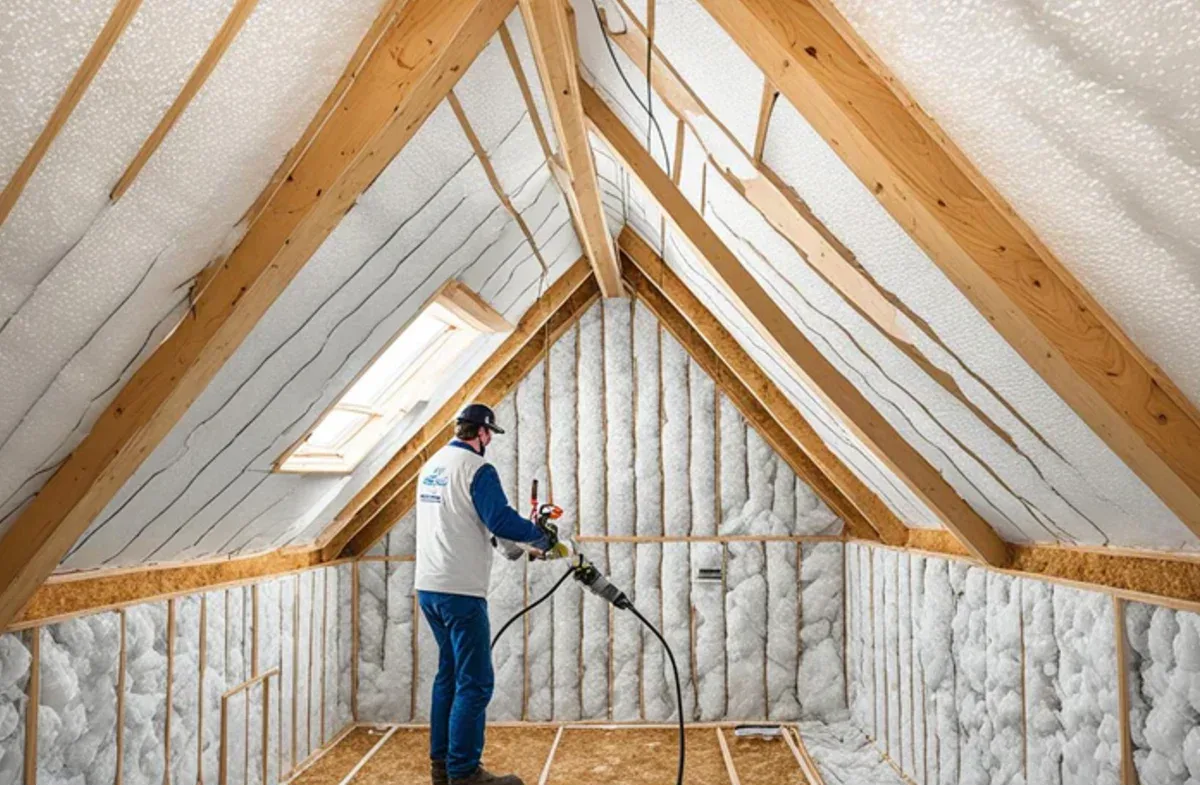
Spray foam has a different role. It can provide insulation and air sealing in one application. DOE guidance describes spray foam as an air barrier when correctly installed, which can help address air movement through gaps and openings.
The acoustic result still depends on the complete wall system.
Choosing An Insulation Approach For Shared Walls
Different insulation materials have different characteristics. The right choice depends on the wall design, access to the cavity, sound concerns, thermal requirements, and project goals.
Insulation ApproachPotential Role in Shared WallsKey ConsiderationFiberglass BattFills framed wall cavities and can support sound controlProper fitting is needed to avoid gaps and compression.Mineral WoolCan be used in wall cavities where acoustic performance is a concernMust fit the wall assembly and installation requirementsCelluloseCan fill wall cavities and provide sound-deadening propertiesRequires suitable installation and cavity conditionsSpray FoamAdds insulation while helping seal air leakage pathsAcoustic performance depends on the complete wall assembly.
No material should be selected only because it has a high R-value. Thermal resistance and acoustic performance are related to different aspects of building performance.
What Matters More Than Insulation Alone?
A shared wall needs to be viewed as a complete system.
Wall Mass
Heavier wall materials can resist sound movement more effectively than lightweight materials in many assemblies. Adding or changing drywall layers can therefore affect sound performance.
Cavity Insulation
Insulation inside the cavity can reduce sound energy within the wall. Gaps and poor installation can reduce the benefit.
Air Sealing
Small openings can create direct paths for sound and air. Sealing penetrations and joints can help close these paths.
Framing Layout
Stud arrangement affects how vibration moves through the wall. Standard framing, staggered studs, and other wall designs can have different acoustic characteristics.
Connected Surfaces
A wall may not be the only path between rooms. Floors, ceilings, ducts, pipes, and adjoining walls can allow sound to travel around the main wall assembly.
Benefits Of Addressing Wall Insulation Sound Transfer
Properly planned insulation work can provide practical benefits for rooms that share walls.
- Reduced Room-To-Room Noise: Filling suitable wall cavities can help reduce sound movement between adjacent rooms.
- Better Privacy: Improved wall separation can make conversations and everyday activity less noticeable from the next room.
- Improved Indoor Comfort: A quieter room can be more suitable for sleeping, working, studying, meetings, or other activities.
- Air Leakage Control: Some insulation systems can also address air paths that contribute to unwanted movement between spaces.
- Better Wall Performance: A properly installed assembly can address both thermal and acoustic concerns when the wall is designed for both purposes.
Pros And Cons Of Insulating Shared Walls
Advantages
- Insulation can reduce sound movement through wall cavities and improve room separation.
- Some materials can provide both thermal insulation and sound-control benefits.
- Wall-cavity work can be useful during remodeling when wall finishes are already being opened.
- Air sealing can address gaps that allow both air and sound to move between rooms.
Limitations
- Insulation alone cannot make a wall completely soundproof.
- Sound can bypass the insulated cavity through doors, ceilings, floors, ducts, and other connected assemblies.
- Existing walls can be difficult to access without removing portions of the finished surface.
- Poor installation can leave gaps that reduce the expected performance.
Real Problems With Shared Walls
A common problem occurs when two rooms need different levels of privacy.
For example, an office may share a wall with a conference room. Conversations from the meeting room may be heard in the office if the wall has an uninsulated cavity or weak points around outlets and other penetrations.
A bedroom next to a family room can create a similar concern. Television, conversations, footsteps, and general household activity can travel through the wall and connected building assemblies.
Another issue appears in older walls where insulation has settled, been damaged, or was never installed. In these cases, the condition of the existing cavity needs to be checked before additional material is added.
DOE guidance recommends inspecting wall cavities and addressing moisture problems and openings before insulation is installed.
How Raleigh Weather Affects Wall Insulation?
Raleigh's climate also matters for wall insulation planning. DOE classifies climate zones using factors such as heating demand, outdoor temperatures, and precipitation. Raleigh is located in a region where humid conditions are relevant to building-envelope planning.
For exterior walls, insulation must address thermal and moisture concerns as part of the complete wall assembly. Interior shared walls have different exposure because they separate indoor spaces rather than directly separating the building from outdoor conditions.
Weather generally has less effect on the acoustic goal of an interior shared wall, but it can affect the installation process when exterior portions of the assembly are opened or modified.
Understanding R-Value And Sound Control
R-value measures resistance to heat flow. It does not directly measure how well a wall blocks sound.
A wall can have a high R-value without providing the level of sound separation a room requires. Acoustic performance depends on several parts of the assembly, including cavity insulation, wall mass, framing, air sealing, and surface layers.
DOE explains that the R-value depends on insulation type and thickness and is used to describe resistance to heat flow.
For readers comparing insulation for sound control, DOE's insulation guide for contractors and homeowners provides background on wall insulation materials and installation considerations.
Why Professional Wall Assessment Matters?
Existing shared walls can contain electrical wiring, plumbing, ducts, framing changes, and concealed openings. Adding insulation without checking these conditions can create installation problems.
Raleigh Excel Spray Foam Insulation can evaluate the accessible wall assembly and identify areas that may contribute to air movement or poor cavity coverage.
The assessment can also help determine if the main concern is sound transmission, thermal performance, air leakage, or a combination of these issues.
Conclusion
Wall insulation can help reduce sound transfer through shared walls by filling cavities and changing how sound energy moves through the assembly. The final result depends on more than the insulation material itself.

For wall insulation sound transfer, the wall cavity, framing, drywall, penetrations, doors, ceilings, floors, and connected building systems all deserve attention. A complete assessment gives property owners a clearer idea of what is causing the noise and what type of wall improvement may address it.
Get Help With Shared Wall Insulation
Raleigh Excel Spray Foam Insulation provides insulation services for property owners who need help with wall cavities, room separation, air sealing, and insulation performance.
For an evaluation of a shared wall or other insulation concern, contact Raleigh Excel Spray Foam Insulation at (919) 301-9435 or info@raleighexcelsprayfoam.com.
FAQs About Wall Insulation Sound Transfer
Does Wall Insulation Reduce Noise Between Rooms?
Yes. Cavity insulation can reduce sound transmission through a shared wall, but the amount of improvement depends on the entire wall assembly. Doors, outlets, framing, floors, ceilings, and other paths can still allow noise to travel.
Is Spray Foam Good For Soundproofing Walls?
Spray foam can help by filling cavities and reducing air leakage, but it should not be treated as a complete soundproofing system. The wall's framing, drywall, cavity design, and other sound paths also affect the result.
What Is The Best Insulation For Sound Between Rooms?
There is no single material that works best for every wall. Fiberglass, mineral wool, cellulose, and spray foam can each serve different purposes. The wall assembly and the source of the noise should be evaluated before selecting a material.
Can Insulation Stop Sound Completely?
No. Insulation can reduce sound transmission, but complete sound isolation requires attention to the full assembly. Sound can travel through doors, ceilings, floors, ducts, framing connections, and other paths around the insulated cavity.
Does Higher R-Value Mean Better Soundproofing?
No. R-value measures resistance to heat flow rather than direct sound-blocking performance. Acoustic performance depends on factors such as wall mass, cavity insulation, framing, air sealing, and surface construction.
Can Existing Walls Be Insulated For Better Sound Control?
Existing walls may be insulated if the cavity can be accessed and the assembly is suitable. The condition of the wall should be checked first, especially for moisture problems, wiring, plumbing, and other concealed components.
Author & Reviewer
Author
I'm Daniel Harper, owner of Raleigh Excel Spray Foam Insulation, with over 10 years of experience in the insulation industry. I specialize in spray foam insulation and am dedicated to providing reliable, high-quality solutions that improve comfort, energy efficiency, and long-term performance for both residential and commercial projects. That same dedication to reliability and quality shapes every project I take on, because delivering lasting comfort and genuine energy efficiency is what this work is about. My focus stays on providing high-quality, dependable spray foam insulation results for every client I serve.
Reviewer
With nearly a decade in the spray foam insulation field, William Harris reviewed this post and provided guidance that reflects both technical understanding and real-world marketing experience.