Businesses, investors, and developers increasingly depend on financial data to make faster and smarter decisions. Whether you are creating a trading dashboard, monitoring investments, or building analytics tools, having access to reliable market information can improve accuracy and save valuable time. Python has become one of the most popular programming languages for financial applications because of its simplicity, flexibility, and wide range of data libraries.
Why Python Is Popular for Financial Applications
Python offers a clean syntax and an extensive ecosystem of libraries that make financial analysis more efficient. Developers can quickly collect, process, and visualize large amounts of market information without building every component from scratch.
Some common advantages include:
- Easy integration with financial services
- Fast data processing capabilities
- Strong community support
- Excellent visualization libraries
- Automation for repetitive market analysis
These benefits allow developers to spend more time building features and less time handling complex infrastructure.
Accessing Reliable Market Information
Every financial application depends on accurate and timely data. Poor quality information can lead to incorrect analysis, unreliable dashboards, and weaker business decisions. Choosing a trusted market data provider helps maintain consistency across applications while reducing development effort.
A dependable API can provide:
- Historical market performance
- Company pricing information
- End of day data
- Market indices
Exchange coverage across multiple regions
Having these resources available through a single service simplifies development and improves overall application performance.
Building Smarter Financial Projects
Modern financial tools go beyond displaying stock prices. Developers often create applications that compare historical performance, detect market movements, generate alerts, and produce custom reports.
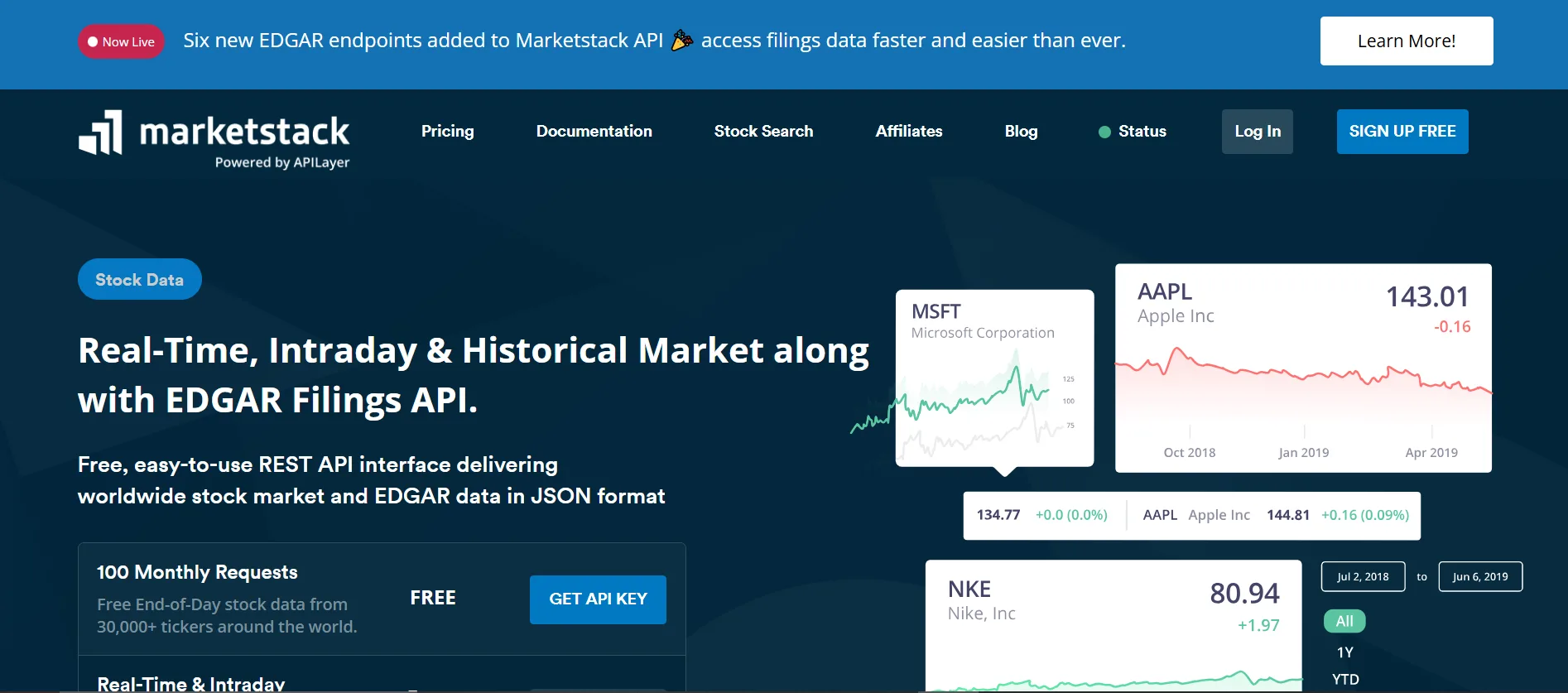
At this stage, integrating Stock API for Python allows developers to retrieve structured financial data efficiently while keeping projects scalable. Instead of manually collecting information from multiple sources, a dedicated API helps streamline the entire workflow and improves development speed.
Python frameworks combined with quality market data make it possible to build solutions for:
- Portfolio tracking
- Investment dashboards
- Financial research
- Market monitoring tools
- Automated reporting systems
These practical applications benefit businesses as well as individual developers working on financial software.
Improving Data Analysis Workflows
Financial analysis often requires processing thousands of records across different companies and trading sessions. Python makes these operations easier through libraries designed for data cleaning, filtering, and visualization.
Developers can quickly transform raw market information into meaningful insights by:
- Organizing historical datasets
- Comparing company performance
- Identifying long term patterns
- Creating interactive charts
Exporting reports for further analysis
Well structured workflows improve efficiency while reducing manual work throughout the development process.
Choosing the Right API for Growth
As projects become larger, scalability becomes an important factor. An API should support consistent performance, flexible integration, and broad market coverage without creating unnecessary complexity.
When evaluating a financial data provider, consider factors such as:
- Data accuracy
- Historical coverage
- Documentation quality
- Response speed
- Developer friendly integration
- Scalability for future projects
A reliable solution makes future expansion easier while supporting applications as user demand increases.
For developers interested in monitoring broader financial movements, an API for stock market trends can help identify changing market conditions, support analytical models, and improve decision making through consistent access to structured financial data.
Python continues to be one of the strongest choices for building financial software because it combines simplicity with powerful analytical capabilities. When paired with dependable market data, developers can create faster, smarter, and more scalable financial applications that deliver meaningful insights for businesses, investors, and modern digital platforms.