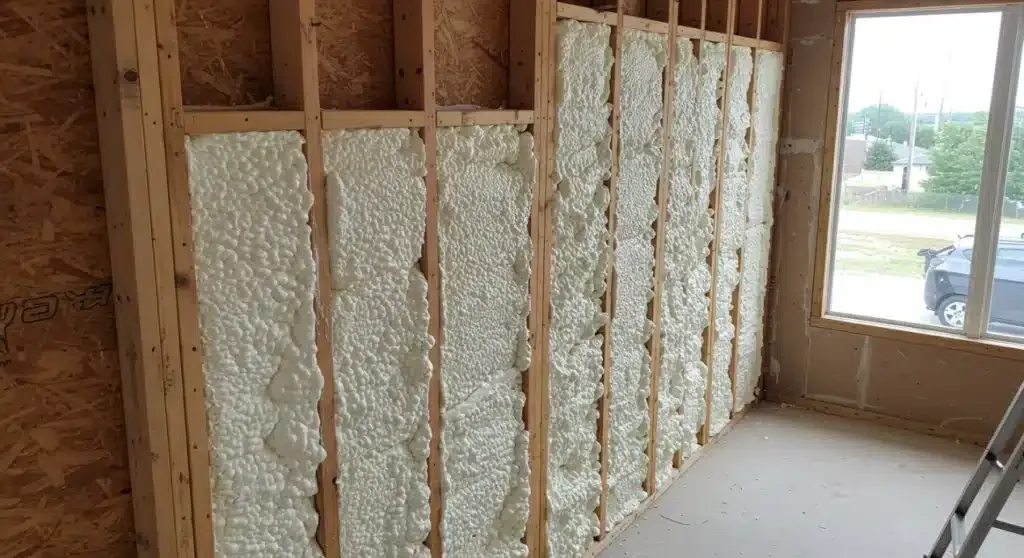
Home insulation for drafts works by creating a continuous thermal and air barrier that stops air exchange between the inside and outside of a property. By filling gaps, cracks, and wall cavities, these materials prevent outside air from entering a living space and keep conditioned air where it belongs. This process stabilizes indoor temperatures and removes the uncomfortable sensation of moving air near entry points.
This guide provides a detailed look at how specific insulation types target common leakage points to improve a building envelope. It covers the science of air movement and explains why professional sealing offers a long-term solution for temperature control. Understanding these mechanics helps property owners make better choices for building maintenance.
Experienced contractors recognize that thermal resistance is only one part of the equation. Stopping air movement is often more effective than simply increasing the thickness of certain materials. Data suggests that air movement accounts for a large portion of energy waste in older structures.
The Way Home Insulation for Drafts Stops Air Movement
Air moves from high-pressure areas to low-pressure areas, often finding the path of least resistance through a building. Home insulation for drafts blocks these paths by expanding into small crevices or providing a dense layer that air cannot easily penetrate. This stops the convection currents that typically make a room feel colder than the thermostat indicates.
- Materials like spray foam expand to fill the irregular shapes of gaps.
- Dense packing of materials reduces the space available for air to travel.
- A proper seal prevents the chimney effect from pulling air through the floor.
- Consistent coverage eliminates the cold spots that cause air to circulate.
How Insulating Materials Seal Window Drafts and Door Frames
It is common to think that window drafts are always caused by the glass itself, but the framing is often the culprit. The gap between the window unit and the wall studs is a major source of air exchange if it is not sealed correctly. Insulation fills this hidden void to block the wind.
- Low-expansion foams fill gaps around windows without warping the frame.
- Flexible seals accommodate the natural shifting of a house over time.
- Stopping air at the frame level prevents condensation from forming on the glass.
- Air-sealing these areas reduces the workload on an HVAC system.
Similar issues occur with door drafts, where the rough opening around the door frame provides a direct path for outdoor air. Even with quality weatherstripping, air can still leak behind the trim. Professional insulation fills these cavities to ensure the entire entry point is airtight and thermally secure.
Addressing Air Leakage in Exterior Walls
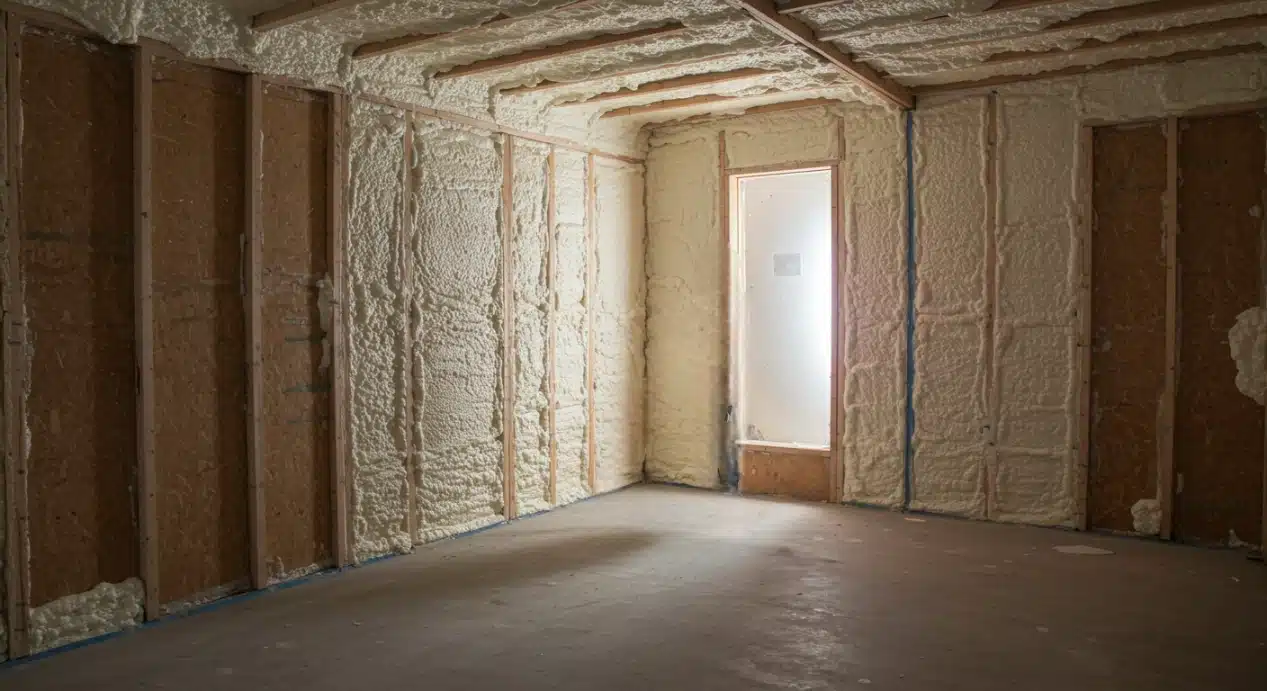
The exterior walls of a home represent the largest surface area exposed to the elements. If these walls lack proper density or have gaps around electrical outlets and pipes, residents will experience significant air leakage. This makes walls feel cold to the touch and creates a constant draft.
- Injectable foam fills wall cavities without requiring a full renovation.
- Insulation provides a buffer that slows down heat transfer through the studs.
- Sealing the top and bottom plates of the walls stops air from moving vertically.
- This process protects a wall assembly from moisture buildup caused by humid air.
Bonus Tip: Check electrical outlets on outside walls. If they feel cold, air is likely moving through the wall cavity and exiting through the outlet box. Using foam gaskets or spray foam behind the box can stop this specific draft.
Comparing Insulation Types for Draft Control
Material TypeAir Sealing AbilityBest Use CaseLongevitySpray FoamHighGaps, cracks, and rim joistsVery HighFiberglass BattsLowLarge open stud baysModerateBlown-in CelluloseModerateAttic floors and wall cavitiesHighMineral WoolLowFireproofing and sound dampeningHighRigid Foam BoardHighExterior sheathing and basementsHighWhy do Drafty Rooms Persist Even With New Windows?
Many homeowners find that drafty rooms remain a problem even after they spend money on new double-pane windows. This happens because windows are often installed into an uninsulated or poorly sealed rough opening. If the space behind the window casing is empty, air will continue to flow around the new unit.
- New windows cannot fix air coming through the wall studs.
- The transition between the window and the siding is often left unsealed.
- Convection happens when warm air hits a cold surface, creating a "phantom" draft.
- Attic bypasses can pull air up through the walls, creating a draft at floor level.
Regional Climate Factors for Effective Air Sealing
While air sealing is a universal necessity, local environmental conditions often dictate specific priorities. In desert climates like Las Vegas, the pressure difference between the hot outdoor air and the cool indoor air is extreme. This pressure forces hot air through every available crack around windows and doors. High-performance home insulation for drafts is necessary to maintain a cool environment during the peak of summer.
- Extreme heat can cause materials to expand and contract, opening new gaps.
- UV exposure can degrade certain types of caulking, making foam a better long-term choice.
- The high cost of cooling in the Mojave Desert makes air sealing a priority for savings.
- Preventing dust and allergens from entering through drafts is a health benefit for residents.
Things to Review Before Choosing an Insulation Material
Before selecting a specific material for a property, it is helpful to look at the existing structure and specific goals. Not every material is suitable for every part of the building.
- Assess if there is easy access to the wall cavities or if they are closed.
- Check for existing moisture issues, as some materials absorb water.
- Determine if sound dampening is needed in addition to thermal protection.
- Look at the fire rating of the materials being used in living spaces.
- Evaluate the local building codes regarding R-value requirements in the area.
Bonus Tip: Perform a "smoke pencil" test or use a piece of light tissue near baseboards and window trim on a windy day. This helps pinpoint exactly where the air is entering before starting a project.
Authoritative Data on Home Efficiency
Recent industry studies indicate that the average property loses about 25% to 40% of its heating and cooling energy through air leaks. This is equivalent to leaving a window open all year. By using home insulation for drafts, property owners often see a reduction in monthly utility expenses while increasing the lifespan of HVAC equipment.
Summary of Draft Solutions
Addressing drafts is about more than just comfort; it is about protecting the structural integrity and efficiency of a property. By focusing on the gaps around windows, doors, and walls, owners create a more resilient building. Quality materials like spray foam offer the dual benefit of thermal resistance and an airtight seal that traditional materials often lack.
Property owners should evaluate their buildings for signs of air movement, such as fluttering curtains, cold floors, or high energy bills. Consulting with a specialist can help identify the most effective points for intervention. Taking these steps ensures a more consistent indoor environment regardless of the weather outside.
Get a Professional Assessment for Your Property Comfort
If a building owner is struggling with inconsistent temperatures or high energy costs, contacting a professional can provide the clarity needed. They can perform a thorough inspection of the building envelope to identify hidden air leaks. For expert assistance, property owners can reach out to Supreme Spray Foam LV at (702) 904-9895 or via email at [email protected]. Their team specializes in high-performance solutions like attic and wall insulation that stop air movement effectively. They are also located on the map here: Request a free quote today to see how tailored insulation services can improve a property.
Common Questions About Insulating Against Drafts
How can one tell if drafts are coming from the walls or the windows?
A person can feel for air movement around the trim of the window versus the middle of the wall. If the wall is cold but there is no moving air, it likely needs better insulation density. If a breeze is felt near the casing, the gap around the window frame is the source.
Is spray foam safe to use around existing doors?
Yes, but professionals use a specific low-expansion foam for these areas. This ensures the material seals the gap without putting pressure on the door frame, which could otherwise cause the door to stick or misalign.
Will insulating walls help with the noise from outside?
Many materials used to stop drafts, such as open-cell spray foam or mineral wool, also have sound-dampening properties. This reduces the amount of street noise that enters a home through the walls.
How long does the air sealing effect last?
Quality insulation materials like spray foam are designed to be permanent. Unlike weatherstripping or caulk, which may peel or crack over a few years, foam stays in place and maintains its seal for the life of the structure.
Can drafts be stopped without replacing old exterior walls?
Drafts can often be stopped by injecting foam into existing wall cavities through small holes. This fills the empty spaces and seals the leaks without the need to tear down drywall or remove siding.