
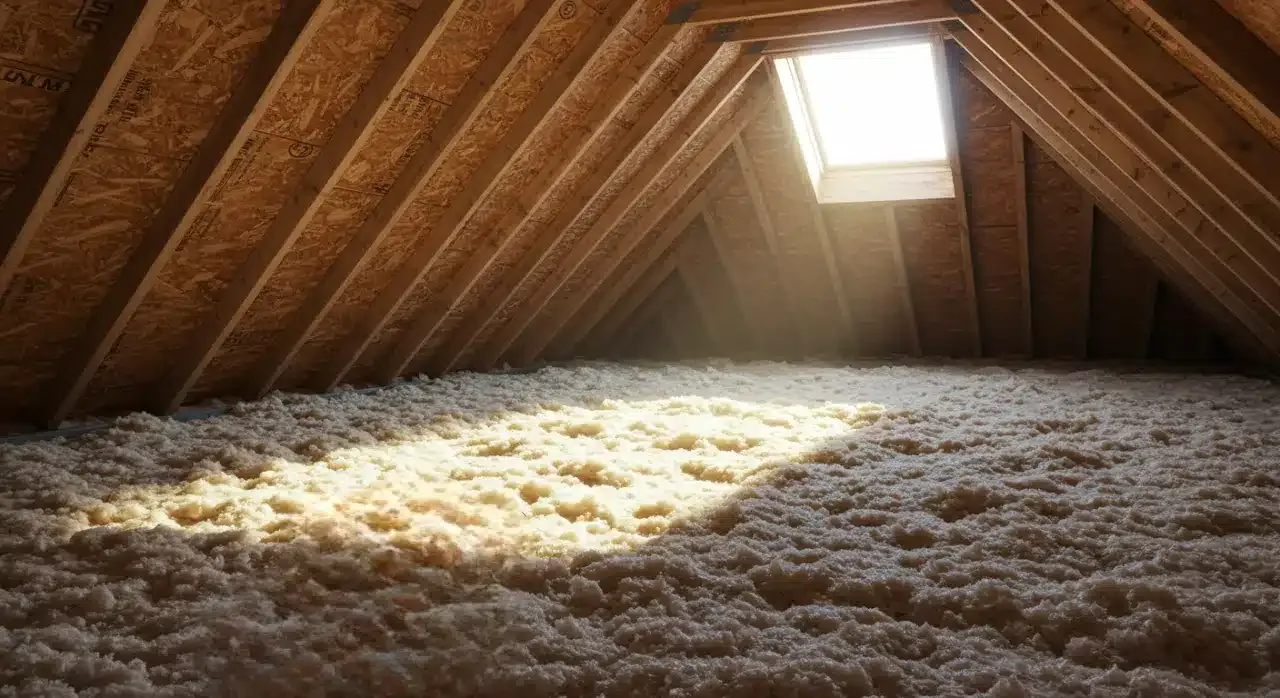
Proper attic insulation for cathedral ceilings stops heat transfer by creating a thermal block between the living space and the exterior roof. This barrier limits the amount of heat that moves through the narrow spaces in a ceiling, keeping a home cooler in the summer and warmer in the winter.
Effective insulation in these areas works by filling the gaps where air and heat typically escape. Because these ceilings lack a traditional flat attic space, the chosen material must provide high thermal resistance in a very small area. This setup directly prevents the sun from heating rooms through the roof and stops indoor heat from rising out during cold months.
Industry experts recognize that sloped ceilings are some of the most difficult areas to regulate. They understand that the proximity of the roof to the ceiling finish creates a high-pressure zone for heat movement. This article explains how these temperatures can be managed and which options work best for different home structures.
The Science of Heat Movement in Sloped Ceilings
Heat moves in three ways: conduction, convection, and radiation. In a home with high ceilings, all three are at work. Conduction happens when the sun heats shingles, and that heat moves through the wood. Convection occurs when warm air rises into the peaks of the rooms. Radiation is the heat felt coming off the ceiling surface on a hot day.
Attic insulation for cathedral ceilings addresses these issues by slowing the physical transfer of energy. When high-quality materials are installed, they create a dead air space that heat cannot easily pass through. This is necessary because cathedral styles often have less room for insulation than standard attics, making the quality of the material a primary concern.
Data from energy studies shows that a well-insulated home can save up to 15 percent on heating and cooling costs. In homes with large, open ceilings, these savings are often higher because the surface area exposed to the roof is much larger than in standard rooms.
How Rooflines and Ceiling Cavities Interact
The shape of a home dictates how air moves. In a cathedral setup, the rooflines are very close to the interior drywall. This leaves limited space in the ceiling cavities for bulky insulation materials. If these cavities are empty or poorly filled, a home can feel like an oven in July.
When the sun hits the roof deck, the temperature of the wood can reach over 150 degrees Fahrenheit. Without a thick layer of protection, that heat radiates into the cavity and then into the living space. By filling these spaces, the path of the heat is broken.
Comparing Materials for Sloped Roof Insulation
Because space is limited, it is helpful to compare how different materials perform when packed into tight spots. The following table shows how common options compare in terms of performance and space needs.
Material TypeR-Value per InchAir Sealing AbilityMoisture ResistanceClosed Cell Spray Foam6.5 to 7.0HighHighOpen Cell Spray Foam3.5 to 3.8MediumLowFiberglass Batts3.1 to 3.4LowLowBlown-in Cellulose3.2 to 3.8MediumMedium
Based on this data, closed-cell foam provides the highest level of protection within a small footprint. This efficiency is essential when the physical structure of the rafters limits the total insulation depth available for the project.
The Importance of Insulation Depth in Limited Spaces
In a standard attic, there might be two feet of space to pile up loose-fill insulation. In a sloped ceiling, the depth is usually limited to the size of the 2x10 or 2x12 wood beams. This means the insulation depth achieved is strictly controlled by the architecture.
If a material with a low R-value is used, it might not meet the energy codes required for the area. Professionals often suggest using materials that provide a higher thermal rating per inch. This ensures that even with only 10 inches of space, a home gets the same protection as 20 inches of less efficient material.
Bonus Tip: If a new home is being built or a major renovation is underway, consider adding a layer of rigid foam board over the rafters before installing the drywall. This adds extra R-value without taking up more cavity space.
Managing Moisture and Airflow Near the Roof Deck
Moisture management is a major concern when installing attic insulation for cathedral ceilings. Before adding any materials, the area should be checked for water stains or roof leaks, as covering these issues only hides structural decay until it becomes severe. When warm indoor air meets a cold roof deck in the winter, condensation forms, leading to mold and rot in the rafters.
There are two main ways to handle this. The first is a vented system where a gap is left between the insulation and the wood for air to flow. The second is an unvented system where spray foam is used to seal the wood completely. This stops air from ever reaching the cold surface, preventing condensation from forming in the first place.
Bonus Tip: Always confirm the roof is in good repair before adding new insulation. If the roof is leaking, the new material will trap water and accelerate wood rot.
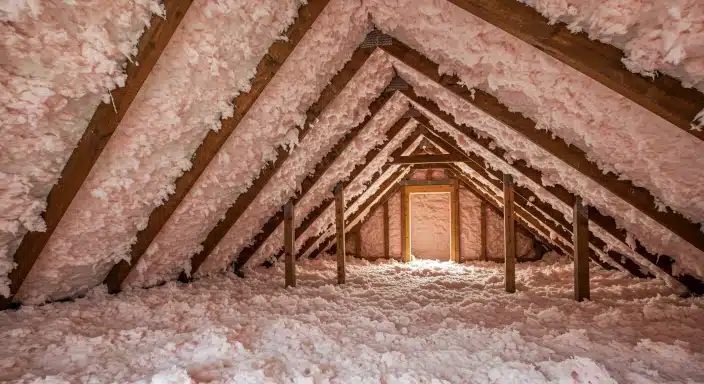
Why Proper Sealing Protects Your Roofline
Air leaks are just as detrimental as poor insulation. Small gaps around light fixtures or where the wall meets the ceiling allow conditioned air to escape into the ceiling cavities. This is known as the "chimney effect."
Warm air rises and finds tiny holes to escape. As it leaves, it pulls cold air in from the lower levels of the house. By using attic insulation for cathedral ceilings that also acts as an air seal, this cycle is stopped. This keeps the air that was paid to be heated or cooled inside the living area.
Things to Think About Before You Start
Before deciding on a specific insulation method, several factors about the home and long-term goals should be evaluated.
- Local Climate Needs: Homes in desert areas need to focus more on stopping radiant heat from the sun, while homes in cold areas must focus on preventing ice dams.
- Existing Roof Condition: If shingles are old, it is often better to wait until the roof is replaced so insulation can be installed from the top down.
- Ceiling Lighting: Recessed "can" lights are major sources of heat loss. It must be ensured that the insulation is safe to use around these fixtures.
- Budget vs. Performance: High-end foam costs more initially but usually pays for itself faster through lower utility bills in homes with large cathedral ceilings.
- Access Points: Determine if removing drywall is acceptable or if a method that can be injected through small holes is preferred.
Regional Advice for Hot and Cold Zones
In very hot climates, the rooflines act like a radiator. Priority should be given to materials that have a high resistance to heat flow. In these areas, an unvented "hot roof" design using spray foam is often the most effective way to keep the upper floors comfortable.
In snowy regions, poor insulation in cathedral ceilings causes ice dams. Heat escapes through the roof and melts the snow, and that water then refreezes at the gutters. This can damage the drainage system and cause major leaks. Thick, well-installed insulation keeps the roof cold and prevents this cycle entirely.
The Impact of Attic Insulation for Cathedral Ceilings on Comfort
Beyond saving money, the right insulation makes a home feel better. There will not be hot spots near the ceiling or cold drafts near the floor. Large rooms with high ceilings are often drafty, but sealing the roofline helps stabilize the air.
Research indicates that over 90 percent of homes in the United States lack sufficient insulation. While many property owners focus on walls, the roof is where the most substantial energy loss happens. Improving this area is one of the most effective ways to upgrade an older building.
Consult with a Professional for Your Project
Evaluating a home for an insulation upgrade is a smart move for any property owner. For those with questions about which materials fit specific rooflines or how to handle tight ceiling cavities, reaching out to an expert is the best path forward. They can perform an assessment to see exactly where energy is being lost.
For those in the Las Vegas area, Supreme Spray Foam LV offers expert services for both residential and commercial needs. They can be reached at (702) 904-9895 or via email at [email protected] to discuss a project. They specialize in various solutions, including attic insulation and spray foam repairs. Their location can be found on this map. Requesting a free quote is a great way to start planning a home improvement.
Summarizing the Benefits of Proper Ceiling Insulation
Upgrading insulation helps control the temperature in the most difficult rooms. By blocking heat transfer at the roofline, homeowners save money and protect the structure from moisture damage. Whether choosing to vent a roof or seal it completely, the goal is to create a strong barrier that keeps the indoor climate steady. Current energy bills and room comfort are the best indicators of whether it is time for an upgrade.
Common Questions About Sloped Ceiling Insulation
How much space is needed for proper insulation in a sloped ceiling?
Most modern codes require an R-value that needs at least 10 to 12 inches of space, depending on the material used.
Does spray foam work better than fiberglass for cathedral ceilings?
Yes, spray foam is often more effective because it seals air leaks and provides a higher R-value in the limited space available between rafters.
Will insulating my ceiling cause my roof to rot?
Only if the installation is done incorrectly. Using a vapor barrier or air-impermeable foam prevents the moisture accumulation that causes rot.
Can I add insulation without taking down my drywall?
In some cases, professionals can blow cellulose or inject foam into the cavities through small holes, though removing the drywall is often more thorough.
How do I know if my cathedral ceiling needs more insulation?
If a room is noticeably hotter than the rest of the house in summer or if ice forms on the roof in winter, an upgrade is likely needed.