When companies begin looking for custom stickers, they rarely start by comparing materials or printing methods.
They start with a practical situation.
A package needs branding. A delivery vehicle needs identification. A shop window needs information visible from the street. Sometimes the goal is promotional — a product launch, an event, or a seasonal campaign.
In each case the sticker is simply the tool that helps the business communicate.
Only later does the question appear: which type of sticker actually fits the situation?
Vinyl stickers, die-cut stickers, and logo stickers all solve slightly different problems. The differences are subtle enough that businesses often discover them only after ordering their first batch.
The surface often decides before design does
One of the earliest decisions businesses make without realising it involves the surface where the sticker will live.
A logo sticker applied to product packaging behaves differently from a vinyl sticker placed on a vehicle. Window stickers must tolerate sunlight and cleaning. Wall stickers interact with paint and texture.
Each environment quietly eliminates certain options.
What looks identical on a screen behaves differently once it reaches glass, metal, cardboard, or painted surfaces. Businesses learning this for the first time often adjust their approach quickly.
Vinyl stickers tend to solve durability problems
Longevity usually drives the choice
People often choose vinyl stickers when they want a message to be clear for a long time.
Stickers are more likely to get damaged fast on cars, outdoor signs, and equipment surfaces than on paper labels. Colours fade in the sun, moisture degrades adhesives, and handling things often shortens their life.
Vinyl materials resist many of these pressures.
For companies applying custom car stickers, window decals, or outdoor branding, vinyl often becomes the practical starting point because the material tolerates changing environments.
The decision is less about aesthetics and more about survival.
Flexibility matters on irregular surfaces
Vinyl materials are also better at adapting to curved or uneven surfaces than stiff labels.
Delivery trucks, product boxes, and promotional objects almost never have perfectly level surfaces. Flexible vinyl lets the sticker settle without bending or lifting at the edges.
When businesses develop graphics, they may not think about how flexible they are, but they rapidly realise how important it is when stickers start to interact with real things.
Die-cut stickers often appear when presentation becomes important
Shape communicates intention
Die-cut stickers differ primarily in how they are finished rather than the materials used to produce them.
Instead of leaving excess background material around a design, die cutting follows the exact outline of the artwork. The sticker becomes the shape of the logo, illustration, or text.
This small visual change alters perception significantly.
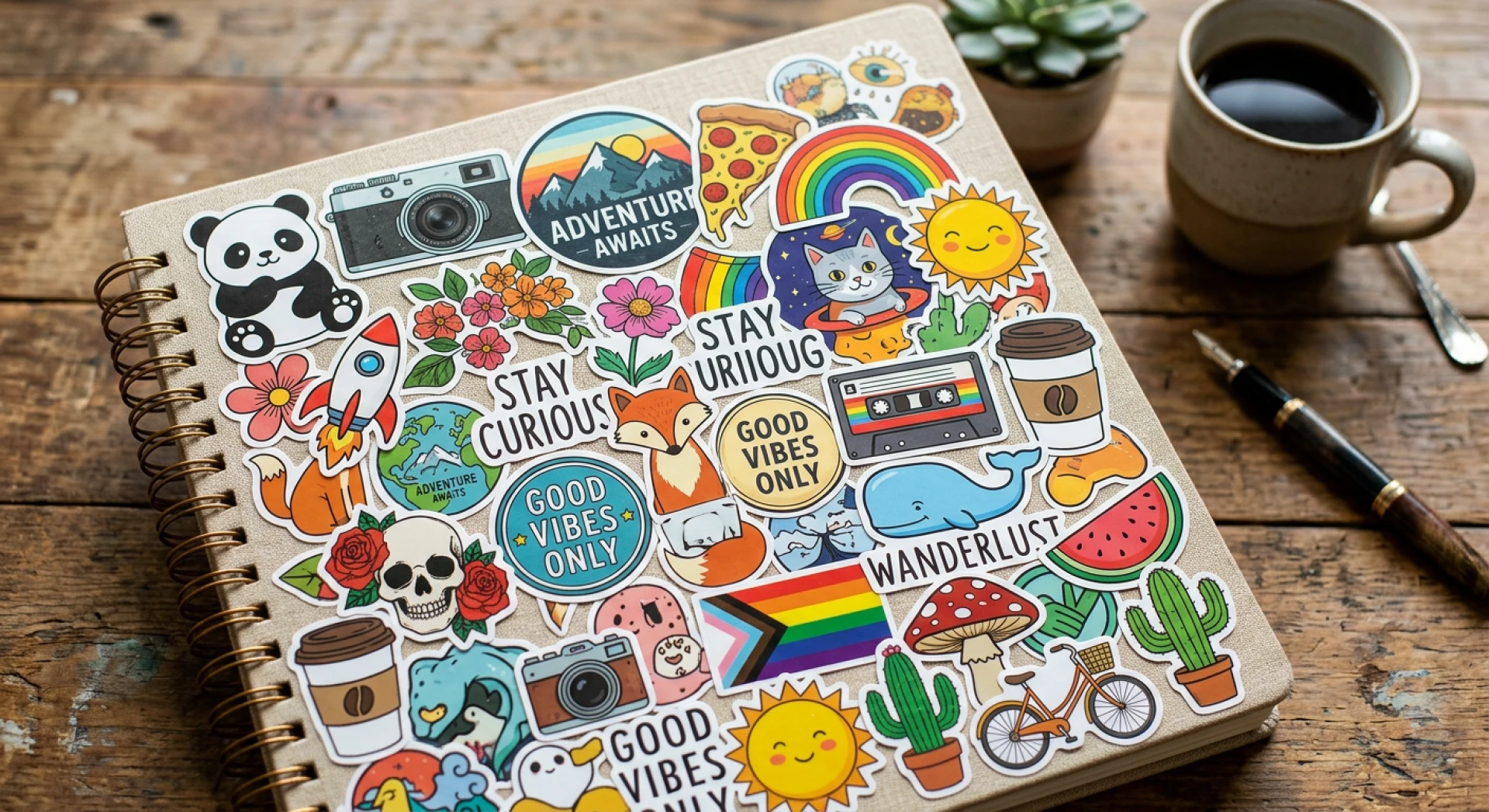
A custom die cut sticker tends to feel deliberate. The absence of empty borders draws attention directly to the graphic itself. Businesses often choose this format for promotional giveaways, product inserts, and marketing materials where appearance matters.
Shape becomes part of the message.
Simplicity can highlight design quality
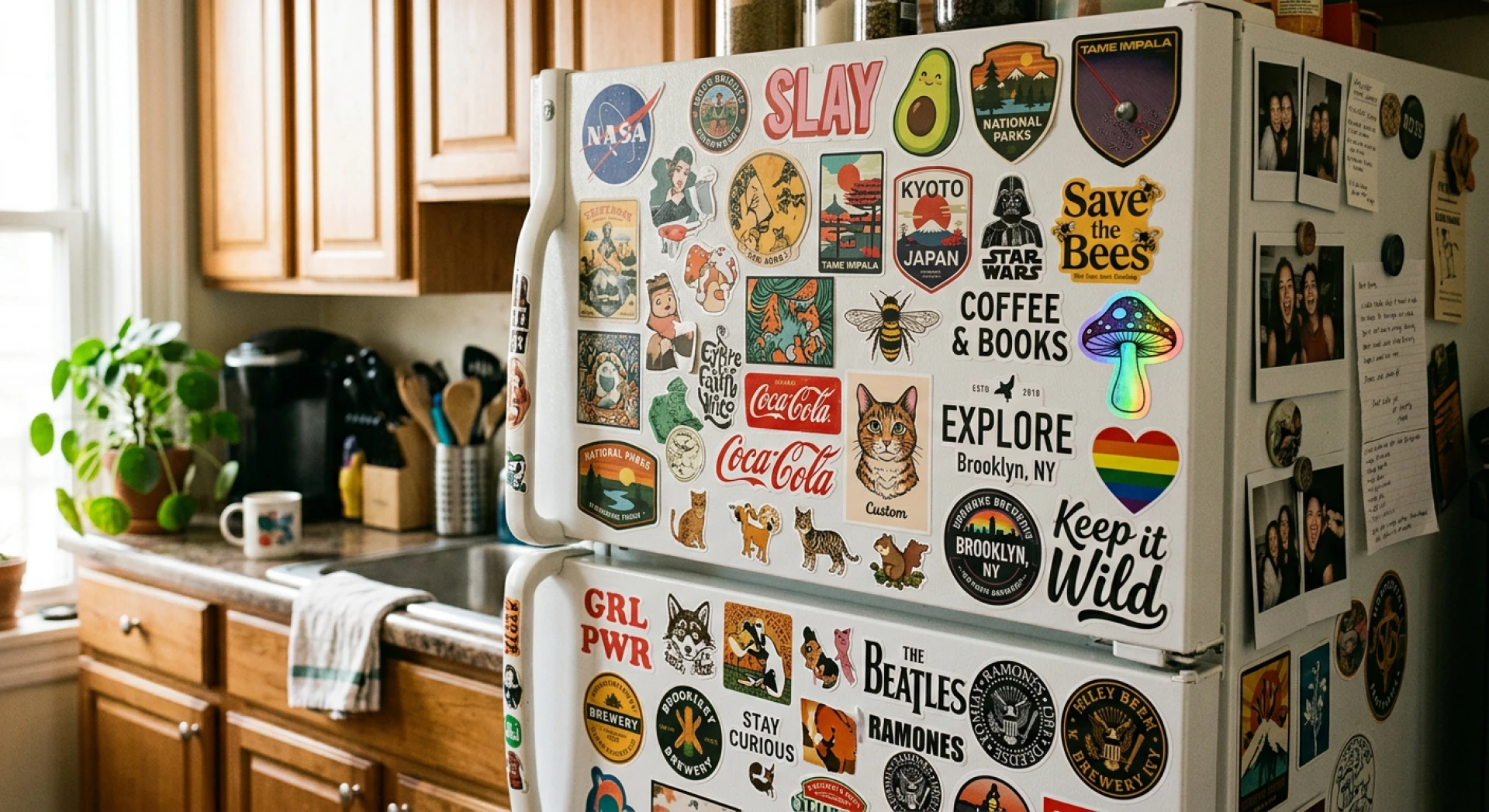
When a sticker is die cut precisely, the design carries more responsibility. There is no border to soften the edges of the artwork.
Businesses sometimes discover that certain logos work particularly well in die-cut form because the shapes already stand out clearly. Others require small adjustments before cutting begins.
This process encourages companies to think more carefully about visual clarity.
Logo stickers usually appear in packaging decisions
Packaging makes things the easiest to see.
Custom logo stickers for packaging are the most common sort of sticker used in regular business.
A shipping box, product container, or takeaway bag is a surface that is easy to brand because it is always the same. The sticker is what makes a basic package into something you can recognise.
Because packaging interacts directly with customers, logo stickers carry subtle influence.
Customers often encounter them at the moment a product is opened or handled. That moment shapes the impression of professionalism, even if the sticker itself is small.
Flexibility makes logo stickers attractive
Many companies select logo stickers over printed packaging because they are more flexible.
You can change the designs of your packaging without having to buy new boxes or containers. You can change the sticker design to add new product lines, limited editions, or seasonal promotions.
This flexibility is why logo stickers may be found in a wide range of fields, from retail and cosmetics to food service and industry.
Businesses often compare sticker types after their first order
Experience changes future decisions
Companies rarely analyse sticker formats deeply before their first order.
Instead, they learn from use.
A packaging sticker that peels too easily may lead to a switch toward vinyl materials. A rectangular label that hides part of the logo may encourage experimenting with die-cut shapes.
The learning process happens gradually.
Once businesses observe how stickers behave in real environments — on vehicles, packaging, windows, or equipment — their next order usually becomes more specific.
Visibility reveals unexpected differences
Some distinctions only become obvious after the stickers are applied.
A window sticker that seemed clear during design may appear faint against bright daylight. A packaging sticker may wrinkle slightly on curved surfaces. A promotional sticker may attract attention simply because its shape stands out.
These observations influence future choices more than theoretical comparisons.
Why the choice often becomes strategic over time
Stickers eventually become part of brand systems
As companies get bigger, they tend to be more careful about which stickers they choose.
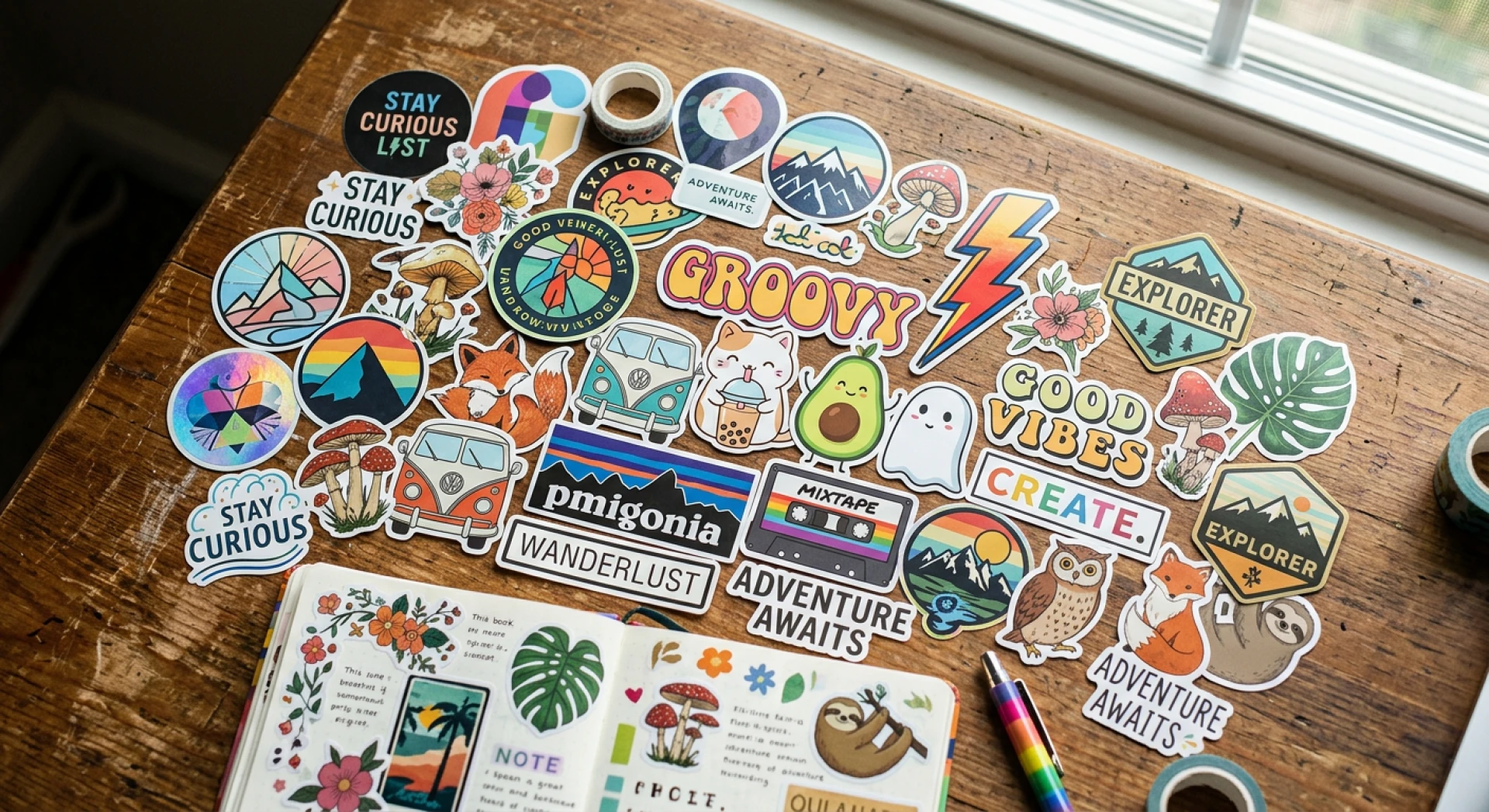
Vinyl decals for cars, logo stickers for packaging, and die-cut stickers for marketing campaigns are all things that a business might use. Each format has a particular purpose for communication. Each format serves a different communication role.
Rather than choosing a single type, businesses often combine them.
This layered approach allows the brand to appear consistently across vehicles, products, windows, and physical spaces without relying on a single printing format.
Small details influence perception
Customers rarely analyse sticker types consciously.
However, small details influence perception more than expected. A clean die-cut shape suggests careful design. A durable vinyl decal signals professionalism. A consistent logo sticker on packaging reinforces brand recognition.
Individually these signals appear minor. Together they shape how a business is remembered.
Final perspective
When businesses choose between vinyl stickers, die-cut stickers, and brand stickers, they are frequently making a choice based on practical needs rather than design preferences. The best format is generally based on the surfaces, how long it needs to last, and how it will be packaged.
Over time, many businesses learn that different types of stickers serve different purposes when it comes to communication. For example, vinyl stickers are good for durability, die-cut stickers are good for making things seem good, and logo stickers are good for keeping branding constant throughout all packaging.
When these decisions are made early and thoughtfully, small printed surfaces become reliable communication tools rather than temporary labels — something experienced print providers such as I YOU PRINT help businesses consider long before the first sticker is applied.