
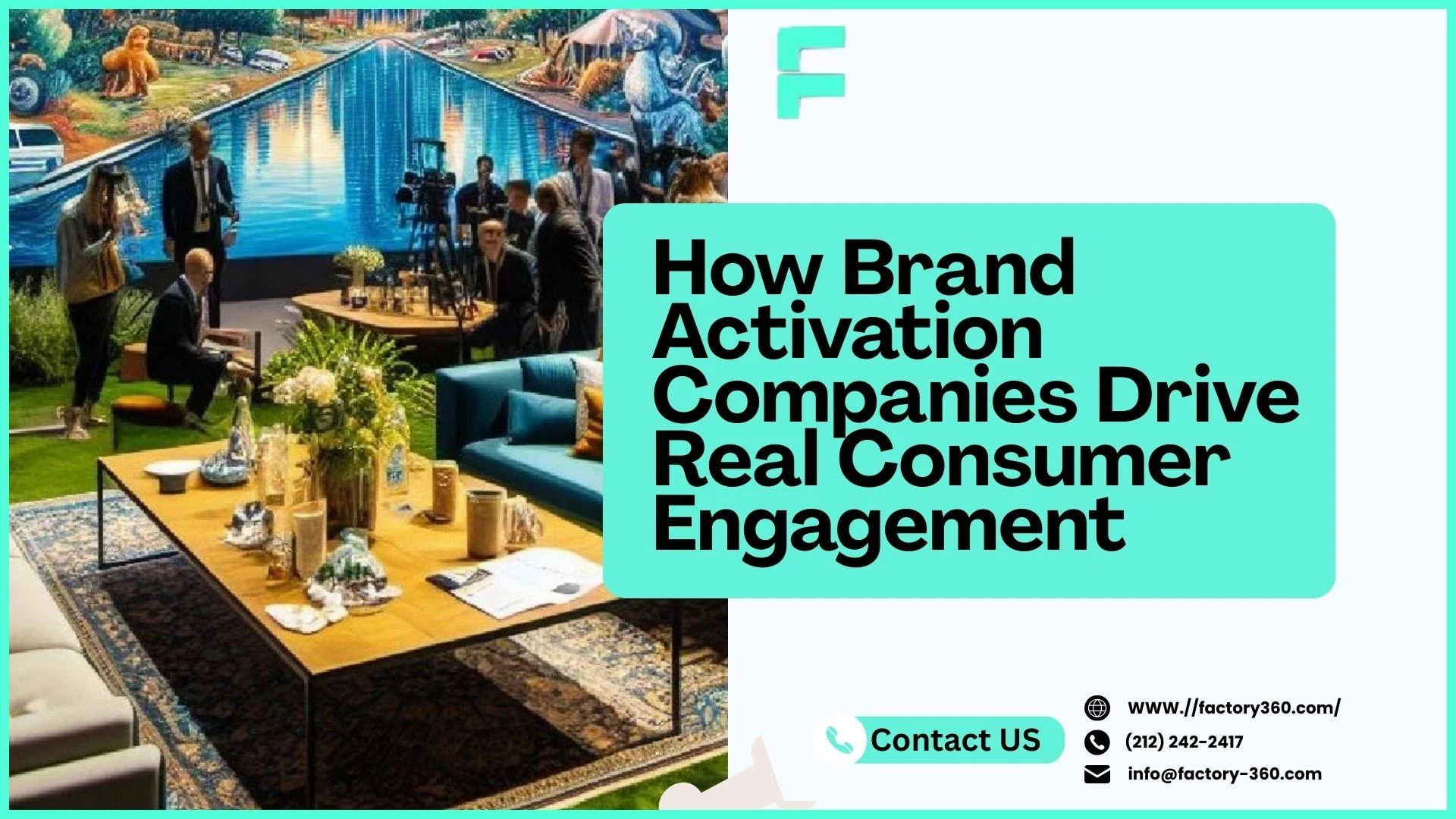
Your brand shapes how people interact with products and services today. In many markets, brand activation companies help turn simple promotion into real experiences that consumers can see, try, and remember. Instead of relying only on advertisements, these companies create situations where people meet a brand in everyday settings.
Many people today react more to real experiences than regular ads. Watching an ad is easy to ignore. Trying something in person feels different. Face-to-face interaction tends to catch attention faster than a standard ad. For that reason, many organizations now rely on live experiences instead of only digital promotion.
Observing these efforts shows why engagement has become important in modern marketing. When people participate in an activity, the message feels more real and easier to remember. When people see or try something themselves, the message becomes clearer. Personal interaction often makes the idea easier to understand. In the sections ahead, the post explains how activation strategies work, why experiences affect consumer behavior, and how agencies plan these campaigns.
The Role of Brand Activation Companies in Experiential Marketing
Experiential marketing is participation-based. Consumers do not view the advertisements but they get involved in the activity. These activities are organized by brand activation companies in order to establish memorable contacts between audiences and brands.
How Experiential Marketing Creates Interaction
Experiential marketing involves dealing with a product directly. People do not just watch a message on a screen; instead, they can get in touch with the brand physically. It will take minimal efforts to invite visitors to participate in a small booth, live demonstration, or speedy product demonstration. The impression of that brief communication can be more powerful than a conventional advertisement.
Building Meaningful Consumer Moments
Strong activation events usually rely on small yet thoughtful interactions. Large productions are not always necessary. In many cases, short activities or simple demonstrations draw attention more effectively.
Clear messaging also plays an important role. Visitors should quickly understand the purpose of the experience. When instructions remain simple, participation feels easy and natural.
Poor planning, however, can lead to confusion. Crowded setups or unclear activities may weaken the message. For that reason, organizers focus on clear goals, smooth flow, and simple communication during activation planning.
How a brand activation agency Designs Engagement Campaigns
Campaign design usually involves several stages. A brand activation agency studies the target audience before planning the experience.
Audience Research
Agencies research consumer behavior, the venue of events, and cultural practices. As an example, younger viewers are usually sensitive to social interaction and graphics.
Also, there is a place issue. Meeting places frequented by people tend to achieve a greater spontaneity.
Campaign Planning
Campaign planning transforms research into practical activities.
Typical planning steps include:
- Choosing the right location
- Creating interactive elements
- Designing short product demonstrations
- Training event staff
Clear planning ensures that visitors understand the activity quickly.
Execution and Real-Time Interaction
Execution happens during the live event.
Trained staff guide visitors through activities. Short conversations often explain the product message.
However, engagement should feel natural. Overly scripted interaction may reduce authenticity.
Information collected during the event also supports future marketing decisions.
Consumer Psychology Behind Activation Experiences
Engagement works because people respond strongly to personal experiences.
Memory and Emotional Response
Psychological studies show that experiences affect memory more strongly than simple messages.
Direct interaction activates multiple senses. Sight, sound, and movement combine to form stronger mental recall.
For example, an interactive display often stays in memory longer than a static advertisement.
Social Sharing and Community Impact
Modern consumers often share experiences online.
Interactive events naturally encourage photos and short videos. Additionally, participants enjoy sharing unusual or fun activities with friends.
Such sharing expands campaign reach beyond the physical event.
However, organic sharing works best when experiences feel authentic rather than staged.
Measuring Engagement in Brand Activation Campaigns
Marketing teams often ask a simple question: how effective was the campaign?
Measurement helps answer that question.
Direct Engagement Metrics
Activation events produce several measurable signals:
- Number of participants
- Time spent at the event
- Product trials or demonstrations
- Feedback responses
These indicators reveal whether people truly interacted with the activity.
Long-Term Consumer Awareness
Some effects appear after the event ends.
For example, follow-up surveys may measure brand recall. Social media mentions also indicate continued interest.
Additionally, data gathered during events helps refine future experiential marketing campaigns.
Careful analysis allows brand activation companies to adjust strategies based on real behavior rather than assumptions.
FAQs
1. What do brand activation companies actually do?
Brand activation companies will organize campaigns whereby the consumers get to play directly with the brands. The activities can be events, demonstrations, or public experiences.
2. How does experiential marketing differ from traditional advertising?
Experiential marketing is participative. Consumers interact with a brand by doing rather than watching adverts.
3. Why do companies use a brand activation agency?
A brand activation agency is an amalgamation of marketing research, events planning and audience analysis. This kind of experience can assist in building systematic contact campaigns that reach actual consumers.
Conclusion
Modern marketing tends to be based on interaction and not passive communication. Those real connections between brands and consumers are created with the help of brand activation companies. Experiences give people a chance to test ideas and observe products up close. Personal impressions often form quickly during these moments. Direct interaction tends to feel more real than watching an advertisement.
A closer look at activation strategies explains why engagement matters today. Marketing communication has changed over time. Audiences respond better when activities feel simple and clear. Thoughtful planning and short interactions often help messages stay in memory longer than traditional advertising.
Campaign evaluation should also consider how people interact with the activity. Strong participation usually signals genuine curiosity. In many cases, visitors spend more time with experiences that feel easy and natural. Because of that shift, many organizations continue to include experiential marketing within their broader communication approach.