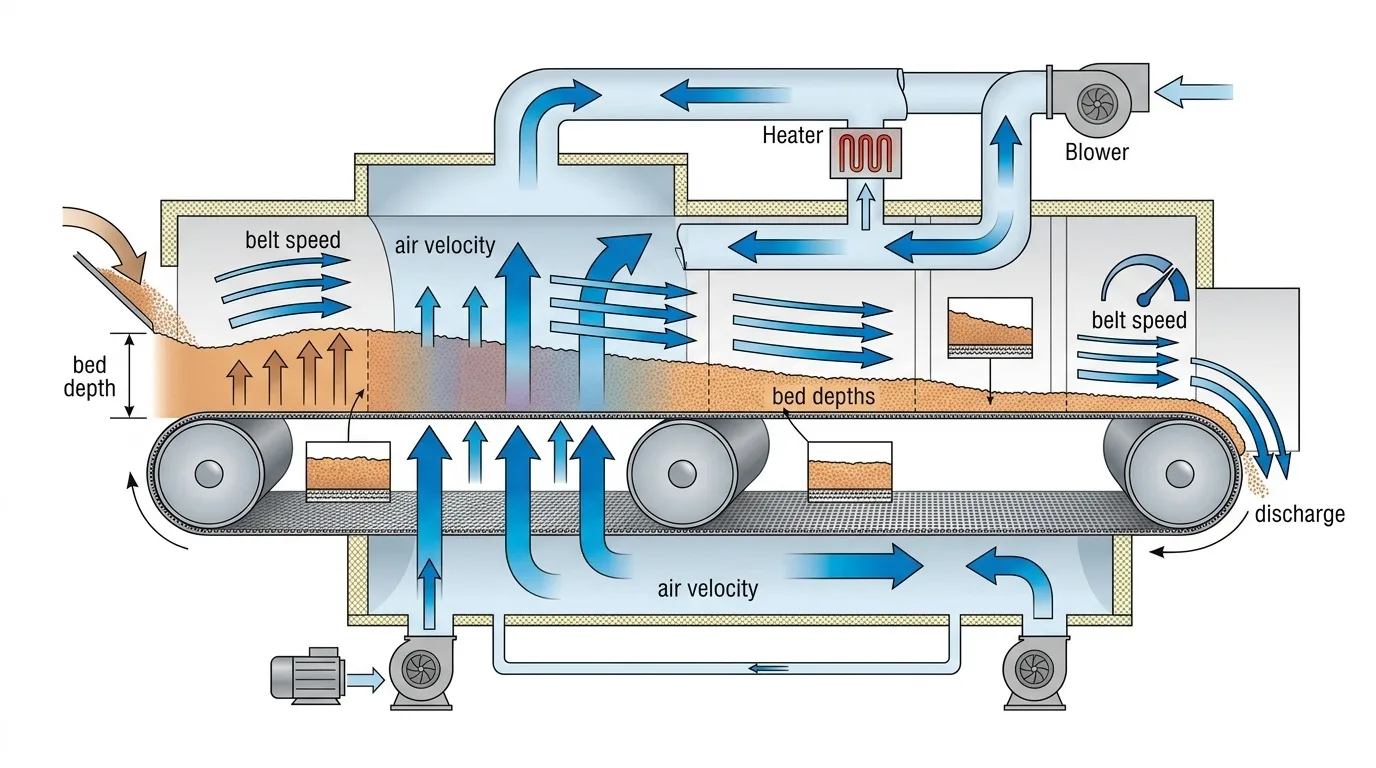
For continuous band dryers to achieve the optimum moisture removal requires more than just adjusting the temperature. The effectiveness of heat transfer and moisture removal depends on the depth of the bed, speed of the belt and velocity of the air.
A deeper material bed can enable more material to pass through each pass, but it could limit the flow of air through the bottom of the bed. If not, enough air penetrates, the moisture layer underneath it may dry before the surface, creating an uneven moisture amount.
The residence time is controlled by belt speed. If the belt is moving too fast, you run the risk of the material ending up out of the dryer without being properly dried. A decrease in the speed of the movement will provide more drying time, but may result in a decrease of throughput if the production conditions are not adjusted accordingly.
The air velocity affects the heat and evaporation rate. Good air flow aids consistent drying, but high velocities cause high fan energy use and may cause particles to be blown away from the product.
Getting the Drying Parameters Right
Generally, these three parameters should be matched to the material to be processed. The depth of the beds must allow for good airflow, the speed of the belts must have enough residence time, and the velocity must be sufficient to remove moisture by proper air velocity but not using unnecessary energy. The operating condition is also affected by feed moisture, particle size, density and heat sensitivity.
Why Material Characteristics Matter
Not all materials can be dehydrated in the same manner. If heavy and not easily broken into smaller pieces or particles, air can pass through the bed relatively easily; however, if the materials are dense, compact, or the material is sticky, air will not flow so easily through the bed. For the same reason, materials that have higher initial moisture content could take a longer time to dry than dried feed with lower moisture content going into the same material drying system.
With these differences in mind, operators can ensure that they set up the condition correctly for their change in belt speed, or airflow change, before making the adjustment. If unexpected changes occurred in the moisture content of the feed, such as feed moisture content increase after the plant opened, the residence time or operating conditions may be different to achieve the desired final moisture content.
Recognizing Signs of Poor Drying Performance
When moisture is not received evenly over the product, product quality is not consistent, energy usage is high or operating parameters are changing, it is an indication that operating parameters must be checked. There are, however, several reasons that these symptoms may occur such as uneven distribution of materials, feed properties etc., variation, inadequate air distribution or residence time.
While operators should be checking for a raise in temperature, they should also be looking at other factors such as material bed, belt loading, airflow pattern, and moisture readings. The measurements of drying at various positions along the drying coin can help verify that the drying process starts to be inconsistent, when applicable.
Improving Performance Through Process Monitoring
A regular monitor allows a more accurate picture of the responsiveness of the dryer to changing production conditions to be obtained. Moisture in the inlet to and outlet from the mill, belt speed and air temperature and airflow, when tracked, can alert operators to trends that become severe quality problems.
Small changes of one or more operating parameters will usually provide more useful information than large changes in more than one. This method helps to determine which changes result in an increase in drying performance and which cause further issues.
The Takeaway
The material loading, residence time, and air flow are interrelated in optimizing a continuous activity dryer. Consideration of these along with feed characteristics and operating data creates improvements in moisture consistency, in production throughput and in the effective use of energy.
In the industrial applications, this approach helps as a viable basis for designing and selecting a band dryer according to the specific needs of the process.