
Introduction
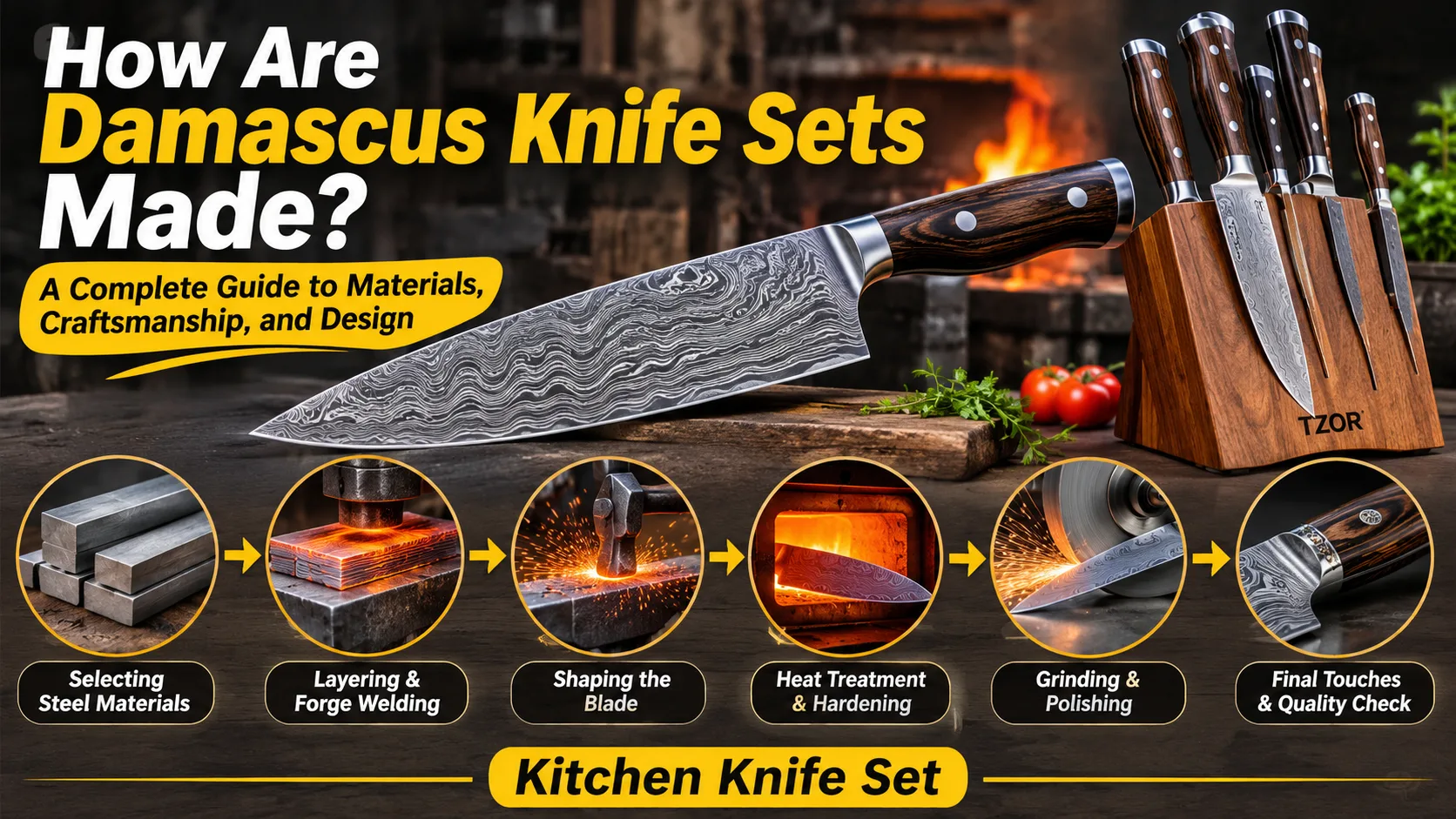
Damascus steel knives are widely recognised for their distinctive surface patterns, attractive appearance, and traditional craftsmanship. Their unique designs make them popular among home cooks, professional chefs, and kitchen enthusiasts who appreciate both functionality and visual appeal. However, the manufacturing process behind these knives involves several important stages, from selecting suitable steel to
shaping, heat treatment, sharpening, and final finishing.
Understanding how Damascus knives are made helps buyers make informed decisions when choosing kitchen cutlery. The appearance of a blade is only one part of its overall quality. Factors such as steel composition, construction method, blade geometry, edge retention, and handle design also influence its practical performance.
A Damascus Knife Set typically includes several kitchen knives designed for different food preparation tasks. These may include chef knives, utility knives, paring knives, and other specialised blades. Although individual sets can vary in composition and construction, understanding the production process makes it easier to recognise the craftsmanship and features that contribute to a well-designed knife.
1. Selecting the Right Steel Materials
The manufacturing process begins with selecting suitable steel. In modern Damascus-style knife production, manufacturers commonly use two or more types of steel with different properties.
One steel may provide hardness and edge retention, while another may contribute toughness or flexibility. The exact combination depends on the manufacturer's intended blade characteristics and production technique.
Material selection is important because the quality of the finished knife depends heavily on the properties of the steel being used. Manufacturers must consider:
- Carbon content and overall steel composition.
- Hardness and toughness.
- Resistance to corrosion.
- Ability to withstand heat treatment.
- Suitability for forging and sharpening.
Using appropriate materials helps create blades that balance cutting performance, durability, and maintenance requirements.
2. Preparing and Layering the Steel
After selecting the materials, the steel pieces are prepared for the forging process. In traditional pattern-welded Damascus production, different steel layers are stacked together to create a billet.
The layers are carefully arranged and cleaned to reduce contamination between surfaces. They are then heated to a temperature that allows the materials to bond through forge welding.
During this process, the layers are compressed under a hammer or hydraulic press. This creates a solid piece of steel containing multiple bonded layers.
The number of layers can vary depending on the manufacturing method. Some makers repeatedly fold or manipulate the billet to increase the number of layers and develop more complex surface patterns.
3. Forge Welding and Pattern Formation
Forge welding is one of the most important stages in producing pattern-welded Damascus steel. The prepared steel billet is heated in a forge until the surfaces can bond under pressure.
The blacksmith then uses controlled hammering or mechanical pressing to join the layers. Proper temperature, pressure, and surface preparation are essential for creating a reliable bond.
Once the billet has been successfully welded, the maker can manipulate it to produce different decorative patterns.
Common Damascus-style patterns include:
- Ladder pattern: Features repeated horizontal or ladder-like designs.
- Twist pattern: Creates flowing lines by twisting the steel billet.
- Raindrop pattern: Produces rounded markings across the blade surface.
- Random pattern: Creates irregular and distinctive visual designs.
- Wave pattern: Produces flowing lines that resemble natural waves.
These patterns are not simply painted onto the blade. In pattern-welded Damascus steel, they result from the arrangement and manipulation of different steel layers.
4. Shaping the Knife Blade
After forging and pattern formation, the steel billet is shaped into an individual knife blade. The blacksmith or manufacturer cuts the required blade profile and removes excess material.
The blade is then ground to establish its shape, thickness, and cutting geometry.
Different knife styles require different blade designs. For example, a chef knife generally has a broad blade suitable for chopping, slicing, and general food preparation. A paring knife is smaller and designed for detailed tasks such as peeling and trimming.
Important design considerations include:
- Blade length and thickness.
- Cutting edge geometry.
- Blade curvature.
- Weight distribution.
- Overall balance and handling comfort.
A properly shaped blade helps determine how comfortably and effectively a knife performs during everyday kitchen activities.
5. Heat Treatment and Hardening
Heat treatment plays a major role in determining the mechanical properties of a knife blade. After shaping, the steel undergoes controlled heating and cooling processes to achieve the desired hardness and toughness.
The process generally involves two important stages:
Hardening: The blade is heated to a specific temperature and cooled under controlled conditions. This changes the steel's internal structure and increases its hardness.
Tempering: The hardened blade is reheated to a lower temperature and held for a specific period. This helps reduce excessive brittleness and improve toughness.
The exact temperatures and procedures depend on the steel grades used. Professional manufacturers carefully control these stages because incorrect heat treatment can negatively affect blade performance.
6. Grinding, Sharpening, and Polishing
Once heat treatment is complete, the blade moves to the finishing stage. Grinding removes excess material, refines the blade profile, and establishes the cutting edge.
Sharpening is another important step. The manufacturer creates an appropriate edge angle according to the knife's intended use.
For example, a general-purpose chef knife requires a different edge design from a heavy-duty chopping knife.
Polishing improves the blade's surface appearance and removes unwanted marks from the manufacturing process. In pattern-welded Damascus steel, suitable surface finishing and etching can reveal the contrasting layers and create the familiar decorative pattern.
This stage requires attention to detail because the final appearance and cutting characteristics depend on accurate finishing.
7. Making and Attaching the Handle
A knife handle is just as important as its blade. Even a well-made blade may feel uncomfortable if the handle is poorly designed.
Manufacturers use different handle materials, including:
- Natural wood.
- Stabilised wood.
- Micarta.
- Resin-based composites.
- Other durable synthetic materials.
The handle is shaped to provide a comfortable grip and suitable control. Depending on the knife construction, it may be attached using rivets, adhesives, or other established assembly methods.
Important handle features include grip comfort, moisture resistance, balance, and ease of cleaning.
A well-designed handle allows users to maintain better control while preparing food.
8. Quality Inspection and Final Assembly
Before a knife is packaged and sold, it should undergo quality inspection. Manufacturers check the blade, handle, cutting edge, and overall construction.
Typical inspection points include:
- Blade alignment and surface finish.
- Consistency of the cutting edge.
- Handle attachment and stability.
- Visible forging or grinding defects.
- Overall balance and finish.
For a complete knife collection, each individual knife should also be inspected to ensure consistent quality across the set.
Understanding a Kitchen Knife Set
A Kitchen Knife Set brings together different knife styles to support a variety of food preparation activities. Instead of relying on one knife for every task, users can choose a suitable blade according to the ingredients and cutting requirements.
A typical collection may include:
Chef Knife: A versatile option for chopping vegetables, slicing meat, and preparing everyday ingredients.
Utility Knife: Suitable for smaller cutting tasks that require more control than a larger chef knife.
Paring Knife: Designed for peeling fruits, trimming vegetables, and detailed preparation work.
Bread Knife: Features a serrated edge that helps cut bread without crushing its soft interior.
Santoku Knife: A Japanese-style kitchen knife commonly used for slicing, dicing, and chopping.
The number and types of knives included vary between manufacturers. Buyers should consider their actual cooking habits rather than choosing a set simply because it contains more pieces.
9. Damascus Steel vs Ordinary Stainless Steel
One common question among kitchen knife buyers is how Damascus-style steel compares with conventional stainless steel.
The main difference is related to construction and material composition.
Modern pattern-welded Damascus steel uses multiple layers of steel joined together to create distinctive patterns. Conventional stainless steel knives may be manufactured from a single steel alloy, although stainless steel can also be used in layered constructions.
Here are some important comparison points:
Appearance: Damascus-style blades are known for their distinctive layered patterns, while conventional stainless steel blades often have a more uniform appearance.
Corrosion Resistance: Stainless steel is formulated to resist rust and staining. Damascus-style blades may also offer corrosion resistance, but this depends on the specific steel grades used.
Maintenance: Both types require proper cleaning, drying, and appropriate storage. Damascus-patterned blades should receive particular attention to the manufacturer's care instructions.
Cutting Performance: Sharpness and edge retention depend on steel composition, heat treatment, blade geometry, and sharpening quality rather than decorative patterns alone.
Price: Manufacturing complexity, material selection, finishing, and brand positioning can influence the price of both types.
There is no universal winner. The right choice depends on cooking requirements, maintenance preferences, budget, and design expectations.
10. How to Maintain Damascus Kitchen Knives
Proper care helps preserve the appearance and functionality of kitchen knives. Even premium blades can deteriorate if they are stored or cleaned incorrectly.
Here are some useful maintenance practices:
- Wash knives carefully after use with mild soap and water.
- Dry the blades immediately to reduce the risk of corrosion.
- Avoid leaving knives soaking in water.
- Use suitable cutting boards made from wood or other knife-friendly materials.
- Sharpen blades when they begin losing their cutting performance.
- Store knives in a protective case, knife block, or suitable storage system.
- Follow the manufacturer's instructions regarding cleaning and maintenance.
Avoid using harsh cleaning chemicals or abrasive materials unless specifically recommended by the manufacturer.
11. What to Consider When Buying a Damascus Knife Set
Choosing a suitable knife collection requires more than looking at decorative blade patterns. Buyers should examine the construction, materials, design, and intended use of each knife.
Consider the following factors before purchasing:
- Steel information: Check whether the manufacturer provides clear details about the steel grades and construction.
- Blade quality: Examine the blade finish, cutting geometry, and overall construction.
- Handle comfort: Choose a handle that feels secure and comfortable.
- Knife selection: Make sure the included knives match your everyday cooking requirements.
- Maintenance needs: Understand the cleaning, sharpening, and storage requirements.
- Manufacturer transparency: Look for reliable product descriptions and accurate material information.
These considerations help buyers distinguish between attractive presentation and practical product quality.
12. The Role of Modern Craftsmanship in Kitchen Knives
Modern knife manufacturing combines traditional forging techniques with contemporary machinery and quality-control methods. While traditional craftsmanship remains important, modern equipment helps manufacturers achieve greater consistency in blade shaping, grinding, and finishing.
Different manufacturers follow different production methods. Some rely heavily on manual forging, while others use a combination of automated processes and skilled finishing.
For consumers, understanding these differences is useful when comparing products. A decorative Damascus pattern does not automatically guarantee superior cutting performance. The quality of the underlying steel, manufacturing process, and final inspection remains essential.
Conclusion
Making Damascus-style kitchen knives involves several carefully controlled stages, including steel selection, layering, forge welding, blade shaping, heat treatment, sharpening, polishing, and handle assembly. Every stage contributes to the final knife's appearance, construction, and practical characteristics.
For anyone considering a new knife collection, understanding these manufacturing methods can make the buying process more informed. Whether choosing a Damascus-style blade or a conventional stainless steel option, material quality, comfortable handling, suitable blade geometry, and proper maintenance should remain the main priorities.
TZOR focuses on offering kitchen cutlery and chef knife collections for UK customers who appreciate practical functionality, modern design, and distinctive knife styles. By understanding how these products are made, buyers can make more confident decisions and choose knives that suit their cooking needs.