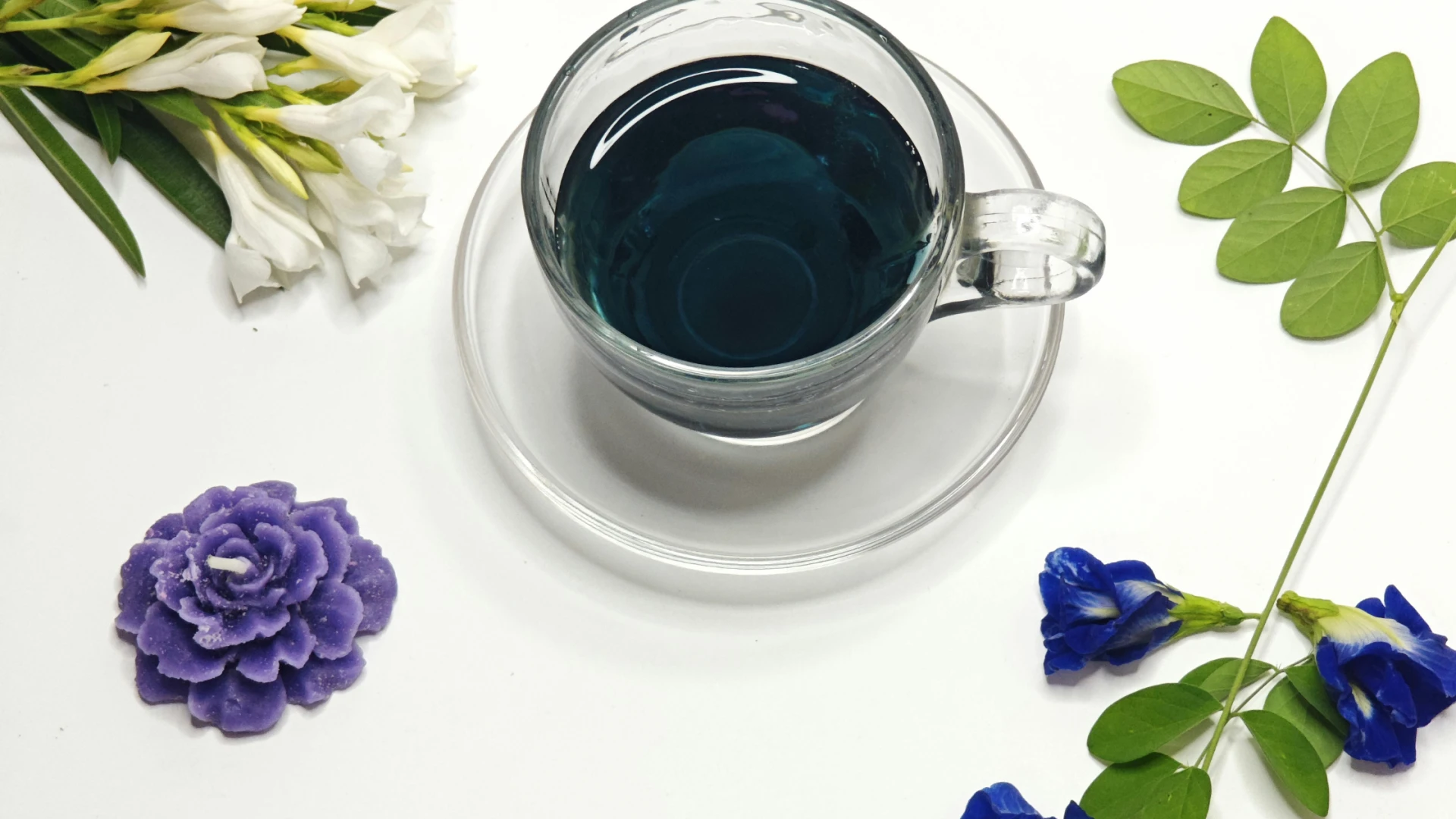
It offers colour, calm and lightness in the same cup, which suits people who want something soothing without too much sugar or caffeine. Because it is easy to prepare and gentle on the stomach, aparajita tea fits naturally into different parts of the day, from morning to late evening.
From Aparajita Plant to Kitchen Shelf
Aparajita tea starts with the aparajita plant, a soft climber often seen on compound walls, gates and balcony grills in many parts of India. The plant produces bright blue blossoms known as aparajita flower, which are the main ingredient for the drink. These petals are picked, cleaned and dried in the shade before being stored in jars.
In English recipes, the same blossom is usually called butterfly pea flower. Once dried, the petals keep well for months and are ready whenever someone wants to brew a quick herbal tea. A small pinch is enough for one cup, so even a modest supply of dried flowers can serve an entire family.
Aparajita Tea in the Morning
In the morning, many Indians still rely on strong chai or coffee to wake up. Aparajita tea does not need to replace these traditions but can sit alongside them. Some people prefer to start the day with a light cup of this blue tea before moving to their usual chai. The warm, mild drink helps hydrate the body after sleep without adding sugar or milk.
Those who are sensitive to caffeine, or who are trying to reduce it, sometimes use aparajita tea as their first drink instead of strong black tea. The soft, earthy taste is enough to feel like a proper morning beverage, while the lack of caffeine keeps the body calm. This can be especially helpful for people who already feel anxious or wired early in the day.
Midday and Workday Breaks
During the workday, aparajita tea fits well into short breaks between tasks. It can be brewed quickly in an office pantry or at home while working remotely. Because it does not leave a strong smell, it is suitable for shared spaces where full masala chai or filter coffee might feel too intense.
The bright blue colour from butterfly pea flower turns an ordinary workdesk into something a little more cheerful. Many people find that boiling water, adding the petals and watching the colour deepen gives them a small mental reset. This kind of pause, even if it lasts only five minutes, helps break the pattern of constant screen time and mental strain.
Evenings at Home with Aparajita Tea
Evening is where aparajita tea fits most smoothly into Indian routines. After a day of heavy meals, traffic and screens, a light, caffeine‑free drink is often more suitable than another strong chai. A warm cup after dinner can help the body wind down without disturbing sleep.
Families can also serve aparajita tea when guests visit, offering it alongside regular chai. The unusual blue or purple colour becomes a conversation starter, especially when a squeeze of lemon changes the shade right in the cup. In this way, the drink keeps the social warmth of Indian tea culture while quietly supporting lighter choices.
Role in Health‑Focused Habits
As more people pay attention to weight, skin and overall wellness, aparajita tea naturally finds a place in health‑focused routines. When brewed plain, it has almost no calories, so it becomes an easy replacement for sugary soft drinks and very sweet chai. Over time, these small swaps can support better weight balance and more stable energy.
The hydration from regular cups of herbal tea also helps the skin look fresher and the body feel less tired. Rather than being promoted as a miracle cure, aparajita tea works best when seen as one gentle tool in a broader lifestyle that includes sensible food, everyday movement and enough sleep.
Blending Tradition with Modern Needs
One of the reasons aparajita tea fits Indian routines so well is that it does not try to erase existing traditions. The aparajita plant has been known in many regions for a long time, and its flowers have been used in rituals, home remedies and gardens. Turning aparajita flower into an everyday tea simply gives this familiar plant a modern role.
In many homes, the pattern that works best is simple: keep morning chai or coffee for comfort and culture, and let aparajita tea take over for afternoon and evening breaks. This balance respects emotional habits while gently moving daily life toward less sugar, less heaviness and more calm. In that sense, aparajita tea is not just a new trend; it is a natural extension of how Indian families already use plants, colour and warmth to care for themselves.