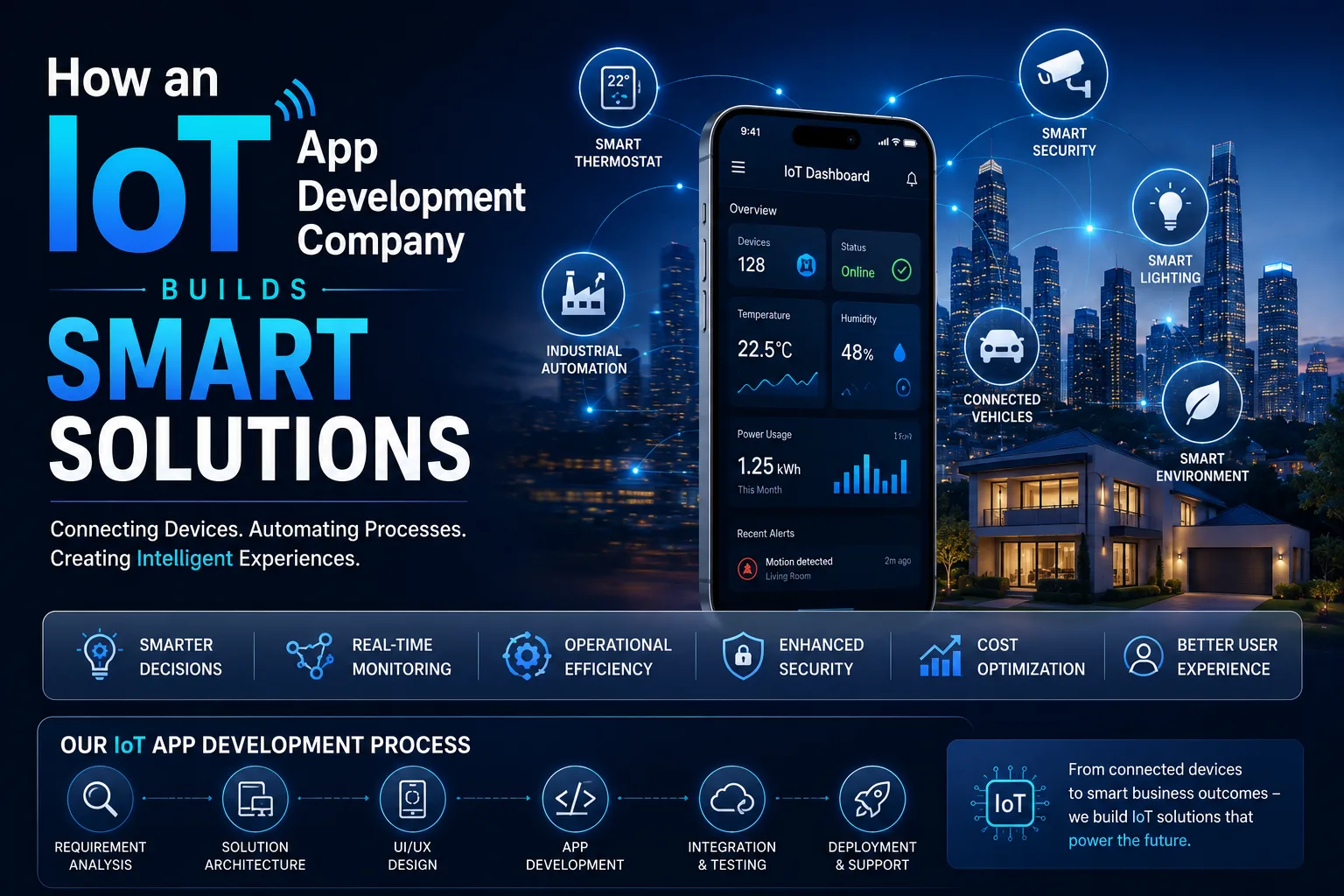
The Internet of Things (IoT) has moved from being a futuristic idea to an everyday reality. From smart homes and wearable devices to industrial automation systems, IoT is transforming how we live and work. Behind these innovations are IoT app development companies that design and build the software systems powering connected devices.
But how exactly do these companies create “smart solutions”? Let’s break it down in a simple, practical way.
Understanding the Problem First
Every successful IoT solution starts with a clear understanding of the problem it is meant to solve. An IoT app development company works closely with clients to identify goals such as improving efficiency, reducing costs, or enabling real-time monitoring.
For example, a logistics company might want to track delivery vehicles in real time, while a healthcare provider may need remote patient monitoring. The development process begins by analyzing these needs and defining a clear use case.
Designing the IoT Ecosystem
IoT is not just about apps—it’s about building an entire ecosystem. This includes:
- Connected devices (sensors, machines, wearables)
- Communication networks (Wi-Fi, Bluetooth, LTE, etc.)
- Cloud platforms for data storage and processing
- Mobile or web applications for user interaction
An IoT app development company designs how all these components will work together seamlessly. The goal is to ensure smooth data flow between devices and applications.
Building the Core Application
Once the architecture is defined, developers start building the core application. This includes:
- Mobile apps for Android and iOS
- Web dashboards for monitoring and control
- Backend systems to process and manage data
The focus is on creating real-time functionality so users can access live updates from connected devices. For instance, a smart home app allows users to control lights, thermostats, and security systems from their phones.
Integrating Hardware and Software
One of the most important parts of IoT development is hardware integration. Developers ensure that sensors and devices communicate effectively with the software system.
This step often involves working with APIs, embedded systems, and communication protocols. Proper integration ensures that data collected from devices is accurate, reliable, and actionable.
Using Cloud and Data Analytics
Modern IoT solutions rely heavily on cloud computing. IoT app development companies use cloud platforms to store large volumes of data generated by devices.
But collecting data is not enough. Advanced analytics and sometimes AI/ML models are applied to extract meaningful insights. For example:
- Predicting machine failures in factories
- Tracking energy usage in smart buildings
- Monitoring health patterns in wearable devices
These insights help businesses make smarter, data-driven decisions.
Ensuring Security and Scalability
Security is a major concern in IoT systems because multiple devices are constantly exchanging data. Developers implement strong security measures such as:
- Data encryption
- Secure authentication
- Regular system updates
At the same time, the system must be scalable. As the number of connected devices grows, the platform should handle increased data without performance issues.
Testing and Continuous Improvement
Before launching, IoT applications go through rigorous testing. This includes checking device connectivity, data accuracy, and system performance under different conditions.
Even after deployment, IoT solutions are continuously monitored and improved based on user feedback and real-world performance.
Conclusion
An IoT app development company plays a crucial role in turning ideas into intelligent, connected systems. By combining hardware, software, cloud computing, and analytics, they build solutions that make life smarter and businesses more efficient.
As IoT continues to evolve, these companies will remain at the center of innovation—shaping a future where everything is connected and data-driven.