Think about the last time you needed help from a company. Maybe a package was late, or a payment didn't go through. You probably didn't want to wait on hold for twenty minutes or dig through a long FAQ page. You wanted an answer, and you wanted it now.
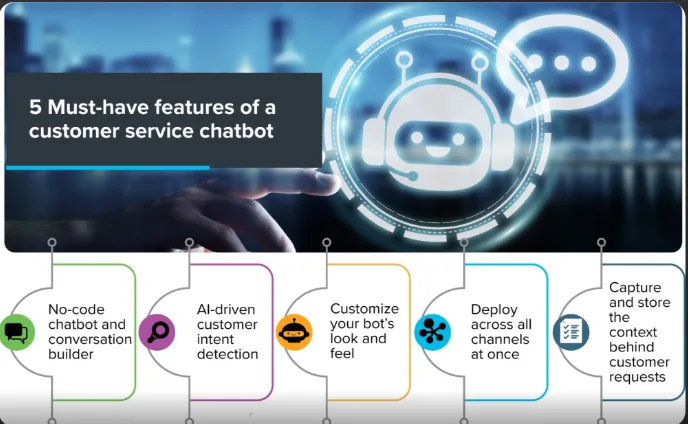
That expectation is changing how businesses handle support. Customers want fast, accurate, round-the-clock help, and traditional phone and email setups struggle to deliver it at scale. This is where the modern AI-powered chatbot comes in. It isn't the clunky, scripted bot you may remember from a few years ago. Today's chatbots understand intent, learn from past conversations, and can resolve many issues without a human stepping in.
Let's look at how this technology works, what it's changing, and how to use it well.
What Is an AI-Powered Chatbot, Really?
An AI-powered chatbot is software that talks with customers in everyday language, through chat windows, messaging apps, websites, or voice. Older rule-based bots could only follow a fixed script. If you typed something they didn't expect, they got stuck and replied with "Sorry, I didn't understand that."
AI chatbots work differently. They use natural language processing (NLP) and machine learning to figure out what a person actually means, even when the wording is messy. A customer who types "my order never showed up" and another who writes "where's my stuff??" are both asking for order tracking. A good AI chatbot recognizes that and responds correctly to both.
Over time, these systems get better. Every conversation adds data about what customers ask, which answers work, and where the bot needs to hand off to a person.
Why Traditional Support Models Are Under Pressure
Most support teams face the same problems:
- Rising ticket volumes. As a business grows, so do the questions.
- Repetitive requests. A large share of tickets are simple, such as password resets, order status, store hours, or refund policies.
- Limited hours. Customers shop and ask questions at all hours, but human agents work in shifts.
- High costs. Hiring, training, and retaining agents is expensive, and turnover in support roles is high.
Adding more people helps only to a point. At some stage, the cost climbs faster than the value. Businesses need a way to handle volume without sacrificing quality, and chatbots are one of the most practical answers available.


Key Ways AI Chatbots Are Changing Customer Support
1. Instant, 24/7 AvailabilityThe most obvious change is speed. A chatbot answers in seconds, at any hour, on any day. There's no queue and no "your estimated wait time is 18 minutes."
For global businesses, this matters even more. A customer in Singapore and one in Chicago can both get help at the same moment, without the company staffing every time zone around the clock.
2. Faster Resolution of Common QuestionsMost support questions fall into a small number of categories. Chatbots handle these quickly, often by pulling information from your order system, knowledge base, or customer database. A customer can check a delivery date, update an address, or start a return in a single conversation.
This is where the real value shows up. Instead of just pointing customers to a help article, a well-integrated chatbot actually completes the task.
3. Freeing Human Agents for Harder WorkA common worry is that chatbots will replace support staff. In practice, the better outcome is a shift in what agents do. When the bot clears out the repetitive tickets, people can focus on situations that need empathy, judgment, or creative problem-solving, like an upset customer, a complicated billing dispute, or a high-value account.
Agents also tend to be happier when they spend less time answering the same five questions all day.
4. Consistent Answers Every TimeHuman agents are skilled, but they have off days. Two agents might give slightly different answers to the same policy question. A chatbot gives the same approved answer every time, which reduces errors and protects the brand. When a policy changes, you update it once and every conversation reflects it right away.
5. Personalization at ScaleModern chatbots can connect to a CRM and recognize returning customers. Instead of asking "Can I have your order number?" for the third time, the bot can say, "Hi Maria, I see your order from Tuesday is out for delivery." That small touch makes the experience feel considered rather than mechanical.
6. Support Across Multiple ChannelsCustomers don't stick to one channel. They might start on your website, follow up on WhatsApp, and finish by email. AI chatbots can operate across these channels and keep context, so customers don't have to repeat themselves. This kind of continuity is one of the biggest drivers of satisfaction.
7. Useful Data and InsightsEvery chat is a source of information. Businesses can see which products generate the most complaints, which questions come up repeatedly, and where customers get confused. Those insights feed back into product design, website copy, and training. Support stops being only a cost center and becomes a source of intelligence.
The Business Benefits in Plain Terms
When chatbots are set up well, companies commonly see:
- Lower cost per interaction, since a bot can handle thousands of conversations at once.
- Shorter response times, which usually lifts customer satisfaction scores.
- Higher conversion rates, because shoppers get quick answers while they're still deciding.
- Better scalability, so seasonal spikes like holiday sales don't overwhelm the team.
None of this happens automatically, though. Results depend on how thoughtfully the chatbot is built and managed.
Where Chatbots Still Fall Short
It would be misleading to say AI chatbots solve everything. They have real limits:
- Emotional situations. Someone dealing with a serious problem or a major service failure often wants to talk to a person.
- Complex, unusual cases. Edge cases that don't match existing patterns can confuse a bot.
- Poor setup. A chatbot trained on outdated or incomplete information will give wrong answers, and that can damage trust fast.
- Customer frustration with dead ends. Few things annoy people more than a bot that won't let them reach a human.
The lesson is simple: chatbots work best as part of a support system, not as a replacement for it.
Best Practices for Using AI Chatbots in Support
If you're planning to adopt or improve a chatbot, these habits make a noticeable difference.
Start with the right use cases. Look at your ticket history and find the most common, straightforward questions. Automate those first, then expand.
Make the human handoff easy. Let customers reach an agent whenever they ask, and pass along the full conversation so they don't have to start over.
Keep your knowledge base current. A chatbot is only as good as the information behind it. Review and update content regularly.
Write in a natural tone. Avoid stiff, robotic phrasing. Short, friendly sentences work better than corporate language.
Be honest that it's a bot. Customers appreciate transparency. Trying to disguise a bot as a human usually backfires.
Review conversations regularly. Read real transcripts. You'll spot gaps, misunderstandings, and chances to improve faster than any dashboard will show you.
Measure what matters. Track resolution rate, customer satisfaction, average handling time, and how often chats escalate to humans. These numbers show whether the bot is helping or just deflecting.
What the Future Looks Like
Chatbots are still improving quickly. Advances in generative AI are making conversations more fluid and more human-sounding. Voice assistants are getting better at handling phone support. And chatbots are becoming proactive, reaching out before a problem grows, such as notifying a customer about a shipping delay and offering a solution at the same time.
We're also likely to see tighter integration between chatbots and the rest of a company's systems, so bots can take on more actions: issuing refunds, rescheduling appointments, or updating accounts, all within clear rules.
The direction is clear. Support is moving from reactive, ticket-based work toward conversations that are faster, more personal, and available whenever customers need them.
Final Thoughts
AI-powered chatbots are changing customer support by making it quicker, more consistent, and easier to scale. They handle routine requests in seconds, free up human agents for work that needs a personal touch, and give businesses valuable insight into what customers really want.
The companies that get the most from this technology treat it as a partner to their team, not a shortcut. They start small, keep improving, and always leave a clear path to a real person. Done that way, a chatbot doesn't make support feel less human. It gives people more time to be human where it counts.
If you're considering your next step, a solid starting point is to review your most common customer questions and ask which of them a chatbot could answer well today. The answer is often more than you'd expect.