Introduction
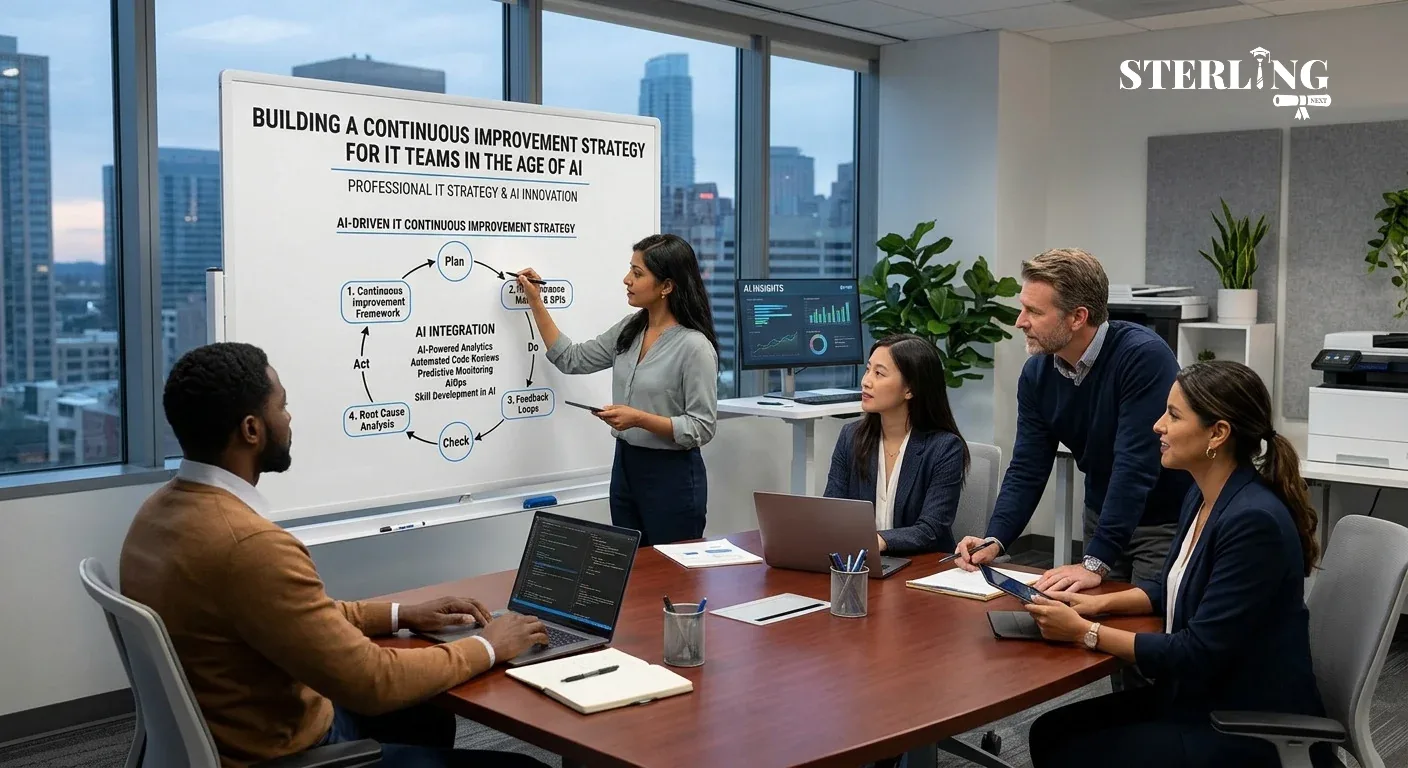
Technology is changing rapidly, and IT teams must continuously adapt to new business requirements, digital tools, and customer expectations. Maintaining existing systems is no longer enough to keep organizations competitive. Businesses need structured approaches to evaluate performance, identify weaknesses, and improve their IT operations over time. Artificial intelligence is making this process more data-driven by helping teams analyze performance, recognize operational gaps, and make informed decisions. A well-designed continuous improvement strategy allows IT departments to connect technology initiatives with business priorities while building more efficient, reliable, and adaptable service environments.
1. Understanding Continuous Improvement in Modern IT Teams
Continuous improvement is an ongoing process of reviewing existing activities, identifying opportunities, and making practical changes to achieve better results. In IT environments, this involves improving service quality, reducing operational delays, strengthening security, and ensuring that technology supports business requirements.
IT departments manage several responsibilities, including infrastructure maintenance, application support, cybersecurity, service delivery, and system performance. Without a structured improvement approach, teams may spend most of their time responding to immediate problems instead of addressing the underlying causes.
A planned improvement process helps organizations move beyond reactive operations.
Why Continuous Improvement Matters in IT
Technology requirements change as organizations grow. New applications, cloud platforms, cybersecurity threats, and automation tools create additional responsibilities for IT professionals.
Regular improvement activities help organizations:
- Identify inefficient processes and remove unnecessary steps.
- Reduce recurring technical incidents.
- Improve employee and customer experiences.
- Strengthen system availability and reliability.
- Use IT resources more effectively.
- Adapt to changing business priorities.
- Make better decisions using operational data.
The Role of AI in Improvement Activities
Artificial intelligence is introducing new ways to examine IT operations. Instead of depending entirely on manual reports, teams can use AI tools to analyze large volumes of operational information.
For example, an organization may experience repeated application downtime. AI-powered monitoring tools can examine historical performance data and identify patterns that indicate a possible infrastructure issue.
IT professionals can then investigate the findings and recommend corrective actions.
However, technology alone cannot guarantee improvement. Teams still need clear objectives, responsible decision-making, and regular performance reviews.
The most effective approach combines human expertise, reliable data, and structured improvement practices.
2. How to Build a Continuous Improvement Strategy for IT Operations
Developing an effective improvement approach requires more than identifying problems and introducing new software. IT departments need a repeatable process that connects improvement activities with measurable business outcomes.
Understanding how to build a continuous improvement strategy begins with evaluating current operations and deciding which areas need attention first.
Step 1: Assess the Current IT Environment
The first step is understanding how existing IT services and processes perform.
An assessment should examine:
- Current service delivery processes.
- System availability and infrastructure performance.
- Incident and request resolution times.
- Security controls and operational risks.
- Employee feedback and support experiences.
- Existing technology investments.
- Communication between IT and business teams.
This assessment provides a starting point for identifying performance gaps.
Step 2: Set Clear Improvement Objectives
Every improvement initiative should have a defined purpose.
For example, an IT department may want to reduce recurring incidents, improve application availability, or shorten service request processing times.
Objectives should be specific and measurable so that progress can be evaluated.
Step 3: Prioritize Improvement Opportunities
Not every operational issue requires immediate attention. Teams should evaluate potential improvements based on business impact, urgency, implementation effort, and available resources.
High-impact issues affecting critical services should generally receive priority.
Step 4: Assign Responsibilities
Each improvement activity should have an accountable owner. Responsibilities may include gathering information, implementing changes, reviewing results, and reporting progress.
Clear ownership reduces confusion and helps initiatives move forward.
Step 5: Review and Refine Results
After implementing a change, teams should compare actual results with the original objectives.
If the improvement delivers the expected outcome, it can become part of standard operations. If the results are limited, the approach should be reviewed and adjusted.
This process makes improvement a regular management activity rather than a one-time project.
3. Using AI to Improve IT Performance and Decision-Making
Artificial intelligence is becoming an important part of modern IT operations. It helps professionals examine operational information, recognize patterns, and identify areas that require attention.
AI in IT management can support decision-making across infrastructure management, service delivery, cybersecurity, and performance monitoring.
Predictive Analytics for IT Operations
Predictive analytics uses historical and current data to identify patterns that may indicate future problems.
For example, an organization may notice that a particular server experiences increased resource consumption during specific business hours.
AI-powered monitoring can analyze these patterns and alert IT professionals when performance begins approaching predefined limits.
This helps teams investigate potential issues before they develop into major service disruptions.
Automated Incident Analysis
IT departments often receive multiple incident reports describing similar problems.
AI can examine ticket descriptions, historical records, and monitoring information to identify relationships between incidents.
This supports faster investigation and helps technical specialists focus on issues with wider business impact.
Smarter Resource Allocation
AI tools can help managers understand workload patterns, support demand, and resource utilization.
For example, ticket analysis may show that a support team receives significantly more requests during software deployment periods.
Managers can use this information to plan staffing, improve documentation, and prepare additional support resources.
Improving IT Performance Through Data
AI-driven IT performance improvement is most useful when technology-generated insights lead to practical action.
Organizations should use AI recommendations to:
- Identify recurring operational problems.
- Monitor infrastructure performance.
- Recognize unusual system behavior.
- Analyze service desk workloads.
- Identify process bottlenecks.
- Support performance forecasting.
AI should assist decision-making rather than replace professional judgment. Important operational changes still require validation, security checks, and appropriate approval.
4. Aligning IT Strategy With Business Goals
IT departments do not operate independently of the wider organization. Technology investments, service improvements, and operational decisions should contribute to business priorities.
Business alignment ensures that IT initiatives support objectives such as customer satisfaction, productivity, cost control, service reliability, and organizational growth.
Understanding Business Requirements
Before planning IT improvements, managers should understand what different business departments need from technology.
For example:
- Sales teams may require reliable customer relationship management systems.
- Finance teams may prioritize accurate reporting and secure financial applications.
- Human resources may need efficient employee management platforms.
- Operations teams may depend on uninterrupted access to business applications.
- Customer service teams may require faster systems and reliable communication tools.
Understanding these requirements helps IT departments identify which improvements provide the greatest business value.
Connecting IT Strategy With Organizational Objectives
Aligning IT strategy with business goals requires collaboration between technology leaders and business stakeholders.
A practical approach includes:
- Identifying the organization's short-term and long-term priorities.
- Understanding how existing technology supports those priorities.
- Identifying gaps in systems, processes, and capabilities.
- Selecting improvement initiatives based on business impact.
- Assigning responsibilities and implementation timelines.
- Measuring the results against agreed objectives.
Why IT Strategy Planning Matters
IT strategy planning helps organizations make informed decisions about technology investments, infrastructure requirements, security, and future capabilities.
Without proper planning, IT departments may invest in tools that do not address important business problems.
A structured strategy helps managers prioritize initiatives, manage budgets, and ensure that technology decisions support organizational direction.
The goal is to make IT a business enabler rather than treating it only as a technical support function.
5. The Role of ITIL 4 DPI in Strategic Planning and Continual Improvement
Organizations need established service management practices to manage improvement activities consistently. ITIL 4 provides guidance for connecting service management with business needs and improving the way organizations deliver value.
ITIL 4 DPI stands for Direct, Plan and Improve. It is part of the ITIL 4 Managing Professional framework and focuses on developing strategic direction, planning improvements, and maintaining effective governance.
Understanding the Direct, Plan and Improve Approach
The framework covers several important areas of organizational management.
Direct focuses on establishing direction through effective leadership, governance, and decision-making.
Plan involves translating organizational priorities into achievable plans, allocating resources, and coordinating activities.
Improve focuses on evaluating performance, identifying opportunities, and making ongoing improvements.
These activities work together to help organizations manage change and maintain alignment between strategy and operations.
Applying the Continual Improvement Model
The continual improvement model provides a structured approach for identifying and implementing improvements.
Its key steps include:
- Understanding the vision and desired outcomes.
- Assessing the current position.
- Defining measurable improvement objectives.
- Developing a practical improvement plan.
- Implementing the required changes.
- Measuring results and evaluating progress.
- Maintaining improvements and identifying further opportunities.
This model helps IT teams approach improvement systematically.
The Importance of IT Governance
IT governance establishes how technology decisions are made, monitored, and controlled within an organization.
It helps ensure that IT initiatives follow organizational policies, manage risks appropriately, and support business priorities.
For example, when introducing an AI-based monitoring platform, governance practices can define access permissions, data protection requirements, approval responsibilities, and performance expectations.
Building Professional Capabilities
Knowledge of ITIL 4 DPI helps professionals understand how strategic planning, governance, and continual improvement work together.
The ITIL 4 Direct, Plan and Improve certification training offered by Sterling Next provides a learning pathway for professionals interested in developing these service management capabilities.
Understanding the framework can help IT professionals contribute more effectively to improvement initiatives and organizational decision-making.
6. Managing Risks and Organizational Change During IT Improvements
Improvement initiatives often involve changes to existing processes, technologies, and employee responsibilities. Although these changes can create long-term value, poor planning may introduce operational difficulties.
Organizations must consider potential risks before implementing significant changes.
Understanding Risk Management
Risk management involves identifying potential problems, evaluating their impact, and establishing measures to reduce their likelihood or consequences.
Common risks associated with IT improvement projects include:
- Unexpected system downtime during implementation.
- Data privacy and cybersecurity concerns.
- Integration problems with existing applications.
- Budget overruns and resource limitations.
- Employee resistance to new processes.
- Incomplete documentation and insufficient testing.
IT teams should assess these risks before approving major changes.
The Importance of Organizational Change Management
Organizational change management focuses on helping employees and departments understand, accept, and adapt to new ways of working.
Even a technically successful project may struggle if employees do not understand how the changes affect their responsibilities.
Effective change management involves:
- Communicating the purpose of the improvement.
- Explaining expected benefits and possible challenges.
- Providing practical training.
- Involving relevant stakeholders.
- Collecting employee feedback.
- Offering support during implementation.
Introducing Changes Gradually
Large-scale changes can be divided into smaller implementation stages.
For example, an organization introducing AI-based incident analysis may initially test the solution with one support team.
After evaluating accuracy, security, and employee feedback, the organization can expand its use to other departments.
A gradual approach makes it easier to identify problems early and reduce disruption to existing services.
7. Measuring IT Improvement Through Key Performance Indicators
Improvement initiatives require measurable outcomes. Without reliable performance information, organizations cannot determine whether changes are delivering meaningful results.
IT performance management helps teams evaluate service quality, operational efficiency, resource utilization, and progress toward business objectives.
Important Key Performance Indicators
Key performance indicators (KPIs) provide measurable information about how effectively IT services and processes are performing.
Some useful indicators include:
- Mean Time to Resolution (MTTR): Measures the average time required to resolve incidents.
- First Contact Resolution (FCR): Tracks the percentage of support issues resolved during the first interaction.
- System Availability: Measures how consistently important systems remain operational.
- Service Level Agreement (SLA) Compliance: Tracks whether services meet agreed performance targets.
- Incident Recurrence Rate: Measures how frequently similar incidents occur again.
- Customer Satisfaction (CSAT): Evaluates user feedback about IT services.
- Project Delivery Performance: Measures whether improvement initiatives meet planned timelines and objectives.
- Operational Cost: Tracks the resources required to maintain and deliver IT services.
Using KPIs to Identify Improvement Opportunities
Consider an organization experiencing repeated application failures.
Its IT department may monitor system availability, incident recurrence, and average resolution time.
If availability remains low and similar incidents continue appearing, the results may indicate that the underlying technical cause has not been resolved.
Managers can then investigate infrastructure capacity, application performance, or configuration problems.
Reviewing Results Regularly
Performance reviews should take place at planned intervals.
Teams should compare current results with previous measurements, identify areas that require attention, and document improvement actions.
KPIs should also reflect business priorities. Measuring the number of tickets closed each day, for example, is less useful if customer satisfaction and service reliability continue to decline.
The purpose of measurement is to understand service performance and support better decisions, not simply to generate reports.
8. Future Trends: How AI Will Shape Continuous Improvement in IT
The relationship between artificial intelligence and IT management will continue to develop. As organizations adopt more advanced technologies, improvement activities are likely to become increasingly connected, predictive, and data-driven.
AI-Powered Decision Support
AI systems will increasingly help managers review operational information, compare performance trends, and evaluate possible improvement opportunities.
These tools can reduce the time spent preparing reports and allow professionals to focus on interpreting results and making decisions.
Greater Automation Across IT Processes
Automation is expected to expand across incident handling, infrastructure monitoring, software deployment, and service request workflows.
This can reduce repetitive work and help organizations maintain more consistent operational processes.
Predictive IT Performance Management
Future monitoring systems will increasingly use historical data and real-time information to identify potential performance issues.
This can help IT departments plan maintenance, allocate resources, and investigate risks earlier.
Stronger Focus on Governance and Responsible AI
As AI becomes more involved in operational decisions, organizations will need clear policies covering data access, accountability, security, and human oversight.
Effective governance will help ensure that automated systems operate within approved business and regulatory requirements.
IT Professionals Will Need New Skills
Technology changes also influence the skills required in IT roles.
Professionals will benefit from developing knowledge in:
- IT service management frameworks.
- Strategic planning and governance.
- AI-assisted operational analysis.
- Risk and change management.
- Performance measurement.
- Stakeholder communication.
- Continual improvement practices.
Combining these capabilities will help IT teams manage technology changes while maintaining reliable services.
Conclusion
Building an effective improvement approach requires clear objectives, reliable performance information, stakeholder involvement, and regular evaluation. Artificial intelligence is making it easier for IT teams to identify operational patterns, automate repetitive activities, and make informed decisions. However, successful improvement still depends on effective leadership, governance, risk management, and employee participation.
By applying structured ITIL 4 DPI practices and connecting technology initiatives with business priorities, organizations can create more adaptable and efficient IT environments. As AI continues to influence IT operations, professionals who understand strategic planning, performance management, and continual improvement will play an important role in helping businesses achieve their technology goals.