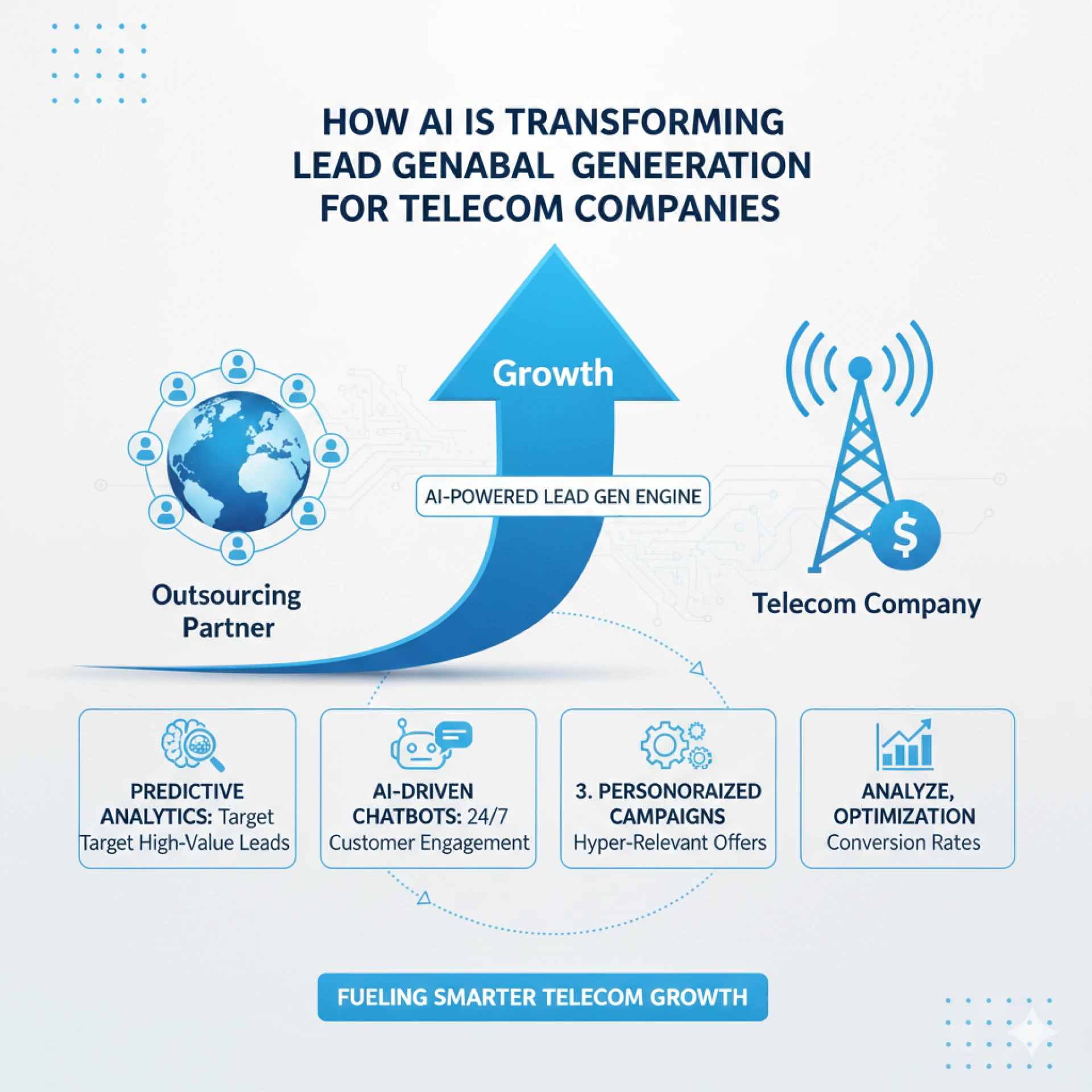
In an increasingly competitive and digitally driven market, telecom companies are under immense pressure to acquire high-quality leads efficiently while maintaining cost-effectiveness. Traditional lead generation methods—such as cold calling, mass advertising, and generic outreach—are no longer sufficient to meet modern customer expectations. This is where artificial intelligence (AI) is redefining the landscape.
AI-powered tools and strategies are enabling telecom providers to enhance targeting precision, personalize engagement, and optimize conversion rates. As a result, businesses leveraging advanced telecom lead generation services are gaining a significant competitive edge.
The Shift from Traditional to AI-Driven Lead Generation
Historically, telecom lead generation relied heavily on broad demographic targeting and manual processes. While these methods produced results, they often lacked accuracy and scalability. AI introduces a paradigm shift by enabling data-driven decision-making at every stage of the customer acquisition funnel.
With AI, telecom companies can:
- Analyze vast datasets in real time
- Identify high-intent prospects
- Predict customer behavior
- Automate repetitive processes
This transformation not only improves efficiency but also ensures that marketing efforts are directed toward prospects most likely to convert.
Advanced Data Analytics for Precision Targeting
One of the most impactful ways AI is transforming telecom lead generation services is through advanced data analytics. Telecom companies generate enormous volumes of customer data—from call records and browsing patterns to billing information and service usage.
AI algorithms can process this data to uncover actionable insights, such as:
- Customer preferences and consumption patterns
- Churn likelihood
- Upsell and cross-sell opportunities
By leveraging predictive analytics, telecom providers can identify prospects who are actively searching for new services or are dissatisfied with competitors. This enables highly targeted campaigns that significantly improve lead quality.
AI-Powered Customer Segmentation
Segmentation is critical in telecom marketing, given the diversity of customer needs—from individual consumers to large enterprises. AI enhances segmentation by moving beyond basic demographic criteria to behavioral and psychographic profiling.
Machine learning models can cluster prospects based on:
- Usage behavior
- Device preferences
- Engagement history
- Purchase intent
This granular segmentation allows telecom companies to tailor their messaging and offers with exceptional precision. As a result, telecom lead generation services powered by AI deliver higher engagement and better conversion rates.
Personalization at Scale
Modern consumers expect personalized experiences, and AI makes it possible to deliver this at scale. Telecom companies can use AI to create dynamic content and offers tailored to individual users.
For example:
- Personalized plan recommendations based on usage patterns
- Targeted promotions for data-heavy users
- Customized communication across email, SMS, and digital channels
AI-driven personalization not only enhances user experience but also builds trust and brand loyalty. Prospects are more likely to convert when they feel that the offering is specifically designed for their needs.
Intelligent Chatbots and Conversational AI
Conversational AI has become a cornerstone of modern telecom lead generation services. AI-powered chatbots can engage website visitors in real time, answer queries, and guide them through the decision-making process.
Key benefits include:
- 24/7 customer interaction
- Instant response to inquiries
- Lead qualification through automated conversations
- Seamless integration with CRM systems
Chatbots can also collect valuable data during interactions, helping telecom companies refine their targeting strategies further. By reducing response times and improving user experience, conversational AI significantly increases the likelihood of lead conversion.
Predictive Lead Scoring
Not all leads are created equal. AI-driven predictive lead scoring helps telecom companies prioritize prospects based on their likelihood to convert.
Using historical data and behavioral signals, AI models assign scores to leads by analyzing factors such as:
- Website activity
- Engagement with marketing campaigns
- Past purchase behavior
- Interaction frequency
Sales teams can then focus their efforts on high-value prospects, improving efficiency and shortening the sales cycle. This is particularly valuable in telecom, where complex offerings often require multiple touchpoints before conversion.
Marketing Automation and Campaign Optimization
AI enables telecom companies to automate and optimize marketing campaigns in real time. From email marketing to digital advertising, AI tools can continuously analyze performance metrics and adjust strategies accordingly.
Capabilities include:
- Automated A/B testing
- Real-time budget allocation
- Dynamic ad targeting
- Performance forecasting
This level of automation ensures that telecom lead generation services remain agile and responsive to changing market conditions. Campaigns can be refined continuously to maximize ROI and minimize wasted spend.
Enhancing Omnichannel Engagement
Today’s telecom customers interact with brands across multiple channels—websites, social media, mobile apps, and offline touchpoints. AI helps unify these interactions into a cohesive omnichannel strategy.
By integrating data across channels, AI enables:
- Consistent messaging
- Seamless customer journeys
- Cross-channel attribution tracking
This holistic approach ensures that prospects receive a unified experience, regardless of how they engage with the brand. It also allows telecom companies to identify the most effective channels for lead generation and optimize accordingly.
Fraud Detection and Data Quality Improvement
Data quality is critical for effective lead generation. AI plays a crucial role in detecting fraudulent or low-quality leads, ensuring that marketing and sales efforts are not wasted.
AI systems can:
- Identify duplicate or fake entries
- Detect unusual patterns in lead data
- Validate contact information
By maintaining high data integrity, telecom companies can improve the accuracy and effectiveness of their lead generation strategies.
The Role of AI in Outsourced Lead Generation
As telecom companies increasingly adopt AI, many are turning to specialized providers for implementation. Partnering with experts offering telecom lead generation services allows businesses to leverage cutting-edge technologies without significant in-house investment.
These providers bring:
- Advanced AI tools and platforms
- Industry-specific expertise
- Scalable solutions
- Continuous optimization
Outsourcing AI-driven lead generation enables telecom companies to focus on their core operations while benefiting from enhanced customer acquisition strategies.
Challenges and Considerations
While AI offers numerous advantages, its implementation is not without challenges. Telecom companies must address issues such as:
- Data privacy and compliance
- Integration with legacy systems
- Skill gaps in AI and analytics
- Initial investment costs
However, with the right strategy and partners, these challenges can be effectively managed.
The Future of AI in Telecom Lead Generation
The role of AI in telecom lead generation is only expected to grow. Emerging technologies such as generative AI, advanced natural language processing, and real-time analytics will further enhance the capabilities of telecom providers.
Future trends may include:
- Hyper-personalized marketing experiences
- Autonomous campaign management
- AI-driven customer journey orchestration
- Deeper integration with IoT data
Telecom companies that embrace these innovations will be better positioned to capture high-quality leads and maintain a competitive advantage.
Conclusion
AI is fundamentally transforming how telecom companies approach lead generation. From precision targeting and predictive analytics to personalization and automation, AI-driven strategies are enabling more efficient and effective customer acquisition.
By leveraging advanced telecom lead generation services, telecom providers can not only improve lead quality but also enhance customer engagement and drive long-term growth. As the industry continues to evolve, adopting AI will no longer be optional—it will be essential for staying ahead in a highly competitive market.