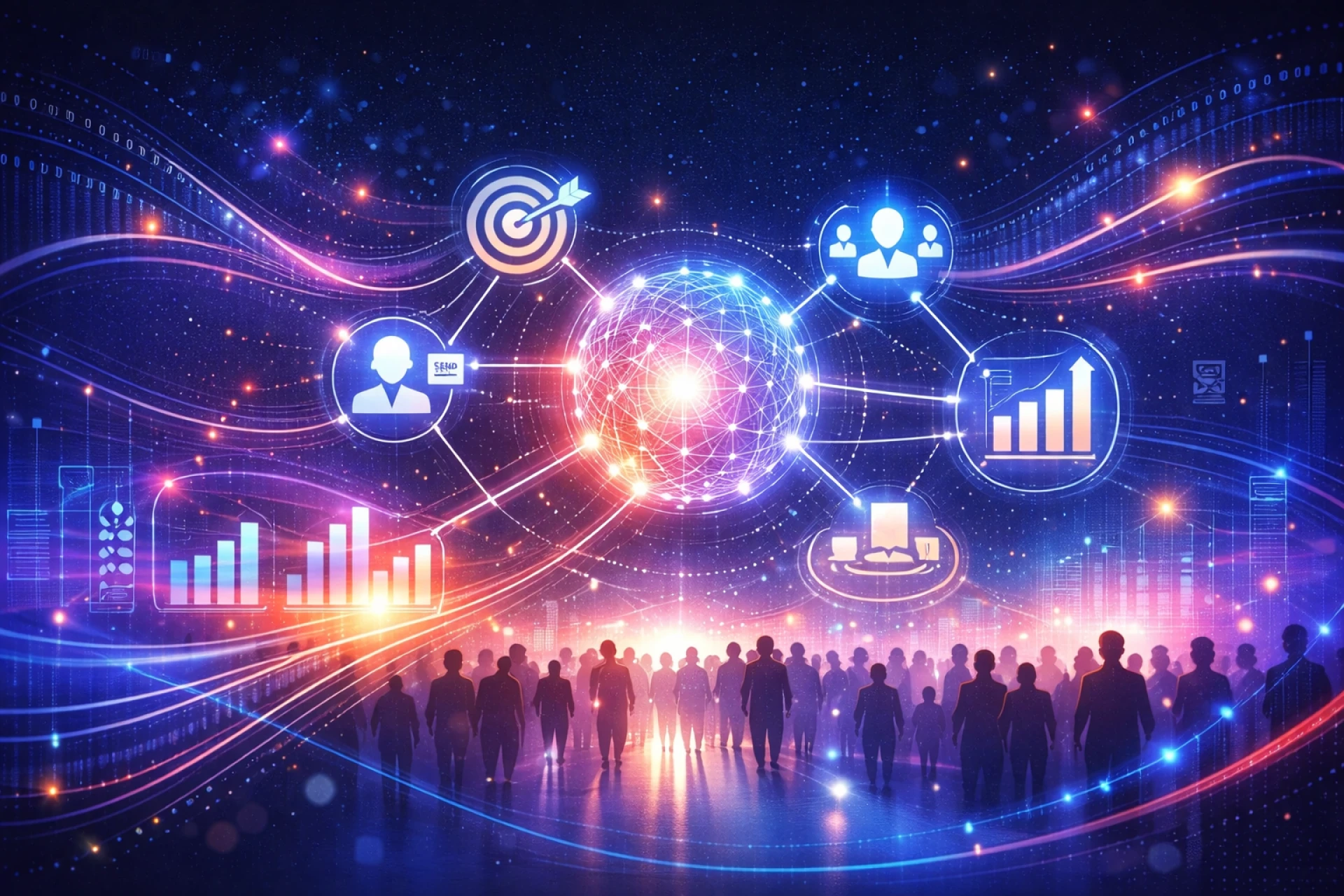
Event marketing has always been about creating meaningful connections with your audience. But in today’s fast-paced world, simply sending emails or posting on social media isn’t enough. Attendees expect personalized experiences, timely updates, and relevant content — and that’s where Artificial Intelligence (AI) comes in. AI is changing the way marketers plan, promote, and execute events, making the entire process smarter, faster, and more engaging.
The knowledge of AI in Event Marketing
In its essence, AI concerns the application of information and machine learning to make smarter decisions. This translates to the behavior of the attendees of event marketing to analyze it, predict the preferences, automate repetitive tasks, provide insights that can be used by the marketer to optimize the entire event journey.
It is not that AI has become a realistic tool that improves the efficiency and satisfaction of the attendees, but rather, we now have AI-driven chatbots answering questions in real-time, AI-based algorithms that suggest the most suitable sessions to attend, etc.
More intelligent Audience Divisions.
Audience segmentation is one of the best applications of AI. Conventionally, the marketers divide their audience in terms of simple aspects such as age, location, or job position. Although these categories are helpful, they do not reflect what really motivates engagement.
AI is able to process a great variety of data such as previous event attendance, web patterns, social media activity, and content interests. This will enable marketers to build highly target segments and apply personalized messaging.
To illustrate, AI will be able to track all attendees, who are interested in networking opportunities, and recommend them to visit sessions or workshops. Such personalization raises registration and attendance as well as enhancing overall satisfaction.
AI-Powered Content Creation
The process of making contents of events, including emails, social media posts, promotional videos, and web copy, may be tedious. Artificial intelligence tools may be used to assist with writing drafts, headlines, and even designs.
When AI is involved in performing the repetitive tasks, marketers have the opportunity to add the human touch to the process, and make sure that the content is consistent with the brand voice and appeals to the audience. It is also worth using AI to test the content: it is capable of analyzing what subject lines, content, or call-to-actions are most engaging and optimize the campaigns accordingly, allowing a marketer to do it in real-time.
Attendee Experiences that are personalized
Today, the attendees of the events have requirements of the customized experiences. AI will enable the marketer to offer personalized experiences to steer attendees through the event, as they feel appreciated and involved.
Some examples include:
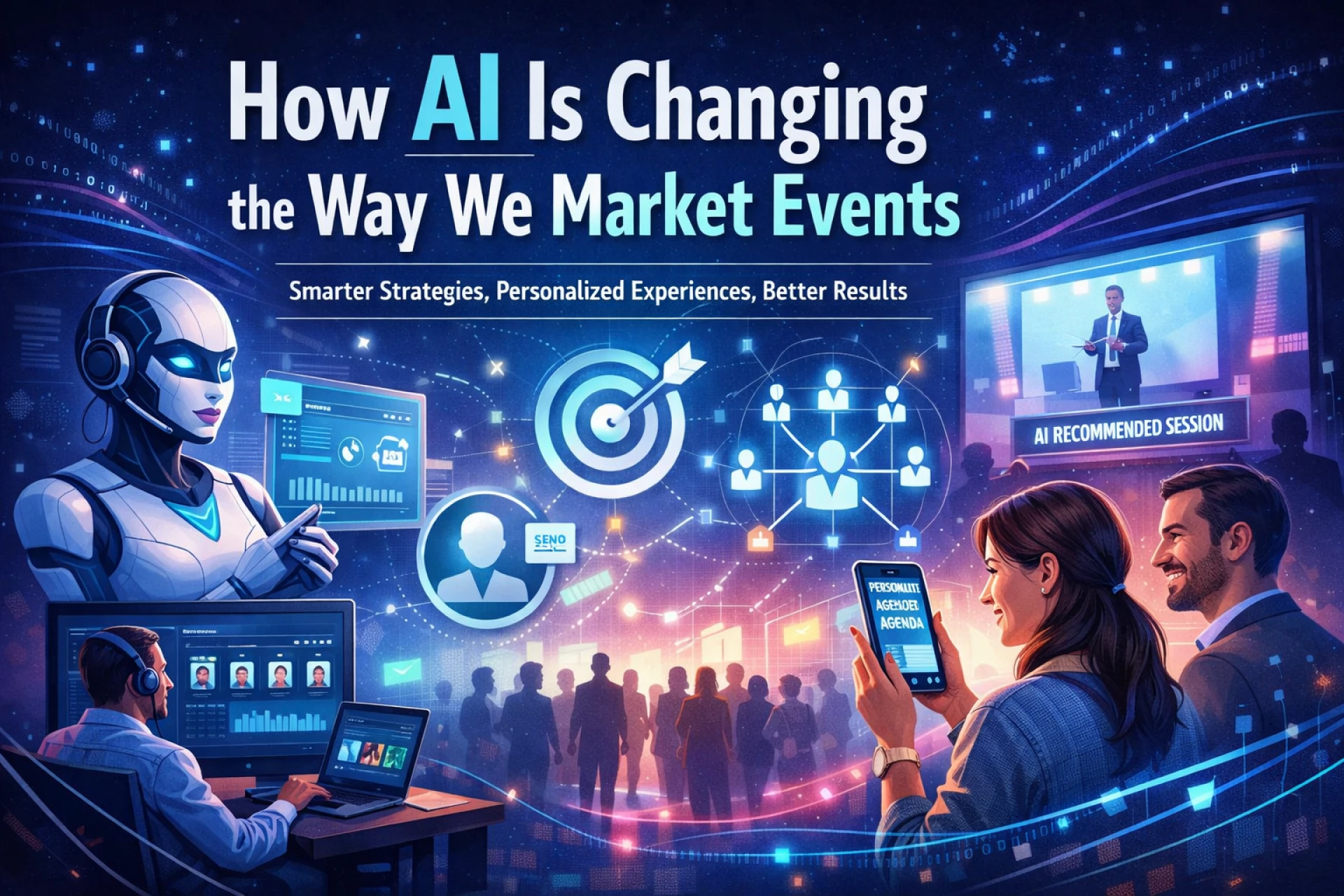
• Artificial intelligence-driven agendas that are centered on the interests of the attendants.
• Recommendations of the session that are based on past behavior.
• Networking recommendations amongst the attendees on similar objectives or industries.
• AI-enabled chatbots that respond to the questions and give updates in real-time.
AI, by offering personalized experiences, does not only enhance engagement but also leave long-term impressions and, therefore, is more likely to make attendees come to the next event.
Dynamic Real-time Insights and Optimization.
AI does not only assist prior to the event, it is also useful during the event. Live analytics would be able to follow the engagement rates, the popularity of the session, and the bottlenecks.
As an example, under-attended sessions can be identified through AI, which will allow providing recommendations on the specific messages or actions that will foster interest. On the same note, AI can assist organizers to organize logistics in a more efficient way, such as room allocation, attendee movement, and time prediction.
This real-time optimization enables event teams to react faster and build a more relaxed experience with more engagement to attendees.
Post-Event Follow-Up
The use of AI is not restricted only to the day of the event. Following the event, AI will be able to interpret the behavior and the feedback of attendees to distinguish trends, segment leads, and customize follow-ups.
As an illustration, AI may automatically send personalized emails with recordings of the sessions, mark important upcoming events, or suggest resources that the attendee is interested in. Such a focused follow-up helps to increase the retention rate, enhance a closer relationship, and give a good idea about organizing new events.
Overcoming Challenges
Although the benefits of AI are enormous, one should use it responsibly. Some of the considerations that should be taken into account are:
• Data privacy: Gather and utilize attendee data in an ethical and transparent way.
• Being authentic: AI must become a means of developing a connection with humans, not substituting it.
Quality control: ALways look through AI-generated content to make sure it does not go against your brand voice.
Rationally applied AI will be a companion that makes event marketing even stronger instead of a device that eliminates personal touch.
The Future of Artificial Intelligence in Event Marketing.
AI remains in the process of development, and its opportunities in event marketing are enormous. AI is changing the industry, whether it is predictive analytics that forecast the behavior of the attendants or hyper-personalized content and real-time engagement tools.
The first marketers who embrace AI will enjoy intelligent campaigns, higher attendance, and increased returns. With AI, teams are able to concentrate on the strategy, creativity and relationships, as technology takes up redundant tasks and data-intensive decisions.
AI is no longer an option on the side of event marketers, but it is becoming a necessity. Intelligent audience segmentation and automated content generation, personal attendee experience, and actionable analytics are some of the ways in which AI enables marketers to produce more effective, engaging and memorable events.
Through a thoughtful approach in how you use AI to your event strategy, it will be able to provide smarter campaigns, provide better experiences to those attending the event, and ultimately do more with the business.