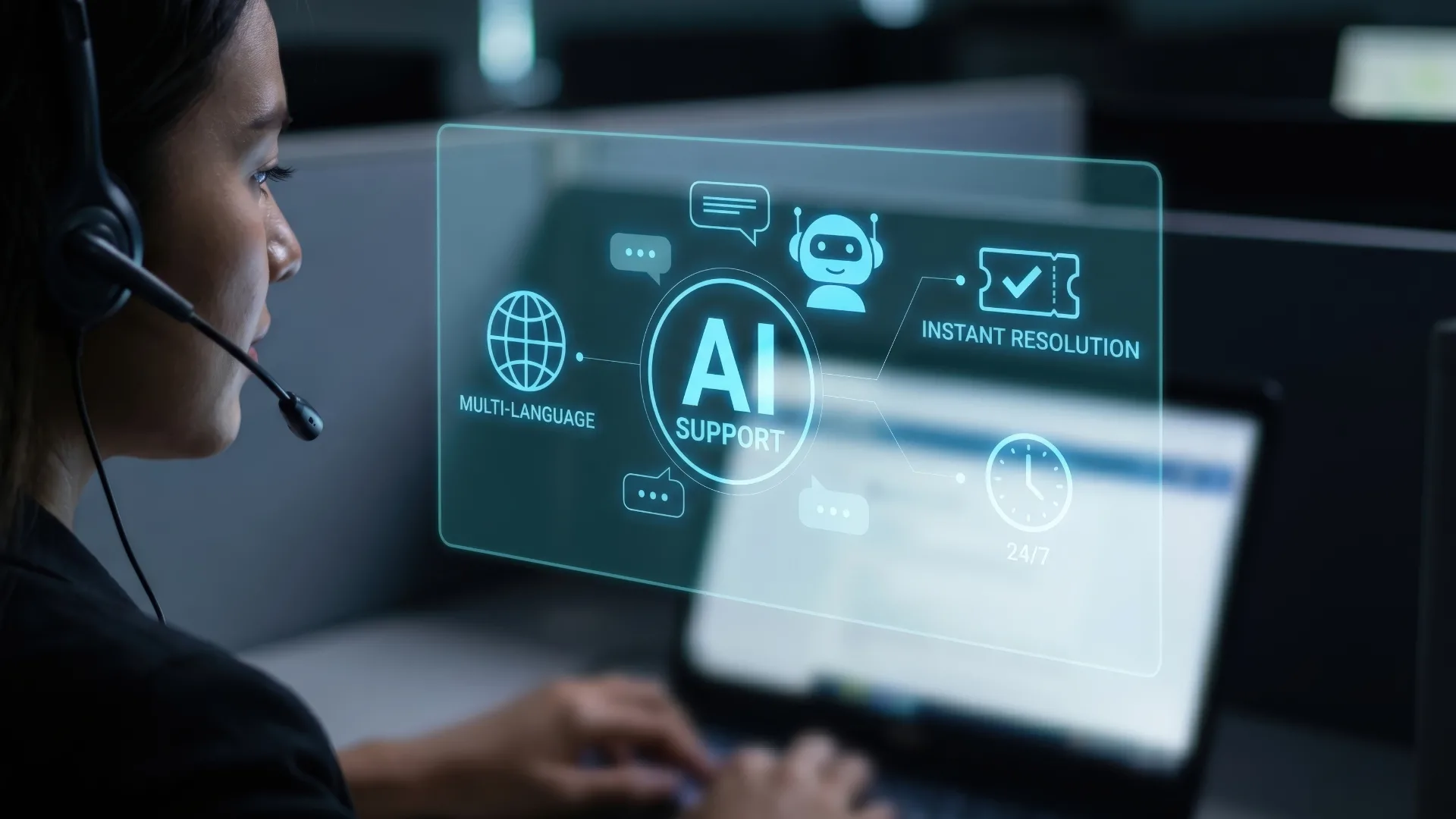
Artificial intelligence has become one of the most discussed technologies in the receivables management industry. While much of the conversation focuses on automation, predictive analytics, and customer-facing virtual agents, another category of AI is quietly reshaping collection operations around the world: AI copilots.
Unlike fully autonomous systems designed to replace human activity, AI copilots are designed to support human decision-making. They provide real-time guidance, surface relevant information, automate administrative tasks, and help agents navigate increasingly complex interactions.
As organizations continue evaluating global workforce strategies, the role of AI-enabled support tools is becoming increasingly important in creating high-performing offshore collections operating models.
Why Offshore Collections Operations Are Evolving
Historically, offshore operations were often viewed as cost-saving initiatives designed to provide additional capacity for transactional tasks. Today, offshore teams support customer service, collections, quality assurance, compliance monitoring, analytics, and operational support functions across numerous financial services organizations.
This shift reflects broader changes in both workforce dynamics and business expectations.
Organizations increasingly require scalable operating models capable of supporting growth while maintaining compliance standards and customer experience expectations. At the same time, talent shortages in many developed markets continue to create challenges for recruitment and retention.
According to the World Economic Forum's Future of Jobs Report, employers globally expect technology adoption and workforce transformation initiatives to accelerate significantly through the remainder of the decade. These trends are encouraging organizations to rethink how technology and talent work together.
Rather than viewing offshore teams solely as labor resources, many organizations now view them as strategic operational partners.
The Emergence of AI Copilot Tools for Collectors
AI copilot tools differ from traditional automation technologies because they are designed to work alongside employees rather than replace them.
Within collections operations, AI copilots can assist agents by:
- Summarizing previous account interactions
- Surfacing relevant compliance requirements
- Providing recommended next-step actions
- Automating post-call documentation
- Monitoring conversation quality
- Delivering real-time coaching prompts
- Identifying customer sentiment during interactions
These capabilities create meaningful productivity gains while helping organizations maintain operational consistency.
Furthermore, AI copilots reduce cognitive load for agents. Rather than searching through multiple systems or manually documenting every interaction, collectors can focus more attention on the customer conversation itself.
This distinction is particularly valuable in offshore collections environments where teams often manage high interaction volumes across multiple client portfolios.
The AI Copilot Framework for Offshore Operations
A growing number of organizations are beginning to implement what can be described as a four-pillar AI copilot framework:
1. Knowledge Assistance
AI copilots help agents quickly access account information, policy guidance, and relevant procedures during customer interactions. This reduces search time and supports faster decision-making.
2. Compliance Support
Real-time monitoring can identify potential compliance risks before they become operational issues. For organizations navigating evolving regulatory environments, this capability creates an additional layer of protection.
3. Performance Optimization
Copilots can provide coaching recommendations, identify training opportunities, and support agent development. Rather than relying exclusively on post-call reviews, organizations gain continuous performance insights.
4. Workflow Automation
Administrative activities such as note-taking, call summarization, and disposition updates can be partially automated, allowing agents to spend more time engaging with consumers.
Together, these four components create a more efficient operating environment without eliminating the human element that remains essential in collections.
Compliance and Customer Experience Benefits
One of the most compelling advantages of AI copilot technology is its ability to support both compliance and customer experience simultaneously.
Historically, organizations often viewed these objectives as competing priorities. Increased oversight could sometimes slow workflows, while productivity initiatives occasionally introduced compliance concerns.
AI copilots help bridge this gap.
By providing real-time prompts and standardized guidance, organizations can improve consistency across geographically distributed teams. Agents receive support during interactions rather than relying exclusively on memory or post-event reviews.
At the same time, consumers benefit from faster responses, more accurate information, and smoother interactions.
Human Expertise Remains Essential
Despite advances in artificial intelligence, the future of collections remains fundamentally human-centered.
Consumers facing financial challenges often require empathy, problem-solving, and nuanced communication. These capabilities remain difficult to replicate through automation alone.
AI copilots should therefore be viewed as workforce enhancement tools rather than workforce replacement tools.
The most successful implementations combine human judgment with machine-assisted efficiency.
The Future of AI-Enabled Debt Collection Operations
As AI adoption continues accelerating across financial services, AI copilots are likely to become standard components of modern collections environments.
Organizations pursuing a long-term global BPO strategy for collections will increasingly evaluate how technology supports workforce effectiveness rather than simply reducing headcount. Offshore collections operating models that successfully integrate AI assistance, compliance governance, workforce development, and customer experience principles will be positioned to create sustainable competitive advantages.
For additional receivables management research, technology analysis, and operational strategy insights, visit ReceivablesInfo.com and explore industry discussions.
Readers interested in broader discussions surrounding offshore operations and strategic outsourcing can also explore Receivables Podcast episode 283 featuring Saket Sahoo from Connect BPS.
About Author
Adam Parks has become a voice for the accounts receivable industry. With almost 20 years of experience working in debt portfolio purchasing, debt sales, consulting, and technology systems, Adam now produces industry news, hosts hundreds of episodes of the Receivables Podcast, and manages branding, websites, and marketing for over 100 companies within the industry.