
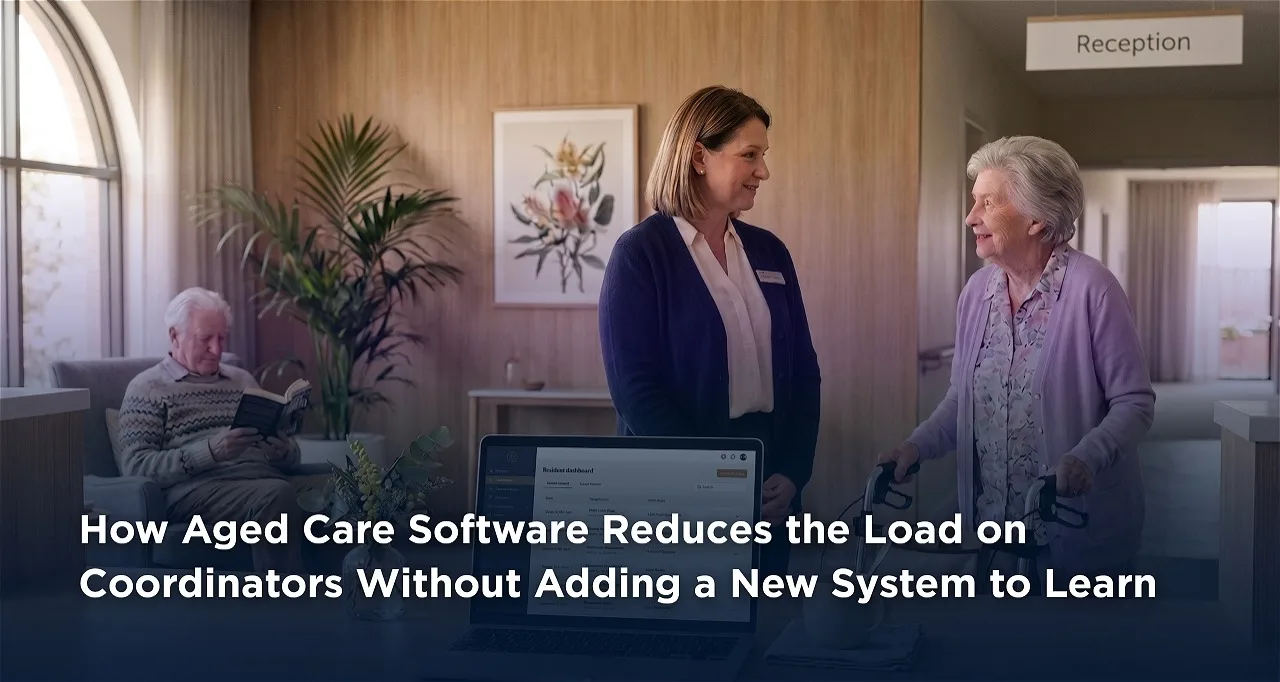
It is 10:47 on a Friday morning at a 100-bed aged care facility on the Sunshine Coast. Angela has been covering the front desk for two days while the lifestyle coordinator is on leave, and she is starting to lose track. A daughter at the counter wants to know if her mother's hairdresser appointment has been moved. Behind her, a son is waiting to book the private lounge for Sunday lunch. The phone keeps ringing, probably another family trying to arrange transport for a specialist visit next week. Taped to the side of the monitor is a handwritten list of 23 outstanding requests. Nine have no owner. Three go back to Monday.
This scene plays out in Australian aged care facilities every week, usually on Fridays or Mondays. Bookings and requests pile up around the edges of the working week, and somebody has to make sense of them before the weekend hits or the coordinator comes back. When the tools for the job are a paper diary, a shared inbox nobody checks on weekends, and a whiteboard with last month's activity prices still on it, the work gets away from whoever is trying to hold it together.
The pressure points nobody sees on the org chart
Aged care coordinators and front-desk staff absorb a particular kind of pressure. They are usually the single routing point for every non-clinical decision in the building. A family wants to book a birthday afternoon tea, it goes through them. A resident wants to switch hairdressers, same thing. The visiting podiatrist moves his day without telling anyone, and untangling that also lands at reception.
Factor in the usual aged care staffing mix of casual shifts, agency cover and rotations between wings, and most of the useful information ends up living in one person's head at a time. When that person is on leave, the system reverts to guessing.
The ACQSC sits on top of all of this. Assessors want to see that resident choice is being honoured routinely, not dug up from memory when a family complains. Proving that from a paper ledger and a shared email folder usually means days of reconstruction before a visit.
Why "just use a booking app" usually fails
Almost every aged care facility has tried a booking app at some point. Often more than one. Most of them end up as a graveyard of abandoned tools that looked great in the demo and then ran aground in real operations. The failure mode is familiar. Staff are asked to log in to another platform on top of clinical software, rostering, maintenance and whatever CRM the business runs. Training takes time nobody has. Someone forgets the password. Someone else quietly stops using it, and the data starts drifting from reality.
An aged care concierge service built as a standalone product, disconnected from everything else a facility runs, almost always ends up this way. The technology is rarely the issue. The fragmentation is.
What concierge management aged care software should actually do
Most of what concierge software needs to do at a front desk is unglamorous. Who asked for what. Who is looking after it. Whether it has happened yet. And whether the resident or their family has been told. If a staff member has to open three tabs to answer any of those, the software is getting in the way rather than helping.
A properly integrated aged care concierge service captures the request wherever it comes in: at reception, on a night-shift phone call or through the family portal from someone's lounge in Sydney. From there it routes itself to whoever needs to act on it, whether that is the lifestyle team, maintenance or the kitchen. The coordinator stops being the bottleneck that every request has to pass through.
Every action is timestamped and attributed, which is what the ACQSC wants to see when they ask how resident preferences are being tracked. The service booking software aged care facilities stick with over time is the kind where this record-keeping happens on its own, without staff remembering to generate reports.
Read more about How Aged Care Software Reduces the Load on Coordinators Without Adding a New System to Learn here: https://centrimlife.com.au/blog/how-aged-care-software-reduces-the-load-on-coordinators-without-adding-a-new-system-to-learn/