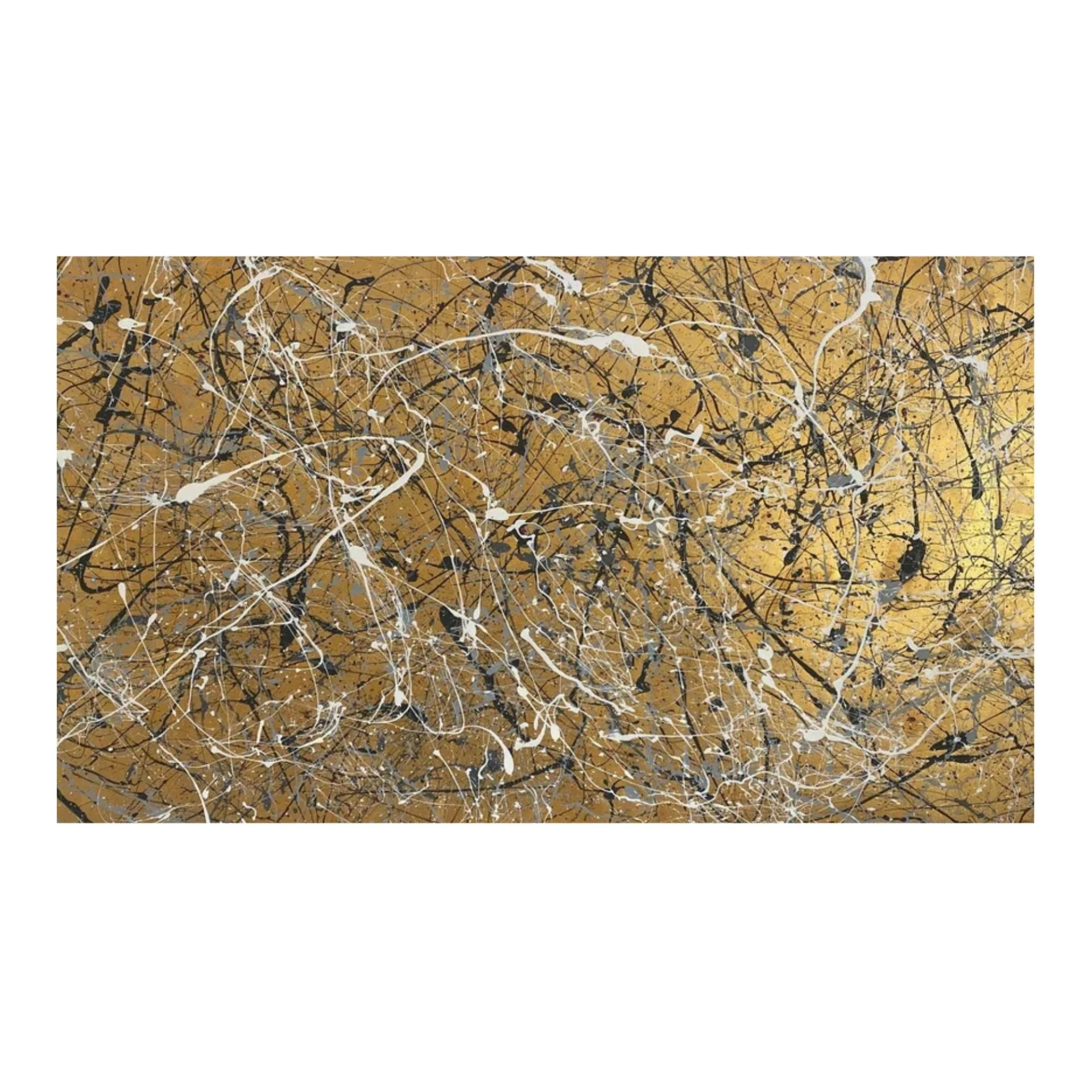
Pollock Canvas Art" is now an iconic term in modern interior design. Abstract expressionism goes beyond decor. It transforms into an experience. When you set a dramatic and expansive piece to your wall and invite the energy, emotions as well as a feeling of motion in your room. Abstract expressionist art like those influenced by Jackson Pollock, use dynamic movements, layers of textures and a variety of forms that are unpredictable. They are in line with modern designs that encourage individual expression as well as spatial tension.
Abstract expressionism was born around the turn of the 20th century. The artists rejected representation as a strict method to create art with their intuition. Jackson Pollock's drip-paintings are among the best-known instances. Pollock moved his large canvases in the air painting with trowels, sticks, and even with his hands. It was a result that was able to capture physical movement as well as emotional energy. Designers and homeowners today employ these concepts to make interiors transform from static and boring to dynamic and dynamic.
Contemporary interiors struggle to find the balance. It is important to have a peaceful place to relax and excitement where you work or gather. Abstract artworks can fulfill both of these needs. Studies conducted by the American Society of Interior Designers illustrates that works composed of organic shapes will increase interest in the viewer at up to 40% but without occupying the entire area. This is especially true of work that is influenced by Pollock's method of painting. The human eye is naturally drawn to the lines of motion and has a variety of textures. These patterns attract attention and keep it more than geometric designs or color blocks that are flat.
Color theory plays a key part in the way abstract expressionism affects a space. Pollock's work often features highly contrasted, saturated colors as well as layered shades. If you place " Pollock Canvas Art" to the space of a neutral palette it creates an emphasis point. Designers determine contrast by with the help of the contrast ratio that measures the difference in luminance between two shades. Any ratio that is greater than 4.5:1 is usually noticeable. In many Pollock-style works, contrast ratios exceed 7:1. The tension in the visual directs the eyes and helps anchor the overall design of the space.
Texture is a way to add another dimension. Pollock's works are noted for their textured surfaces. Contemporary interiors have a lot of texture. affects the way a room feels. An untextured wall placed against a heavy texture canvas will create the impression of a conversation. Research in the field of neuroscience and environmental psychology indicate that surfaces with textured textures can affect the way we regulate our mood. Visual cues that are triggered by touch activate the brain's somatosensory systems and can decrease the stress response by as high as 15 . If abstract expressionist art that have complex textures are displayed in offices or living spaces and offices, they influence the way individuals feel and behave in these spaces.
The placement of the piece is crucial. In an open-plan living space the large piece of art may define zones with no physical boundaries. The traditional design may employ furniture or partitions in order to divide spaces. However, art could serve similar purposes without causing any interference. Designers generally suggest hanging an abstract canvas on the floor at eye height. Eye tracking research suggests that people have a higher probability of looking at art that is between 57 and 60 inches above the floor and is consistent with standard vision lines. The rightly placed piece of " Pollock Canvas Art" does more than draw the attention of viewers, but it also creates the spatial order.
Abstract art can also be used to complement minimalist or maximalist designs. For minimalist rooms this art form's sophistication provides depth, with no clutter. In a minimalist setting it reinforces the concept of an expressive the abundance. One of the most important aspects is size. Experts in architecture recommend that the size of the most prominent artwork must at least 60% of the furniture underneath it, for example an armchair or console. Insufficient space, and the artwork feels small and unimportant or too big, and it takes over. In the case of pieces that are reminiscent of Pollock's vast compositions, larger sizes are often the best choice since they reflect the size and energy of the initial abstract expressionism movement.
Lighting can also transform abstract expressionism inside interior spaces. The track lighting as well as the adjustable spotlights will increase the texture and depth of a canvas. If light strikes the painted surface in a slant shadows are formed in grooves and the ridges. The result is that the perception of dimensionality increases. The study of lighting designers revealed that lighting with angles can increase perceived texture up to 25% compared to straight, flat lighting. By incorporating lighting that highlights the physical characteristics of the art will ensure that the artwork is constantly changing all day long and well throughout the evening.
The art of painting can help improve mental well-being. Research in interior design links the exposure to art that is expressive to increased creativity and increased emotional involvement. Abstract art is different from representational art in that it doesn't require any specific interpretation for a particular object. Instead, it allows viewers to interpret their own personal interpretations. The open-ended nature of the engagement may encourage the mind to think creatively. The effect of workspaces is linked to better ideas generated scores as well as improved solving performance. A striking piece of art at the home office or studio may help in fostering the ability to focus and innovating.
There is no set of rules to determine what constitutes a space effective. One of the most crucial factors is the consistency between the artwork as well as your design ambitions. If you're seeking a space to be lively, pick works with a dynamic style and striking juxtapositions. If you're looking for tranquil exhilaration, pick pieces that have well-balanced compositions and harmonies. Abstract expressionism has a vast range of. Techniques like drips, splattering and layering offer choices that vary from deep to contemplative.
The decision to invest in abstract art shows appreciation for culture. The art market in the world for modern and contemporary art will continue to expand. By 2024, the auctions of post-war and modern art pieces topped $3.2 billion through online platforms all by themselves. These numbers suggest a growing and growing interest in the expressive artworks. With more people bringing art into their everyday lives and homes, the distinction between home and gallery continues to blur. Abstract art is no longer confined to museum spaces. It's a must in living spaces, bedrooms hallways, offices, and halls in which people work, live and talk.
Abstract expressionism, in essence, transforms interiors through the introduction of the sense of movement textures, colors as well as emotional the sense of depth. The walls are transformed from static walls to vibrant visual spaces. If you select pieces that are influenced by the energy and passion of Pollock as well as other abstract artists, you alter your room's appearance and function. Its presence " Pollock Canvas Art" inside your room will do more than simply decorate the walls. It influences how you feel about the world around you every day.