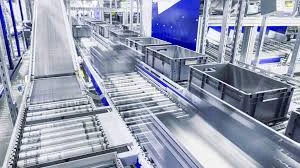
In every manufacturing industry, speed, accuracy, and workflow efficiency define profitability. When raw materials, semi-finished goods, and final products move smoothly through the production line, output increases — but when the flow is slow, manual, or unorganized, even the most advanced factory struggles to deliver results. This is where a Material Handling System becomes an invaluable asset.
A modern, automated Material Handling System optimizes the movement, storage, control, and protection of materials throughout the manufacturing cycle. From receiving raw inputs to dispatching finished goods, it ensures that every step is faster, safer, and more precise — directly improving plant productivity and costing efficiency.
How Material Handling System Boosts Manufacturing Productivity
1. Reduces Material Transfer Time
Manual lifting and shifting is slow and labor-intensive. When automation takes over:
- Material flow becomes continuous
- Production speed increases significantly
- Bottlenecks and line delays reduce
Faster movement = faster output = higher production capacity.
2. Minimizes Human Errors and Product Damage
Manual handling risks breakage, spillage, contamination, and mistakes.
A well-designed Material Handling System ensures controlled movement with precision, reducing wastage and improving product quality consistency.
3. Increases Workforce Efficiency
Instead of pushing or lifting heavy loads, workers can focus on operational tasks, machine control, and quality checks. This leads to:
- Better manpower utilization
- Reduced fatigue and safety risks
- Higher productivity per shift
Automation supports people, not replaces them — it makes them more efficient.
4. Improves Space Utilization
Efficient systems use vertical and horizontal space smartly through conveyors, storage racks, and automated transfer lines. The plant layout becomes more organized, allowing:
- Increased storage capacity
- Clean workflow channels
- Smooth material distribution across processes
More production inside the same floor space = higher ROI.
5. Better Workflow Transparency & Process Control
Smart systems offer real-time monitoring. You know exactly:
- What material is where
- How much stock is available
- Which batch is under process
Higher visibility leads to better planning, faster decision-making, and improved operational control.
Direct Impact on Manufacturing Efficiency
Improvement AreaBenefit with Automated Material HandlingProduction SpeedFaster processing & cycle time reductionWorkforce ProductivityLess manual strain, more skilled workCost EfficiencyReduced labor + material lossSafety & StandardsLower accident risk and contaminationProduct QualityConsistent output without variation
The result? Higher throughput, lower cost, and faster delivery timelines — the winning formula for manufacturing success.
Final Thoughts
A smart Material Handling System is not just machinery — it is a productivity engine for modern factories. With automation, industries can eliminate handling delays, reduce wastage, enhance safety, and achieve scalable production growth. Whether you are planning to upgrade or setting up a new plant, an efficient handling solution can transform your operational performance.