Student engagement has become one of the most critical success factors in education and training environments. In 2026, learners expect interactive, flexible, and personalized experiences that go far beyond static lectures or one-way content delivery. Institutions that fail to meet these expectations often struggle with low participation, reduced completion rates, and declining learner satisfaction.
This is where a modern Learning Management System plays a transformative role. More than just a platform to host courses, today’s LMS solutions are designed to actively involve learners, encourage collaboration, and create meaningful learning journeys. By combining technology, data, and user-centric design, an LMS helps institutions keep students motivated, connected, and invested in their progress.
Key Takeaways
- Understand how digital learning platforms directly influence student engagement
- Learn which LMS features have the greatest impact on participation and motivation
- Discover practical ways to improve engagement using data and automation
- Explore best practices for selecting and optimizing the right LMS for your institution
Why Student Engagement Is a Growing Challenge
Engagement challenges didn’t start with online learning, but they became more visible as digital and hybrid models expanded. Students today balance academics with work, personal responsibilities, and constant digital distractions. Traditional teaching methods often struggle to hold attention in this environment.
Common engagement challenges include inconsistent participation, lack of interaction, delayed feedback, and limited personalization. When students feel disconnected from content or instructors, learning outcomes suffer. Institutions need systems that not only deliver content but also actively foster interaction and motivation.
This shift has pushed education providers to rethink how learning experiences are designed and delivered.
The Role of Technology in Modern Learning Experiences
Technology has reshaped how people consume information, collaborate, and develop skills. Learners now expect the same level of usability and responsiveness from education platforms that they experience in everyday digital tools.
A Learning Management System supports this expectation by creating a structured yet flexible environment where students can access content anytime, interact with peers, and receive timely feedback. Instead of passively consuming material, learners become active participants in their education.
When implemented thoughtfully, an LMS becomes the central hub for engagement rather than just a content repository.
How an LMS Drives Engagement Through Interactive Learning
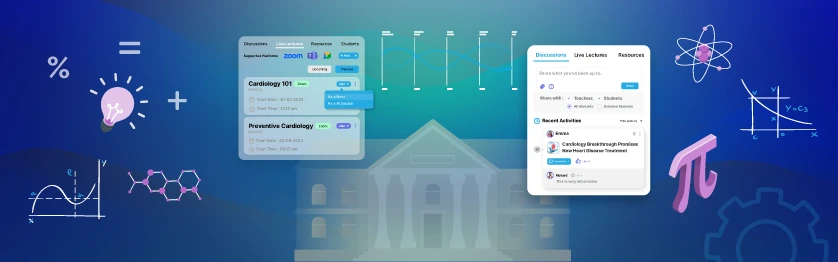
One of the strongest engagement drivers is interactivity. Modern LMS platforms support multimedia content, quizzes, polls, discussions, and assignments that encourage participation rather than passive reading or watching.
Interactive elements help break complex topics into digestible formats and allow students to test their understanding in real time. Features like discussion forums and peer collaboration tools also promote social learning, which has proven to increase motivation and retention.
By offering multiple ways to engage with content, institutions can accommodate different learning styles and preferences.
Personalization That Keeps Learners Motivated
Students are more engaged when learning feels relevant to their goals and pace. Personalization is no longer a “nice to have” feature — it’s an expectation.
A modern LMS enables personalized learning paths, adaptive content delivery, and progress-based recommendations. Learners can move through material at a pace that suits them, revisit challenging topics, and focus on areas that need improvement.
Personalized dashboards also help students visualize their progress, deadlines, and achievements, reinforcing a sense of ownership over their learning journey.
Real-Time Feedback and Continuous Communication
Delayed feedback is a major engagement killer. When students don’t know how they’re performing, motivation drops quickly.
Learning platforms address this by providing instant feedback through quizzes, automated assessments, and performance analytics. Instructors can identify struggling students early and offer targeted support before disengagement turns into dropout.
Built-in messaging and notification tools also ensure that learners stay informed about updates, deadlines, and announcements, maintaining consistent communication throughout the learning cycle.
Gamification and Motivation Strategies
Gamification has emerged as a powerful engagement strategy, especially for digital-native learners. Badges, leaderboards, progress tracking, and achievement milestones introduce elements of challenge and reward into the learning process.
When used thoughtfully, gamification encourages healthy competition, boosts participation, and reinforces positive learning behaviors. An LMS that supports these features helps institutions create a more dynamic and motivating environment without compromising academic rigor.
Data-Driven Insights for Smarter Engagement Decisions
Engagement isn’t just about features — it’s about understanding behavior. Analytics and reporting tools built into an LMS provide valuable insights into learner activity, participation trends, and content effectiveness.
Institutions can use this data to refine course design, adjust teaching strategies, and identify which engagement tactics are working best. Instead of relying on assumptions, decisions are backed by real learner data.
This data-driven approach allows institutions to continuously improve engagement over time.
Best Practices to Maximize Engagement with an LMS
To fully realize engagement benefits, institutions should focus on strategy as much as technology:
- Design courses with interaction in mind, not just content delivery
- Train educators to use engagement features effectively
- Encourage consistent communication and timely feedback
- Use analytics to monitor engagement and intervene early
- Continuously gather learner feedback to refine experiences
Choosing the right platform is also essential. Look for an LMS that integrates easily with existing systems, supports scalability, and prioritizes user experience for both learners and educators.
Frequently Asked Questions
How does a Learning Management System improve student engagement?
A Learning Management System improves engagement by offering interactive content, personalized learning paths, real-time feedback, and collaboration tools that keep learners actively involved in the learning process.
Can an LMS support both online and in-person learning?
Yes. Most modern platforms support blended, hybrid, and fully online learning models, allowing institutions to engage students across different formats seamlessly.
What features should institutions look for to boost engagement?
Key features include multimedia content support, discussion forums, analytics, mobile access, automated assessments, and personalized dashboards.
Is an LMS suitable for institutions of all sizes?
Absolutely. Scalable LMS solutions can support small training centers as well as large multi-campus institutions without sacrificing performance or usability.
How long does it take to see engagement improvements after implementation?
Many institutions notice improved participation and communication within the first few weeks, with deeper engagement gains appearing as courses and workflows are optimized.
Take the Next Step Toward Engaged Learning Experiences
Improving student engagement requires more than good intentions — it requires the right technology and a clear strategy. Institutions that invest in a well-designed Learning Management System are better positioned to create meaningful, interactive, and student-centered learning environments.
Platforms like Classe365 combine modern LMS capabilities with intelligent automation and seamless integration, helping institutions not only deliver content but also build engaging, future-ready learning experiences. By choosing a solution designed for today’s learners, institutions can turn engagement into a long-term advantage rather than a constant challenge.