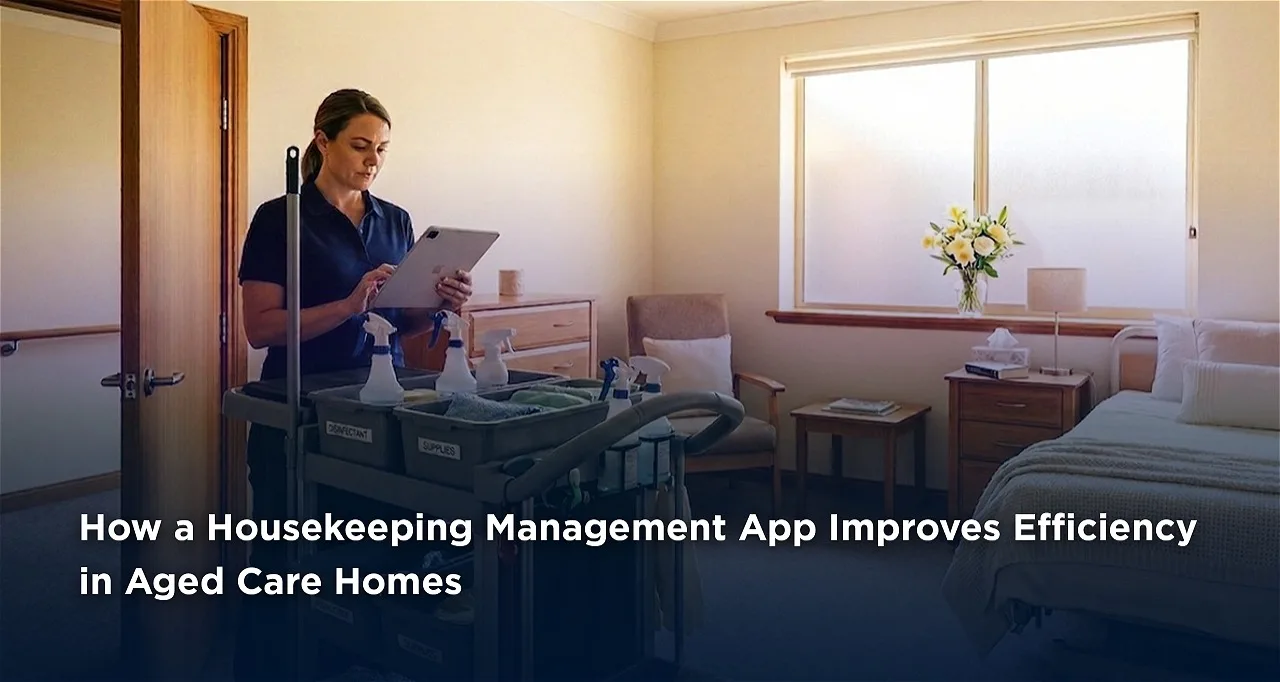
It's 6:50 am. The morning housekeeping team is arriving for a shift at a 65-bed aged care facility in western Sydney. The team leader picks up the paper roster from the bench. Two staff names have been crossed out. Agency cover came through late last night, and two people she has never worked with are on today. The resident in Room 11 has a documented cleaning product sensitivity, but that information is in the care file at the nurses' station, not on the cleaning roster. She knows about it because she has been here three years. The agency workers don't.
By 8:30 am, she has redirected one of them twice, rewritten the schedule by hand, and is still not certain whether last night's jobs were properly documented.
Nothing has gone wrong yet. But that word "yet" is carrying a lot of weight.
This kind of morning is familiar in aged care facilities running housekeeping on paper. The problem isn't the people doing the work. It's the systems that ask them to carry too much in their heads.
Why housekeeping in aged care is operationally complex
Residential aged care is not like cleaning a hotel. Consider what that looks like in practice: a resident with a morning therapy session needs her room cleared before 9am; another has a documented latex allergy; the facility's infection control requirements may be changing room by room as residents' health shifts. None of this holds still.
Paper-based systems can't keep pace with that kind of variability. A printed weekly roster assigns rooms to staff but doesn't carry the context that makes cleaning those rooms safe. That context ends up distributed across care plans, handwritten notes, and whoever happened to be on shift the day before.
What ACQSC now expects
Under the Strengthened Aged Care Quality Standards, effective November 2025, Standard 4 (The Environment) requires aged care facilities to maintain a physical environment that is safe, clean, and well-maintained in ways that actively support residents' health, dignity, and independence. The Aged Care Quality and Safety Commission expects this to be demonstrated through evidence: documented cleaning schedules, completion records, and a traceable process for identifying and resolving issues.
During an unannounced ACQSC review, "we clean regularly" isn't enough. Assessors want to see the record that confirms it.
Where manual housekeeping management breaks down
Handovers that drop detail
In most aged care facilities, the housekeeping shift handover is brief and informal. What was completed, what was deferred, and why a room was skipped: most of that context doesn't survive the handover intact. The next shift inherits a partial picture and patches it as best they can.
Managers without a live picture
Housekeeping managers typically have no real-time view of where things stand across the facility. Checking progress means physically walking the floor or waiting until someone flags a problem. By the time an issue surfaces, it has usually become a complaint already.
Resident-specific information that doesn't reach the right person
Resident care files hold allergy flags, infection control requirements, and sensitivity notes, but that information rarely makes it onto the cleaning job itself. Long-term staff know to check. Everyone else starts without the context they need.
What changes when a facility moves to a housekeeping management app
A purpose-built housekeeping management app structures the work digitally. The room assignment, the resident notes, and the completion record travel together.
Resident notes are attached to every job
When a cleaner opens the job for Room 11, the relevant resident notes are already there: product restrictions, preferred timing, current infection control status, and anything the care team has flagged. There is no need to consult a separate file or interrupt a nurse to ask. The information that makes the job safe is built into the job itself.
Live visibility for managers
The housekeeping manager can see from any device which rooms have been cleaned, which are in progress, and which haven't been started. Patterns become visible over time: rooms that consistently fall behind, stretches where agency coverage correlates with incomplete jobs. A paper system produces this kind of information only in hindsight, if at all.
Compliance records that build themselves
Every completed job generates a timestamped log: who completed the work, when, what products were used, and any issues raised during the room check. When an ACQSC assessor asks for evidence of cleaning compliance across a specific period, the record is searchable and complete. It takes minutes to produce.
A real-life example
A 72-bed aged care facility in regional Victoria ran housekeeping on a combination of paper schedules and a shared messaging app. Handovers were inconsistent, particularly on weekends, and resident-specific cleaning notes were held in care plans that the housekeeping team didn't routinely access.
During an ACQSC review, staff were asked to produce cleaning records covering a two-week period that included a confirmed infection control event in the facility. The records existed. They were spread across a folder at the nurses' station: two team leaders' handwritten notes and a spreadsheet that hadn't been updated correctly. Pulling together a coherent picture took more than an hour.
Three months after transitioning to a digital housekeeping management app, the team leader could generate a complete compliance report for any date range in under three minutes. Resident-specific notes were built into room templates during setup. Handover gaps dropped significantly because the system carried information forward regardless of who was on shift.
Read more about how a housekeeping management app improves efficiency in aged care homes here:
https://centrimlife.com.au/blog/how-a-housekeeping-management-app-improves-efficiency-in-aged-care-homes/