Why does tap water sometimes smell like a swimming pool, taste metallic, or leave a faint film inside a kettle? The cause may come from more than one place. Municipal disinfectants, old pipes, mineral deposits, and organic compounds can all affect water at the kitchen faucet. A home water filtration system treats that water just before use, making it suitable for drinking, cooking, rinsing produce, and preparing tea or coffee.
Chlorine, Lead, And Odor Need Different Treatment
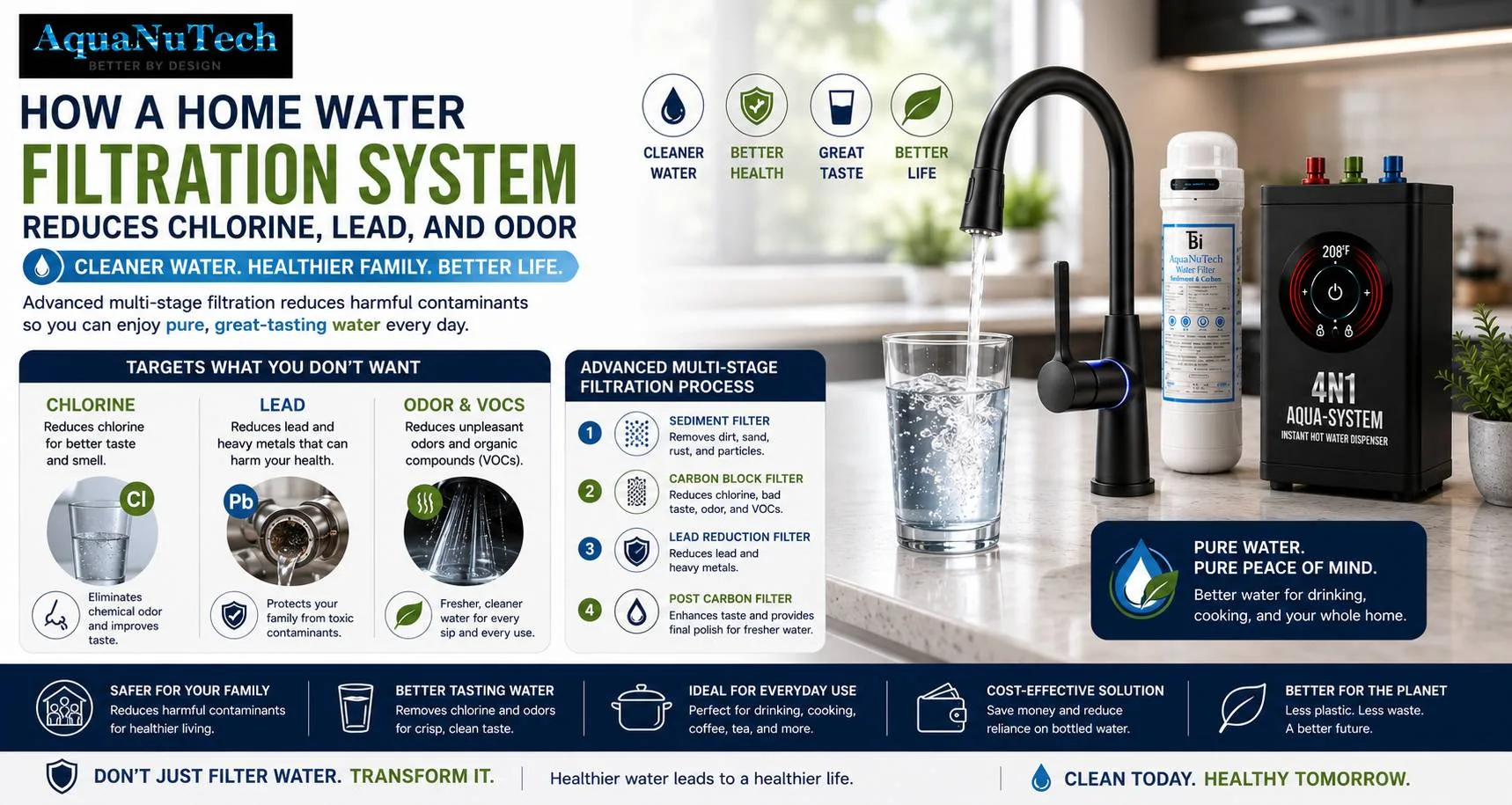
Chlorine usually enters the water supply during municipal treatment. Utilities use it to control harmful microorganisms while water moves through the distribution network. Some residual chlorine can remain when the water reaches a home. It may not create an immediate safety concern, but it can change taste and smell.
Lead enters through another route. Older service lines, solder, brass fittings, and aging household plumbing may release it into water. Odor also has several possible sources. Chlorine can cause it, but stagnant plumbing, sulfur compounds, and organic material may contribute.
A single filter medium cannot handle every concern in the same way. A filtration system for kitchen sink use should combine media that target separate issues instead of relying on one broad claim.
How Layered Filtration Handles More Than Taste
AquaNuTech uses a three-part treatment approach in the FL2000. The design includes hollow-fiber membranes rated to 0.01 microns, a 0.5-micron high-density carbon block, and polyphosphate for scale control.
The carbon block takes on chlorine, unpleasant taste, and odor. The hollow-fiber membrane forms a physical barrier against fine particles and selected microscopic contaminants. Polyphosphate works on mineral scale, which can build up around faucets and hot-water equipment.
This layered design gives the unit more range than a basic carbon cartridge. It does not turn the kitchen filter into a whole-house system, and it should not be described that way. It treats drinking and cooking water at one point of use. For many households, that is the area that needs treatment.
What NSF Listings Tell You
Certification deserves a close look because the label alone does not explain everything. An NSF listing applies only to the performance claims tested under that standard.
The FL2000 is listed to NSF/ANSI Standards 42 and 53 for applicable aesthetic and health-related reduction claims. Standard 42 generally covers concerns such as chlorine taste and odor. Standard 53 covers certain contaminants linked with health effects. Buyers still need to check the performance sheet to see which claims apply.
Before choosing a home water filtration system, review:
- Contaminants named in the certified performance information
- Cartridge capacity and expected replacement interval
- Flow rate during normal kitchen use
- Available space under the sink
- Faucet, tubing, and connection requirements
A local water report or laboratory test can help when a household suspects lead, sulfur, or another specific issue. Certification supports comparison, but it cannot replace testing when the cause remains unknown.
Capacity And Flow Affect Daily Use
Filter technology receives most of the attention. Daily use often exposes the weaknesses later.
A cartridge with limited capacity may need frequent changes. Weak flow can slow bottle filling, cooking, and drink preparation. A large housing may take up storage space under the sink.
The FL2000 has a listed capacity of 1,500 gallons and a flow rate of at least 0.55 gallons per minute. Its approximate size is 3 inches by 12 inches, which suits kitchens where cabinet room is limited.
The manufacturer recommends cartridge replacement every 8 to 12 months with a standard filtration faucet. The interval falls to 6 to 8 months when the filter works with the 4N1 system. Actual timing still depends on water use. A family that cooks daily and fills several bottles will use the cartridge faster than someone filtering a few glasses.
Faucet Choice Can Change The Setup
A filtration system for kitchen sink installation does not require one standard arrangement. Some households want a separate cold-water faucet. Others prefer filtered cold water together with instant hot water. A 4N1 setup can bring several functions into one kitchen station.
Style affects the choice too. Contemporary, C-spout, and hook-spout designs work with different sink layouts. Chrome, brushed nickel, matte black, polished nickel, champagne bronze, and brushed gold can match existing hardware without making the filtration faucet look added later.
Compatibility should be checked before purchase. The FL2000 can work with other suitable filtration faucets. Some AquaNuTech faucets can also connect with other under-sink systems, including certain reverse osmosis units. That allows a homeowner to replace one component instead of rebuilding the full setup.
Conclusion
Chlorine, lead, odor, sediment, and scale come from different sources, so they need different treatment methods. Buyers should compare membrane size, carbon media, certified claims, cartridge life, flow, cabinet space, and faucet compatibility.
A qualified installer or water-treatment consultant can review the plumbing, check the intended configuration, and recommend the right home water filtration system for the kitchen.