Why do Millennial and Gen Z moms feel more exhausted than their own mothers did, despite having dishwashers and robotic vacuums? The answer, says a leading female psychologist in Melbourne isn’t about workload—it’s about interruption load. Every ping, every school email, every notification fractures a mother’s attention into a thousand pieces. And now, in a stunning reversal, young mothers are abandoning efficiency for the slow, deliberate rhythms of ‘grandma hobbies’—and it’s transforming their mental health.
The Burnout Your Mother Didn’t Have to Name
Your grandmother did laundry by hand. She hung clothes on a line. She also sat on a porch and shelled peas for an hour without a single notification. She experienced boredom and rhythm.
Gen Z and Millennial moms have no boredom. They have email, Slack, family group chats, and a six-year-old’s school portal that requires a login update. The result is chronic low-grade stress that manifests as anger management issues, snapping at toddlers, and a pervasive numbness. The screen doesn’t save time; it steals attention.
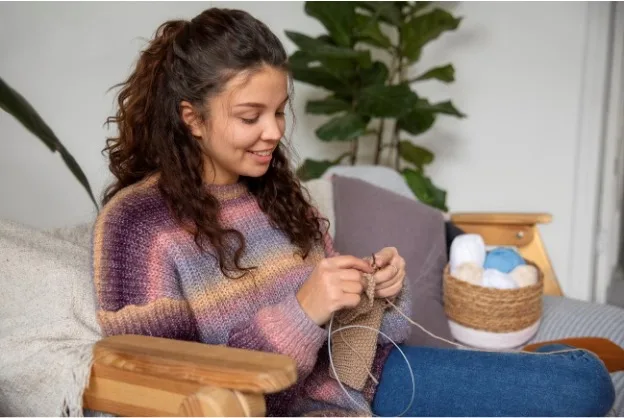
Enter the counter-movement. Across Melbourne, mothers in their twenties and thirties are ditching phone cases for knitting bags. They are pickling, quilting, and restoring furniture. To their friends, it looks like a cosplay of 1950s domesticity. To a skilled female psychologist Victoria it looks like a masterclass in emotion regulation.
Why Tactile Hobbies Heal the Anxious Brain
Social media delivers what neuroscientists call “variable rewards”—maybe a like, maybe a fight, maybe a viral recipe. This keeps the brain’s threat-detection system (the amygdala) constantly revving. Grandma hobbies, by contrast, offer linear, predictable, tactile feedback. You pull the needle through the fabric; a stitch appears. You water the tomato plant; it grows.
This is the neurological equivalent of a deep sigh. For mothers who have been diagnosed with ADHD or who are raising children with ASD, this predictability is medicine. One female psychologist in Geelong reports that several of her NDIS patients have significantly reduced their evening agitation by replacing thirty minutes of TikTok with hand-quilting.
“We don’t think of behavioural issues in mothers, but we should,” she notes. “When a mother dysregulates, the entire family system dysregulates. Teaching her to knit is not a hobby; it’s a systemic intervention.”
The Unlikely Community of Stitch ’n’ Bitch
What makes this movement sustainable is the social infrastructure rising around it. Women are forming “stitch ’n’bitch” groups at local libraries and cafes in Brunswick, Geelong, and the Dandenongs. These are not structured therapy groups, but they function as support systems for life transitions, grief and loss, and self-esteem.
A woman going through a divorce might sit silently sewing for an hour before admitting she is struggling with sexual and relationship issues. Another woman newly diagnosed with depression might find that the act of crocheting a blanket gives her a reason to wake up. These groups are the village that screens demolished.
When to Call a Professional
Let’s be direct: knitting will not cure clinical depression. It will not resolve trauma that requires EMDR. It will not teach your child with ASD social skills or manage severe anger management in a teenager. For that, you need child and adolescent therapy, NDIS support, or evidence-based anger management programs.
But if you are a mother who feels like a ghost in your own life—always present, never arrived— then the grandma hobby trend is an invitation. You are allowed to be slow. You are allowed to produce nothing “valuable.” You are allowed to sit for an hour and let your hands work while your mind rests.
Your grandmother knew this. You are just remembering. And that remembrance, guided or supported by a female psychologist Melbourne when needed, might be the most healing act of modern motherhood.