
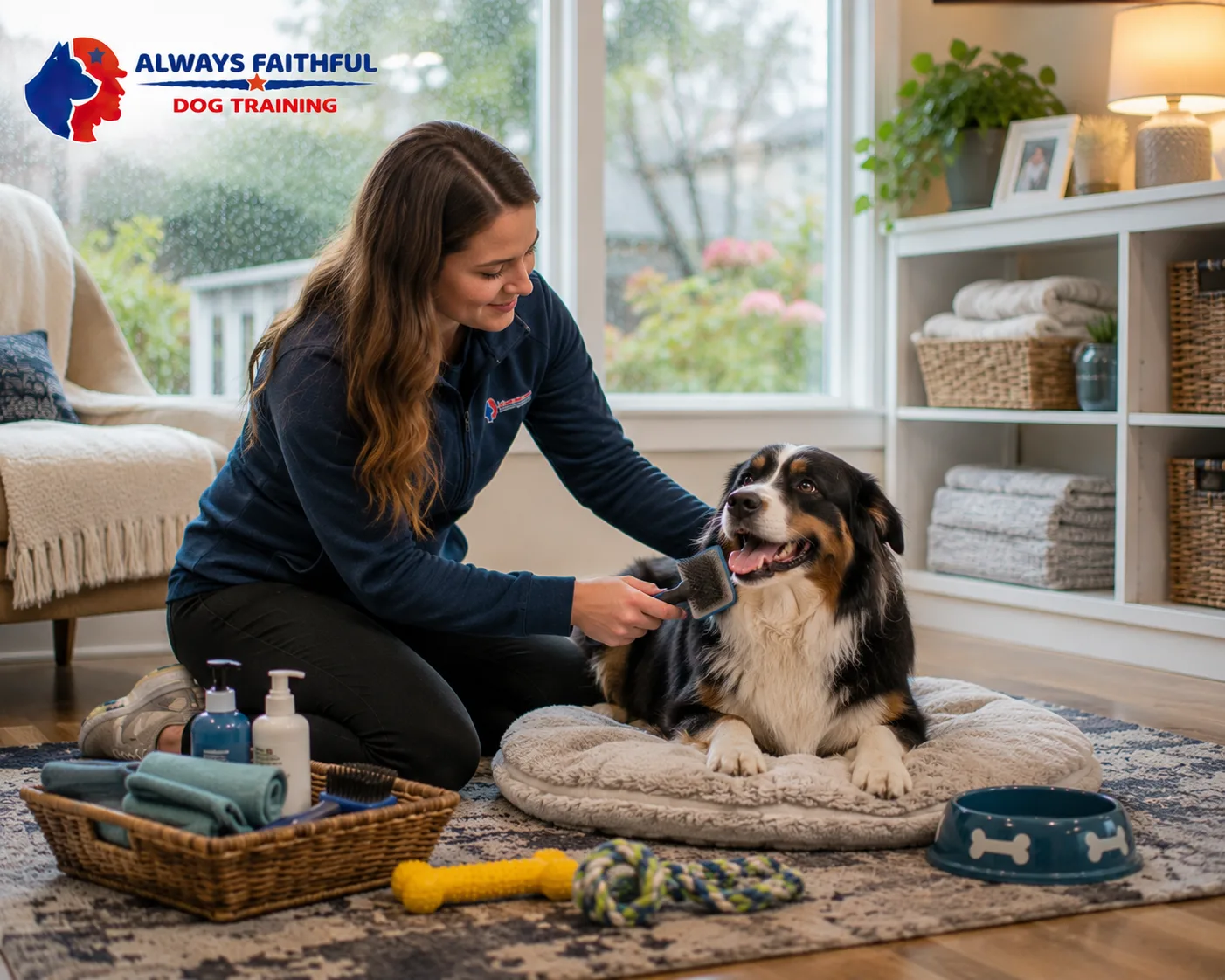
A dog's nails need regular attention, but the process can become difficult when a dog pulls its paws away, becomes restless, or refuses to remain still. A Dog Trainer can help owners develop the cooperation and body-handling skills that make routine nail care easier to manage. For owners searching Dog training Near me, it is also useful to understand that nail-care resistance is not always simple stubbornness. Dogs may react because they dislike having their feet handled, feel uncertain about the equipment, or have previously experienced an uncomfortable trimming session.
Why Paw Handling Can Be Difficult
A dog's paws are sensitive and important for movement, so many dogs naturally pay close attention when someone touches them.
Some dogs accept contact with their shoulders or back but become uncomfortable as soon as someone reaches for their feet. Others may tolerate brief contact but become restless when their toes are separated or held for several seconds.
This difference is important because successful nail care requires more than simply getting a dog to sit still. The dog needs to become comfortable with a sequence of unfamiliar sensations.
Start With Ordinary Touch
Before introducing nail clippers or grinders, owners can make paw handling a normal part of everyday interaction.
A brief touch to the leg can be followed by touching the paw. Later, the owner can gently hold the paw for a moment before releasing it.
The sessions should remain short. The purpose is to build familiarity rather than test how long the dog can tolerate being restrained.
Gradual handling can give the dog repeated experiences in which paw contact does not automatically lead to an unpleasant event.
Introduce the Equipment Without Using It
Nail clippers and grinders can look and sound unusual to dogs.
Instead of immediately bringing the tool toward the dog's paw, owners can first allow the dog to see it from a comfortable distance.
For a grinder, the sound deserves particular attention. A dog that has never heard an electric grooming tool may react to the vibration or noise before the tool comes anywhere near its nails.
Separating visual familiarity from physical contact can make the introduction more manageable.
Work on One Paw at a Time
There is no requirement to handle all four paws during every practice session.
One paw can provide enough opportunity to develop cooperation. Once the dog becomes comfortable with that process, the same routine can gradually be introduced to the other paws.
This approach also helps owners identify whether the dog has a particular sensitivity. A dog may calmly accept handling of the front paws but strongly resist the rear paws.
Recognizing these differences makes training more precise.
Teach the Dog That Stillness Has a Purpose
Remaining still during grooming is a useful behavior because sudden movement can make nail care more difficult.
Owners can practice short periods of stillness without performing any nail trimming. The dog can learn to keep its body settled while the owner handles a paw.
As the dog becomes more comfortable, the duration can gradually increase.
This creates a separate skill that can later support other forms of grooming and routine body care.
Avoid Turning Resistance Into a Struggle
When a dog pulls its paw away, an owner may instinctively hold tighter. Unfortunately, repeated physical battles can teach the dog that paw handling is something it needs to resist.
The dog may begin withdrawing its paw earlier or becoming tense as soon as the owner reaches toward it.
Instead of escalating the struggle, owners should consider reducing the difficulty. A shorter touch, a different position, or a quieter environment may make the next attempt more productive.
Choose a Comfortable Position
The position of the dog and owner can influence the entire experience.
Some dogs are more comfortable standing naturally, while others may prefer to remain beside their owner. The owner should be able to reach the paw without twisting the dog's body into an awkward position.
The environment should also provide secure footing. A dog that feels unstable on a slippery floor may become more resistant simply because it is trying to maintain balance.
Small environmental adjustments can therefore make a noticeable difference.
Pay Attention to Nail Length
Training should not be separated completely from physical care. Nails that become excessively long can affect how a dog places its feet and walks.
Regular observation can help owners notice when trimming is becoming necessary rather than waiting until the nails are significantly overgrown.
However, owners should be cautious when trimming because cutting too far can cause pain and bleeding. Anyone uncertain about proper nail anatomy or technique can consult a veterinary professional or experienced groomer.
Introduce the Actual Trimming Process Slowly
Once a dog is comfortable with paw handling and the equipment, the actual trimming process can be introduced gradually.
The first practice does not have to involve cutting multiple nails.
The dog may simply experience the tool being positioned near a nail before the session ends. Later, a single nail can be addressed while the dog remains calm.
This gradual progression gives the dog time to understand each stage instead of suddenly experiencing the complete procedure.
What About Dogs That Fear the Grinder?
Electric grinders can produce vibration and sound that some dogs find particularly uncomfortable.
If a grinder is being used, owners should introduce its noise separately from paw contact. The sound can initially be experienced from farther away before the tool is brought closer.
The grinder should also be appropriate for the dog's nails and used carefully. If the dog becomes highly distressed, continuing simply to finish the task can undermine future cooperation.
In some cases, another nail-care method may be more suitable.
Use Consistent Household Handling
Dogs often have multiple people interacting with them. If every family member handles the dog's paws differently, the dog may receive inconsistent experiences.
A household can establish a simple approach: gentle handling, brief sessions, controlled movement, and predictable release.
Children should not be responsible for nail trimming. They can learn to respect the dog's space and avoid grabbing its paws unexpectedly.
Consistency can help the dog understand what to expect from routine care.
Recognize the Difference Between Discomfort and Fear
A dog pulling away does not automatically mean it is fearful. It may simply dislike the sensation or be unfamiliar with the process.
More serious reactions can include trembling, attempting to escape, freezing, growling, snapping, or becoming extremely tense.
These behaviors should be taken seriously. Continuing to force the procedure when the dog is highly distressed can increase the risk of injury to both the dog and the person handling it.
A professional can help determine whether the issue is training-related, equipment-related, or potentially connected to physical discomfort.
When Professional Guidance Is Worth Considering
For owners researching Dog training Near me, nail-care cooperation can be an overlooked part of practical behavior training. A professional can observe how the dog responds to touch and determine which part of the process is creating resistance.
A Dog Trainer may also help owners develop handling exercises that can be practiced between grooming appointments.
If the dog suddenly becomes sensitive to paw handling after previously accepting it, however, a veterinary examination may be appropriate because pain or injury can change behavior.
Make Practice Part of Normal Life
The easiest time to practice paw handling is not necessarily when the nails urgently need trimming.
Short sessions throughout the week can make handling feel ordinary. A few seconds of touching a paw, examining a nail, or gently holding the foot can provide useful exposure without creating a long grooming event.
The more familiar the routine becomes, the less likely the dog may be to associate every paw touch with immediate nail trimming.
Progress Should Be Measured by Cooperation
Success does not necessarily mean completing all four paws in one sitting.
A dog that previously refused any paw contact but now allows its foot to be held for several seconds has already made progress.
Another dog may advance from tolerating the clippers nearby to accepting one brief nail trim.
Small improvements matter because they create the foundation for future sessions.
Building a More Comfortable Routine
Nail care becomes easier when owners treat cooperation as a skill rather than expecting it automatically.
The process can begin with simple handling, continue through equipment familiarity, and eventually include short periods of actual trimming. Each stage can be adjusted according to the dog's response.
This approach also gives owners an opportunity to become more observant about their dog's body language and physical comfort.
Final Thoughts
Routine nail care does not have to become a battle between a dog and its owner. By introducing paw handling gradually, making equipment familiar, practicing stillness, and keeping sessions manageable, owners can help dogs develop greater tolerance for an important part of everyday care.
For people looking for Dog training Near me, practical training should address real situations that happen outside traditional obedience exercises. A knowledgeable Dog Trainer can help build the cooperation needed for calmer nail care, while regular practice at home can gradually turn paw handling from a stressful event into a predictable part of the dog's routine.