
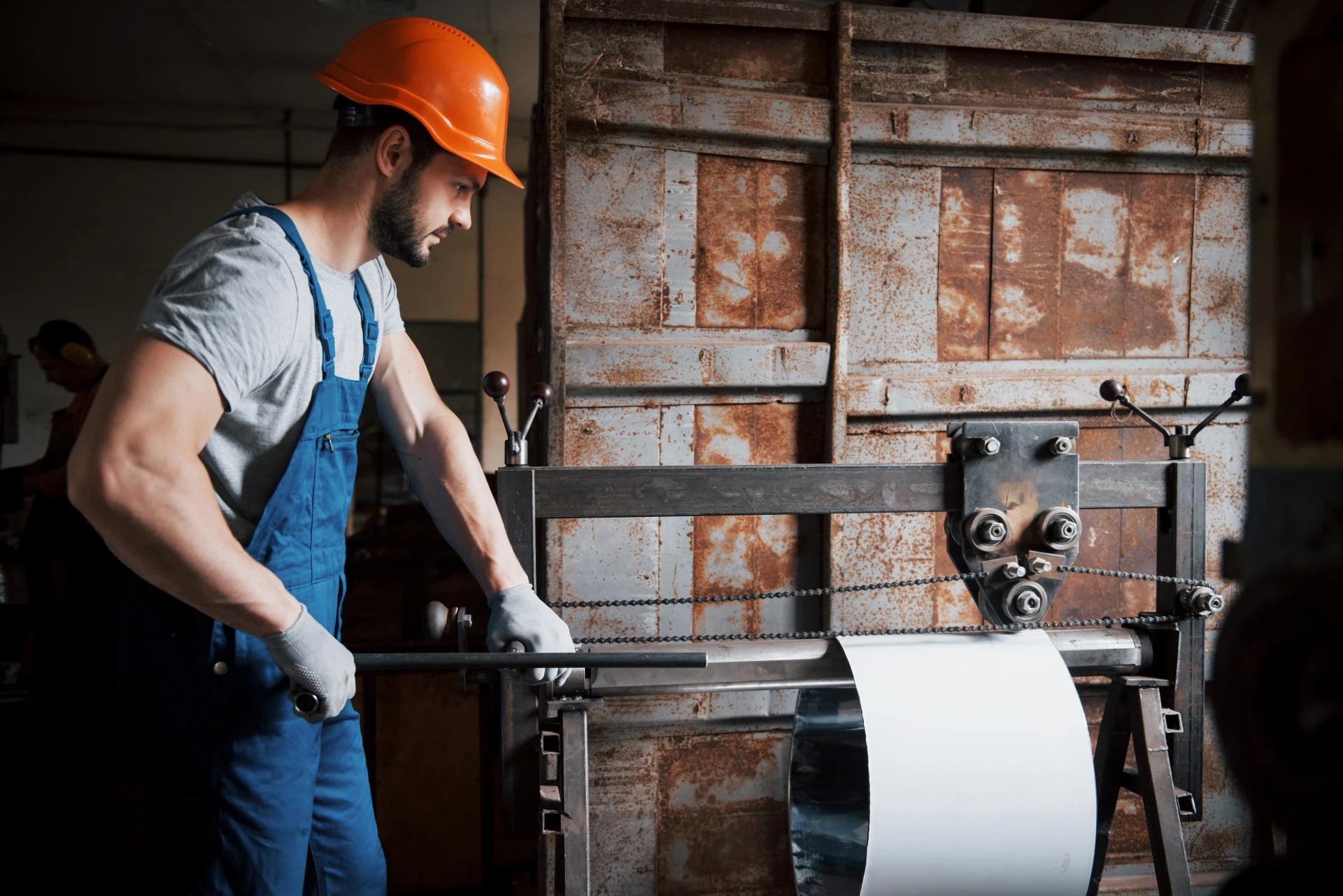
Hot rolled steel coil production in India has become a pivotal driver of the nation’s manufacturing and infrastructure expansion. The versatility, strength, and cost-effectiveness of hot rolled steel make it an indispensable material across multiple industrial sectors. As India continues to strengthen its position as a global manufacturing hub, the demand for high-quality steel coils has surged, supporting industries ranging from automotive and construction to energy and heavy machinery.
Hot rolled steel coils, characterized by their ability to be shaped into various forms while maintaining structural integrity, are integral to building modern urban landscapes. The production process begins with heating steel slabs above their recrystallization temperature, making them easier to mold into sheets and coils. This method enhances ductility and reduces internal stresses, making hot rolled steel suitable for large-scale applications such as bridges, pipelines, and industrial equipment.
India’s strategic investment in steel plants and advanced manufacturing technologies has significantly increased the country’s production capacity. Major steel hubs across states like Chhattisgarh, Odisha, and Jharkhand have adopted automated rolling mills, continuous casting techniques, and advanced quality control mechanisms to produce superior hot rolled steel coils. Companies such as Renny Strips have played a critical role in supplying high-grade coils tailored to the exacting demands of modern engineering and construction projects.
The growth of automotive manufacturing in India has created a direct link between hot rolled steel coil production and vehicle production efficiency. Automotive manufacturers require steel that can endure stamping, bending, and forming processes without compromising strength or safety. Hot rolled steel coils provide the ideal solution, offering a balance between malleability and robustness. With India becoming a significant exporter of automobiles and auto components, the reliance on domestically produced steel coils has amplified, reducing dependency on imports and improving the cost-effectiveness of local manufacturing.
Infrastructure development remains a cornerstone of India’s economic expansion, and hot rolled steel coils are at the heart of this transformation. Roads, railways, airports, and urban high-rise buildings all rely on the structural and thermal stability of steel. The modularity and adaptability of hot rolled steel enable engineers to design structures that withstand seismic activity, heavy loads, and environmental stressors. Additionally, the ability to produce steel coils in large, continuous lengths minimizes welding requirements, reducing construction timelines and improving structural integrity.
Renny Strips emphasizes precision and consistency in coil production. By integrating metallurgical expertise with cutting-edge rolling technologies, the company ensures that every coil meets stringent industry standards. This approach is particularly critical for sectors such as energy and power generation, where steel components are exposed to high temperatures, pressure, and corrosive environments. Hot rolled steel coils are extensively used in turbines, boilers, and pipelines, making quality control and durability non-negotiable.
The production ecosystem in India has also benefited from advancements in raw material sourcing and energy-efficient manufacturing techniques. Steel plants are increasingly leveraging locally available iron ore and coal resources, optimizing supply chains, and reducing production costs. Environmental considerations are also shaping production practices, with companies implementing waste heat recovery systems, dust suppression methods, and emission control technologies. These initiatives align with global sustainability trends, positioning India’s steel industry as both a growth engine and an environmentally responsible sector.
From an industrial perspective, hot rolled steel coil production in India enables small and medium-sized enterprises (SMEs) to participate in large-scale manufacturing. Coil thickness, width, and surface quality can be customized to meet specific project requirements, allowing fabricators, construction firms, and machinery manufacturers to operate efficiently without compromising on material performance. The adaptability of hot rolled steel enhances innovation, giving engineers the flexibility to develop new products, optimize designs, and explore advanced manufacturing techniques.
The export potential of Indian hot rolled steel coils is another factor contributing to economic growth. As global markets seek cost-effective, high-quality steel, India has emerged as a reliable supplier. Strategic partnerships, favorable trade policies, and adherence to international quality standards have enabled manufacturers like Renny Strips to expand their footprint in markets across Asia, Africa, and the Middle East. This has not only enhanced India’s trade balance but also reinforced the country’s reputation as a producer of technologically advanced steel products.
Technological innovation continues to shape the landscape of hot rolled steel production. Continuous casting, computerized rolling mills, and automated inspection systems have transformed manufacturing efficiency, reducing wastage and ensuring uniform product quality. These advancements also facilitate the production of specialty steel grades with specific mechanical and chemical properties, meeting the exacting demands of industries such as aerospace, shipbuilding, and defense. By combining traditional metallurgical knowledge with modern technology, Indian manufacturers maintain competitiveness in both domestic and international markets.
Infrastructure modernization projects, particularly in urban centers, have fueled demand for steel that can support complex architectural designs. Hot rolled steel coils provide the structural backbone for skyscrapers, industrial parks, and transportation networks. The material’s excellent weldability and formability allow for innovative construction methods, including prefabrication and modular assembly. As Indian cities continue to expand, the reliance on durable and versatile steel products ensures that the construction sector remains robust and capable of meeting increasing population and industrial demands.
Workforce development also plays a critical role in sustaining growth in hot rolled steel production. Skilled engineers, metallurgists, and technicians are essential for operating advanced rolling mills, managing quality control systems, and optimizing production processes. Companies like Renny Strips invest in training programs and professional development initiatives, ensuring that employees stay abreast of technological innovations and industry best practices. This combination of skilled labor and sophisticated machinery underpins the reliability and consistency of steel coil production.
Challenges such as fluctuating raw material prices, global market volatility, and energy costs do influence production dynamics. However, Indian manufacturers have shown remarkable resilience through strategic planning, vertical integration, and innovation. By maintaining a balance between production efficiency, quality standards, and cost management, the industry continues to drive growth across multiple sectors.
In conclusion, hot rolled steel coil production in India is not merely a manufacturing process—it is a cornerstone of modern industrial and infrastructural development. The material’s versatility, coupled with India’s strategic investments in technology, quality control, and workforce development, positions it as a critical enabler of growth. From automotive assembly lines to towering urban structures, the impact of high-quality steel coils resonates across sectors, underpinning the nation’s journey toward advanced manufacturing and robust infrastructure. Renny Strips, with its commitment to precision, innovation, and reliability, exemplifies the role of leading steel manufacturers in shaping India’s industrial landscape, ensuring that the demand for durable, adaptable, and high-performance steel continues to meet the ambitions of the nation’s industries.