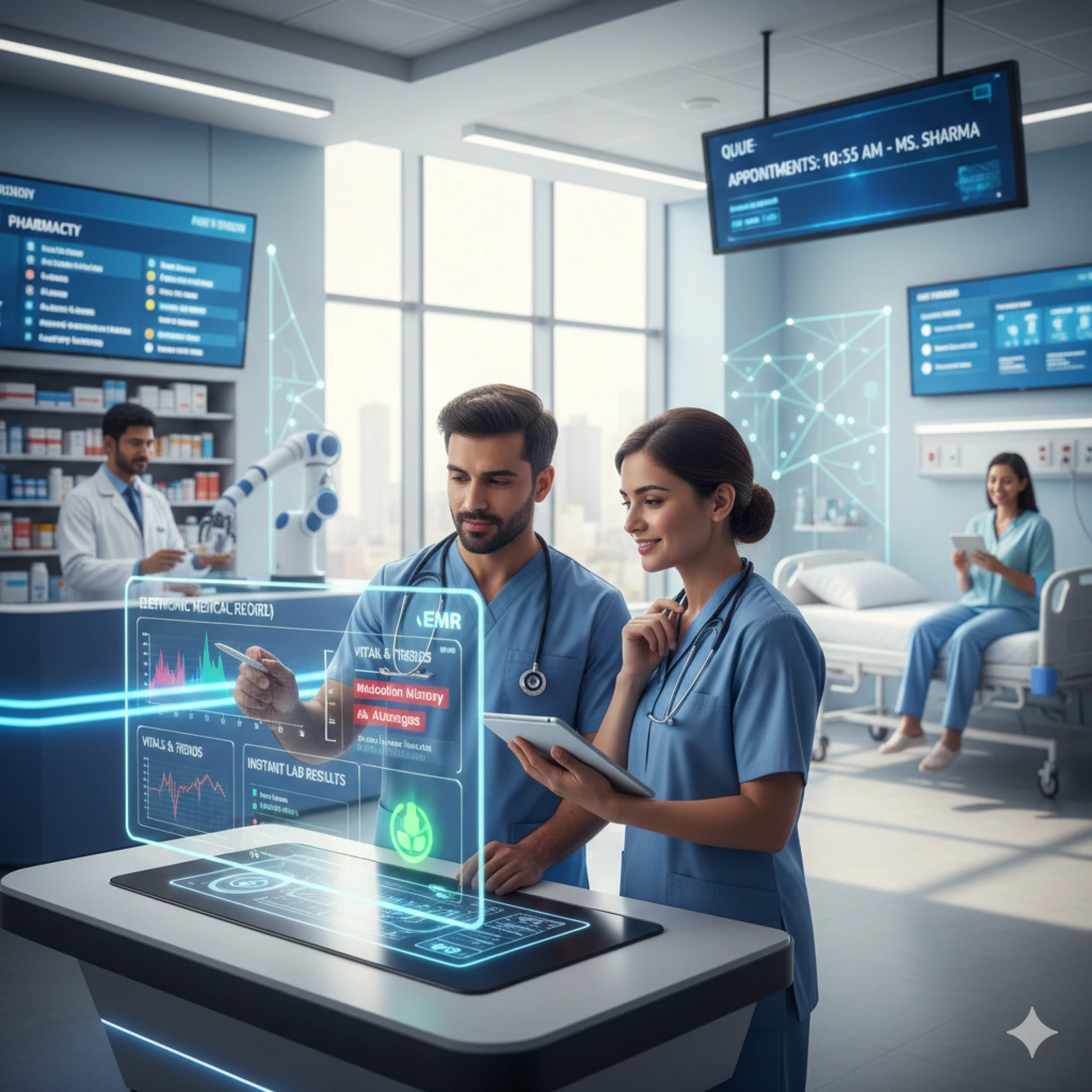
The healthcare sector is undergoing rapid transformation as hospitals adopt digital technologies to manage growing operational complexity. Healthcare institutions today handle large volumes of patient data, administrative tasks, clinical documentation, and financial workflows every day. To maintain efficiency and accuracy, hospitals increasingly depend on Hospital Management System Software that integrates multiple hospital operations into a single digital platform.
Traditional hospital management methods often involve manual documentation, fragmented systems, and disconnected departmental processes. These challenges can slow down treatment workflows, increase administrative workload, and create communication gaps between clinical teams. Digital healthcare platforms solve these issues by creating a unified ecosystem where departments work together through real-time data access and automated workflows.
Solutions like Grapes IDMR are designed to support hospitals in this digital transition. By integrating clinical and administrative operations, modern healthcare software ensures that patient information flows seamlessly between departments, improving coordination, decision-making, and patient outcomes.
The Growing Need for Digital Hospital Systems
Hospitals operate through a network of interconnected departments such as outpatient services, inpatient wards, laboratories, pharmacies, billing, and administration. When these departments operate in isolation, hospitals experience operational delays and inefficiencies.
Digital hospital platforms act as the backbone of healthcare infrastructure by connecting all hospital operations within a centralized system. This integration enables healthcare professionals to access accurate information quickly and collaborate effectively.
Key benefits hospitals gain from integrated digital systems include:
• Improved coordination between hospital departments
• Reduced paperwork and manual documentation
• Faster access to patient records and reports
• Improved workflow efficiency for hospital staff
• Better patient safety and treatment accuracy
By creating a connected digital environment, hospitals can streamline operations while focusing more on patient-centered care.
Centralized Patient Information Management
Managing patient information efficiently is one of the most critical aspects of hospital operations. Hospitals generate large volumes of medical data that must be securely stored and easily accessible for healthcare teams.
A centralized patient information system allows hospitals to maintain a complete digital profile for each patient. This profile can include medical history, laboratory results, prescriptions, diagnostic reports, and treatment records.
The advantages of centralized patient information systems include:
- Complete patient medical records stored in one place
- Instant access to patient history during consultations
- Secure digital storage of clinical documentation
- Real-time updates across departments
- Better coordination between doctors and specialists
These capabilities help healthcare professionals make informed clinical decisions quickly while ensuring continuity of care.
Automated Workflow Management
Hospitals manage multiple operational processes every day, including patient admissions, appointment scheduling, billing, insurance coordination, and discharge documentation. When handled manually, these processes can consume valuable staff time and increase the risk of errors.
Automation simplifies hospital workflows by digitizing routine administrative tasks and ensuring standardized processes across departments.
Examples of automated hospital workflows include:
• Digital patient registration and admission processes
• Automated billing and insurance claim management
• Electronic prescriptions integrated with pharmacy systems
• Laboratory test requests and report tracking
• Digital discharge summaries and patient documentation
Automation improves operational efficiency and reduces administrative burden, allowing hospital staff to dedicate more time to patient care.
Real-Time Communication Between Departments
Effective communication is essential for coordinated patient care. Hospitals often face challenges when departments rely on manual communication methods or disconnected systems.
Digital hospital platforms enable real-time communication through shared dashboards, alerts, and notifications. These tools help healthcare teams stay informed about patient status, treatment progress, and operational updates.
Hospitals using digital communication platforms can:
• Receive instant alerts about patient updates
• Track laboratory and diagnostic results in real time
• Coordinate nursing and clinical activities effectively
• Monitor bed availability and patient transfers
• Respond quickly to emergencies and critical cases
This improved communication helps hospitals deliver faster and more coordinated patient care.
Data Security and Regulatory Compliance
Protecting patient data is a critical responsibility for hospitals. Healthcare institutions must ensure strict data privacy, maintain secure records, and comply with regulatory requirements.
Modern hospital management platforms are built with advanced security features such as encrypted data storage, role-based access control, and secure authentication systems. These features ensure that only authorized staff can access sensitive patient information.
Compliance features also help hospitals maintain accurate records for accreditation audits and regulatory reviews. By maintaining detailed documentation and audit trails, hospitals can demonstrate transparency and accountability in their operations.
Analytics for Strategic Hospital Management
Hospital administrators require reliable data insights to monitor operational performance and plan improvements. Digital healthcare platforms provide advanced analytics that convert hospital data into actionable insights.
These analytics tools allow hospital leadership to monitor:
• Patient admission and discharge patterns
• Bed occupancy and department utilization
• Revenue performance and billing trends
• Diagnostic service usage and laboratory workloads
• Staff productivity and operational efficiency
Access to these insights helps hospital administrators make data-driven decisions that improve hospital performance and patient service quality.
Scalable Digital Infrastructure for Hospitals
Healthcare institutions constantly expand their services to meet the growing needs of patients. A scalable hospital management platform ensures that hospitals can add new departments, facilities, and services without disrupting existing operations.
Modern digital healthcare systems are designed with flexible architectures that allow hospitals to integrate additional modules and capabilities as they grow. This scalability ensures that healthcare institutions remain prepared for future technological advancements and increasing patient volumes.
Conclusion
Modern healthcare institutions require reliable digital infrastructure to manage clinical workflows, administrative operations, and patient services effectively. Platforms such as Hospital Management System Software provide hospitals with the tools needed to centralize patient data, automate workflows, improve communication, and maintain regulatory compliance.
By adopting integrated hospital technology, healthcare organizations can enhance operational efficiency, reduce administrative complexity, and deliver better patient experiences. Digital systems also empower hospital leadership with real-time insights that support strategic planning and performance improvement.
Hospitals looking to modernize their healthcare infrastructure and streamline operations can explore the capabilities of Grapes IDMR. To discover how intelligent hospital software can transform healthcare workflows and patient management, connect with Grapes Innovative Solutions and take the next step toward building a smarter, more efficient healthcare ecosystem.
FAQs
1. What is Hospital Management System Software?
Hospital Management System Software is a digital platform designed to manage hospital operations such as patient registration, appointments, billing, laboratory management, pharmacy workflows, and clinical documentation within a unified healthcare system.
2. How does Hospital Management System Software improve hospital efficiency?
Hospital Management System Software automates administrative tasks, centralizes patient data, enables real-time communication between departments, and reduces paperwork, helping hospitals streamline workflows and deliver faster, more coordinated patient care.
3. Why is digital hospital software important for modern healthcare institutions?
Digital hospital software improves operational transparency, enhances patient data security, supports regulatory compliance, and provides real-time analytics, enabling hospitals to make better decisions while improving patient outcomes and service efficiency.
#HospitalManagementSystemSoftware #HospitalManagementSystem #HMSsoftware #HealthcareIT #DigitalHealthcare #HealthcareTechnology #HospitalSoftware #HealthcareAutomation #HealthTech #HospitalDigitalTransformation #HospitalITSolutions #PatientManagementSystem #HealthcareInnovation #HealthcareSolutions #MedicalSoftware #SmartHospitals #HospitalWorkflow #HealthcareSystems #HealthcareInfrastructure #HospitalAdministration #HealthcareManagement #HospitalOperations #HealthcarePlatforms #DigitalHospitals #HospitalAutomation #HealthcareData #HealthcareTransformation #HospitalTechnology #HealthITSolutions #GrapesIDMR