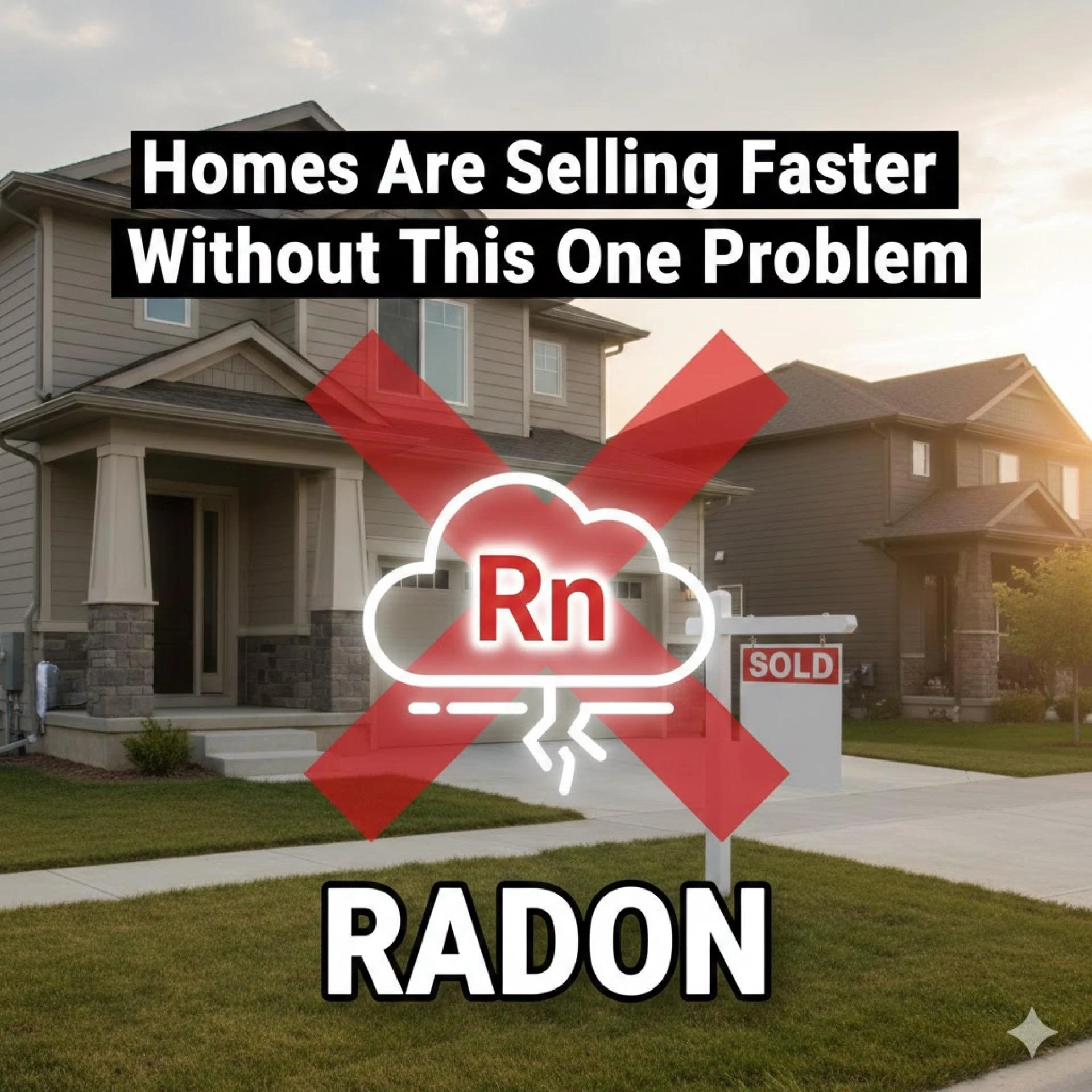
In today’s competitive housing market, speed matters. Homes that sit too long raise red flags, attract low offers, and often sell below asking price. While sellers focus heavily on curb appeal, staging, and pricing strategy, one hidden issue continues to slow down otherwise perfect listings:
radon gas.
Across the country, real estate professionals are seeing the same pattern—homes without unresolved radon issues sell faster, face fewer contract delays, and experience smoother closings.
Radon may be invisible, but its impact on buyer confidence is very real.
In this in-depth guide, we’ll explain why radon is quietly becoming one of the biggest obstacles in real estate transactions, how it affects days on market, and what homeowners can do to eliminate the problem before it costs them time and money.
What Is Radon Gas?
Radon is a naturally occurring radioactive gas formed by the decay of uranium in soil and rock beneath the earth’s surface. As it rises through the ground, radon can enter homes through:
- Foundation cracks
- Construction joints
- Sump pits
- Crawl spaces
- Gaps around plumbing and utility lines
- Porous concrete block walls
Because radon has no smell, color, or taste, homeowners cannot detect it without professional testing.
Why Radon Has Become a Bigger Real Estate Issue
Radon has existed forever—but awareness has changed everything.
Today’s buyers are:
- More health-conscious
- Better informed
- Research-driven
- Less willing to accept unknown risks
With increased public education and online inspection data, radon has moved from a rarely discussed topic to a routine part of many real estate transactions.
As a result, homes that test high for radon often face hesitation—even when everything else checks out.
The Hard Truth: Buyers Hesitate When Radon Appears
When radon shows up on an inspection report, buyer behavior changes.
Common reactions include:
- Requesting price reductions
- Asking for installation credits
- Delaying closing timelines
- Reopening negotiations
- Walking away entirely
Even motivated buyers may pause when radon enters the conversation—especially if the seller is unprepared.
Why Homes Without Radon Sell Faster
Listings without radon issues consistently outperform those with unresolved concerns.
1. Fewer Inspection Objections
When radon testing comes back low—or documentation shows a functioning mitigation system—buyers have little reason to renegotiate.
2. Faster Closings
No additional testing, installation, or retesting means the deal stays on schedule.
3. Higher Buyer Confidence
Clean inspection reports reduce fear and emotional hesitation.
4. Stronger Offers
Buyers are more willing to submit competitive bids when environmental risks are eliminated.
Radon’s Impact on Days on Market
Real estate data consistently shows that:
- Homes with unresolved inspection issues remain listed longer
- Environmental concerns create more buyer drop-off
- Listings with surprises during escrow face increased fallout
Radon rarely kills deals outright—but it slows them down, and time on market directly affects perceived value.
Why Radon Feels Scarier Than Other Issues
Radon creates a stronger emotional reaction than many visible defects.
Why?
- It’s invisible
- It’s associated with cancer
- It’s poorly understood
- It can’t be “seen fixed” immediately
A buyer can see a repaired roof.
They can’t see reduced radon levels—only numbers on a report.
That uncertainty creates hesitation.
Understanding Radon Levels
Radon is measured in picocuries per liter (pCi/L).
EPA guidelines:
- 4.0 pCi/L or higher – Mitigation strongly recommended
- 2.0–3.9 pCi/L – Consider mitigation
- Below 2.0 pCi/L – Lower risk, not zero
There is no completely safe level of radon—only lower or higher risk.
The Reality: Radon Is Extremely Common
Many sellers assume radon means something is “wrong” with their home.
In reality:
- Radon exists in all 50 states
- New homes often test higher than older ones
- Neighboring homes can have drastically different results
- Construction quality does not prevent radon
Radon is geological—not structural.
Why Buyers Prefer Homes With Mitigation Systems
A growing number of buyers actually prefer homes that already have radon systems installed.
Why?
- Testing has already been completed
- Risk has been addressed
- No installation hassle
- Documentation is available
A mitigated home removes uncertainty.
An untested home creates it.
How Radon Mitigation Works
The most effective solution is sub-slab depressurization.
A typical system includes:
- PVC vent piping
- Inline radon fan
- Sealed foundation openings
- Exterior roofline exhaust
The system pulls radon gas from beneath the home and safely releases it outdoors.
Effectiveness
- Reduces radon levels by 90–99%
- Operates continuously
- Uses minimal electricity
- Requires little maintenance
Most installations take one day.
How Much Does Radon Mitigation Cost?
Typical costs range between:
$800–$2,500, depending on:
- Foundation type
- Home size
- Layout complexity
- Local labor rates
Compared to price reductions during negotiation, mitigation is often the cheaper option.
Why Waiting for the Buyer to Test Is Risky
Many sellers choose to “wait and see.”
This often backfires.
When buyers discover radon:
- They control the timeline
- They control negotiations
- They may overestimate repair costs
- Emotions escalate
Pre-listing radon testing keeps sellers in control.
Benefits of Testing Before Listing
- No last-minute surprises
- Ability to install mitigation early
- Stronger negotiating position
- Faster escrow process
- Increased buyer trust
Homes that enter the market with radon documentation sell with fewer interruptions.
Does Radon Lower Home Value?
Not when handled correctly.
A home with:
- A mitigation system
- Post-installation test results
- Transferable warranty
Often sells just as well as comparable properties.
What hurts value is uncertainty, not radon itself.
Why Real Estate Agents Care About Radon
Agents don’t fear radon—they fear delays.
Radon issues can:
- Push closing dates
- Cause buyer anxiety
- Create re-negotiations
- Increase fall-through risk
Homes that are radon-ready move faster through escrow.
What Smart Sellers Are Doing Now
Proactive sellers are:
- Testing before listing
- Installing mitigation if needed
- Retesting for documentation
- Including results in disclosures
This eliminates one of the most common inspection obstacles.
The Competitive Advantage Most Sellers Miss
In a market where buyers compare multiple homes, anything that reduces friction wins.
A clean radon report can be the difference between:
- Multiple offers
- Extended days on market
- Smooth closing
- Stressful renegotiation
Speed sells homes—and radon delays them.
Conclusion: Eliminate the Problem Before It Slows Your Sale
Homes aren’t selling faster because they’re newer, bigger, or staged better.
They’re selling faster because they come with fewer unanswered questions.
Radon creates uncertainty.
Testing and mitigation remove it. Trusted local resources like https://www.radonmitigationspokane.com/ help sellers understand the process and eliminate that uncertainty before a home ever hits the market.
When sellers address radon before listing, they protect:
Buyer confidence
Negotiation strength
Market value
Closing timelines
Radon doesn’t make a home undesirable.
Ignoring it does.
If speed, certainty, and maximum value matter, eliminating radon from the transaction may be the smartest move a seller can make.