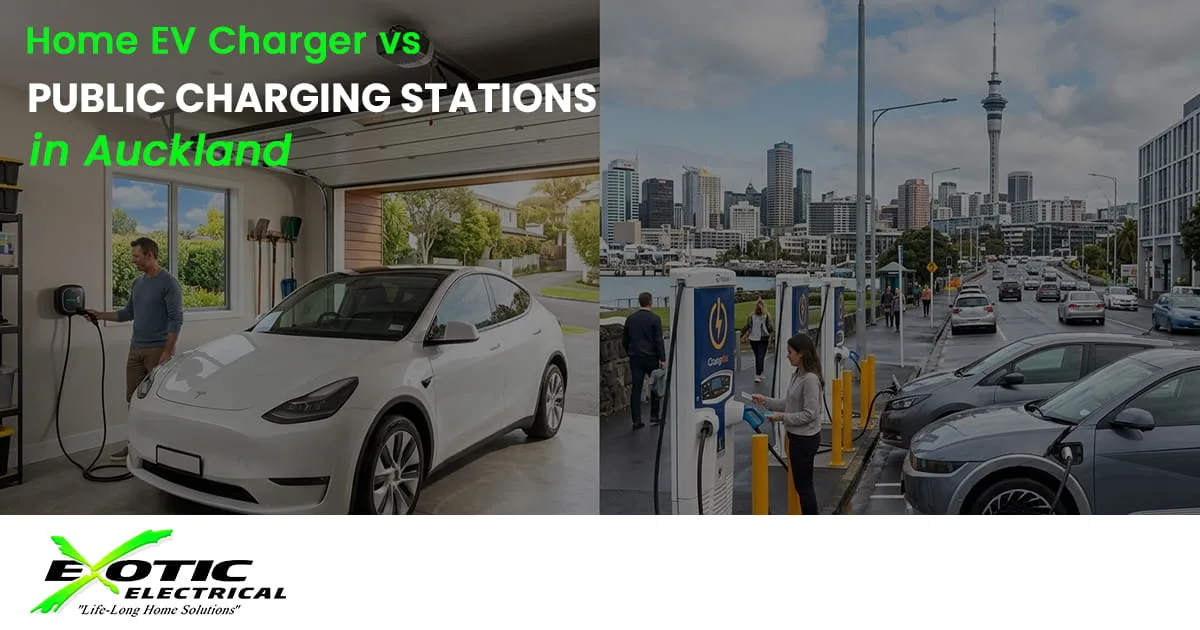
Every new EV owner in Auckland faces the same difficulty like why to get a home EV charger or consider public charging stations. The two approaches differ significantly in speed, cost, and how they fit into daily driving habits. Home EV charger Auckland features offer the convenience of a full charge every morning, and public charging is suitable for long trips.
Understanding the difference between the two can help you get the best solution depending on your budget and driving habits. This guide points out the real differences between these two charging options so that you can make the right decision.
How Does a Home EV Charger in Auckland Work?
Most Auckland homes use a Level 2 EV Charger, which is a wall-mounted system that draws electricity from the home’s power supply. Moreover, this unit enables faster charging when compared to the standard power point. Some of the benefits of this system:
- Charging power: A typical Auckland home supports up to 7.4 kW; that’s enough to charge the EV overnight:
- Overnight Convenience: Plug in when you are home and get it to the full battery the next morning.
- Faster Option: The three-phase power allows quicker charging speeds, but it requires a specialist to install and is uncommon in Auckland’s residential spaces.
Nowadays, many homeowners choose a smart EV charger over the basic model. Smart chargers allow scheduled charging during off-peak hours, monitor the status through an app, and in some cases, integrate with the solar panels. As per EECA research, professionally installed home chargers are much safer and better aligned with New Zealand’s electric supply, besides charging through a standard socket that can’t handle the power an EV draws.
Public EV Charging Stations in Auckland Explained
Public EV charging stations Auckland come in two different types:
- AC Chargers: They charge slowly and are found at gyms, malls, and supermarkets. Best if you are working nearby or for quick daily tasks.
- DC Chargers: These types of chargers are run by companies like ChargeNet, Vector, and BP Pulse and can add a good amount of range in just 15-30 minutes, making them suitable for longer trips and drivers who are more into off-street parking.
Auckland has loads of these types of charging stations across the city, and the fast chargers are found at the major routes for road trips. They are suitable for renters, apartment residents, or those who don't have a driveway to charge their vehicle. That being said, public chargers come with a few limitations in terms of convenience and costs. So, it is worth checking first before you decide on it as your primary way to charge your vehicle.
EV Charging Costs Auckland: Home vs Public
Costs remain a vital factor in deciding what to choose among public or home charging facilities. Charging at home usually costs less in kWh than public stations in Auckland. In contrast, public charging requires no installation costs or space consumption. The underlying table explains what you need to spend with both charging systems to help you decide better:
FactorHome EV ChargerPublic EV Charging StationCost per kWh (Approx)$0.28-$0.35$0.40-$0.95+ (depends on the network and speed)Cost per 100 km (Approx)$4-$5$10-$18Charging SpeedUp to 7.4kW25kW-150kW+Installation RequiredYes, by a reputed technician NoConvenience Overnight chargeDepends on location and queuesIdeal ForHomeowners, daily drivers Apartment living, road trips.
Charging at home appears to be cheaper for daily driving, as a fully charged home costs around $12-$21, while the same charge at the public station costs around $23 -$31 or even higher in remote or premium areas.
Home charging can be even more beneficial if done within an off-peak electricity plan, as most people charge their vehicle overnight.
Charging Speed and Convenience Compared
Public DC fast chargers are the clear winner if speed remains a pivotal factor. For example, a 150kW charger can add around 100 km of range in 13-16 minutes, which is perfect if you are in a hurry. Home Level 2 chargers are slower, but that doesn't matter much for overnight charging scenarios.
Since your car has 8-9 hours to charge while you are in sleep, speed isn't a point here. Auckland drivers who drive most often can benefit mostly from the full overnight charge, as it helps with overnight charging without relying on any fast top-up.
What to Expect After EV Charging Installation
Installing a home charger starts when a professional licensed electrician checks your switchboard capacity and whether it can handle the overall power load. Older Auckland homes with outdated appliances need to upgrade before installing.
A registered technician must do EV charger installation Auckland to meet New Zealand's safety standards. The systems are typically mounted 1.2 to 1.4 metres above the ground with proper ventilation to prevent overheating issues.
Exotic Electrical performs EV installation across Auckland, starting from initial assessments to fitting smart chargers to support scheduled and solar-powered charging.
Which One to Choose for Long-Term Savings?
Installing a home charger requires upfront costs, but overall, its savings compensate for it. For example, a driver covering around 12,000km a year could save over $1,000 annually by charging at home rather than proceeding with public charges every time. Over several years, it can be more beneficial, particularly for drivers who drive daily.
Keep in mind that all EVs in New Zealand also pay road user charges, currently $76 per 1,000km, on top of charging costs. A home EV charger turns out to be cheaper for most Auckland homeowners, while using public charging facilities can be a good option for long road trips.
Conclusion
If you drive occasionally and have a parking space, installing a home charger is the smarter long-term investment. Those who live in apartments have public charging as their only option.
In such cases, understanding how home EV charger Auckland costs differ from public charging is vital, as it helps to plan further EV ownership that works around your budget and routine.
FAQs
How much does an EV home charger cost in NZ?
Most homeowners pay between $1,200 and $2,500 for a charger and installation, including the unit and the electrician's work. If your switchboard needs an upgrade first, that can add $1,500 to $3,000 to the final bill.
How fast are public EV charging stations in Auckland?
The answer depends on which type you are using. AC chargers are usually slow and steady and are preferred for longer stops. In contrast, DC fast chargers are good for those who are in a hurry since they can add 100 km range within 15 minutes.
Can I charge my EV overnight at home?
You can charge your EV at home, especially at night, for more convenience. You plug in when you get home at night and wake up to a full battery. You don't have to plan the charging, and there's no waiting, making everything smoother and in control.
Is a smart EV charger worth it?
For most people, smart EV chargers are extremely beneficial, as with this system you get off-peak scheduling, requiring you to not pay full price. You can keep an eye on usage through an app too. If you get solar panels at your home, some smart chargers will even prioritise your own power first, so it usually pays for itself over time.
What is a Level 2 EV charger?
It is an upgrade from a regular power point, basically a dedicated wall unit that runs on its own circuit and charges way faster. Most Auckland homes can run one at up to 7.4kW, and it's what most people mean when they say "home EV charger."
Do I need an electrician to install a home EV charger?
Installing a home EV charger requires an electrician because it is a legal requirement in New Zealand. Considering professional help makes everything more secure, with top-notch service and a proper understanding of what's suitable for your area.