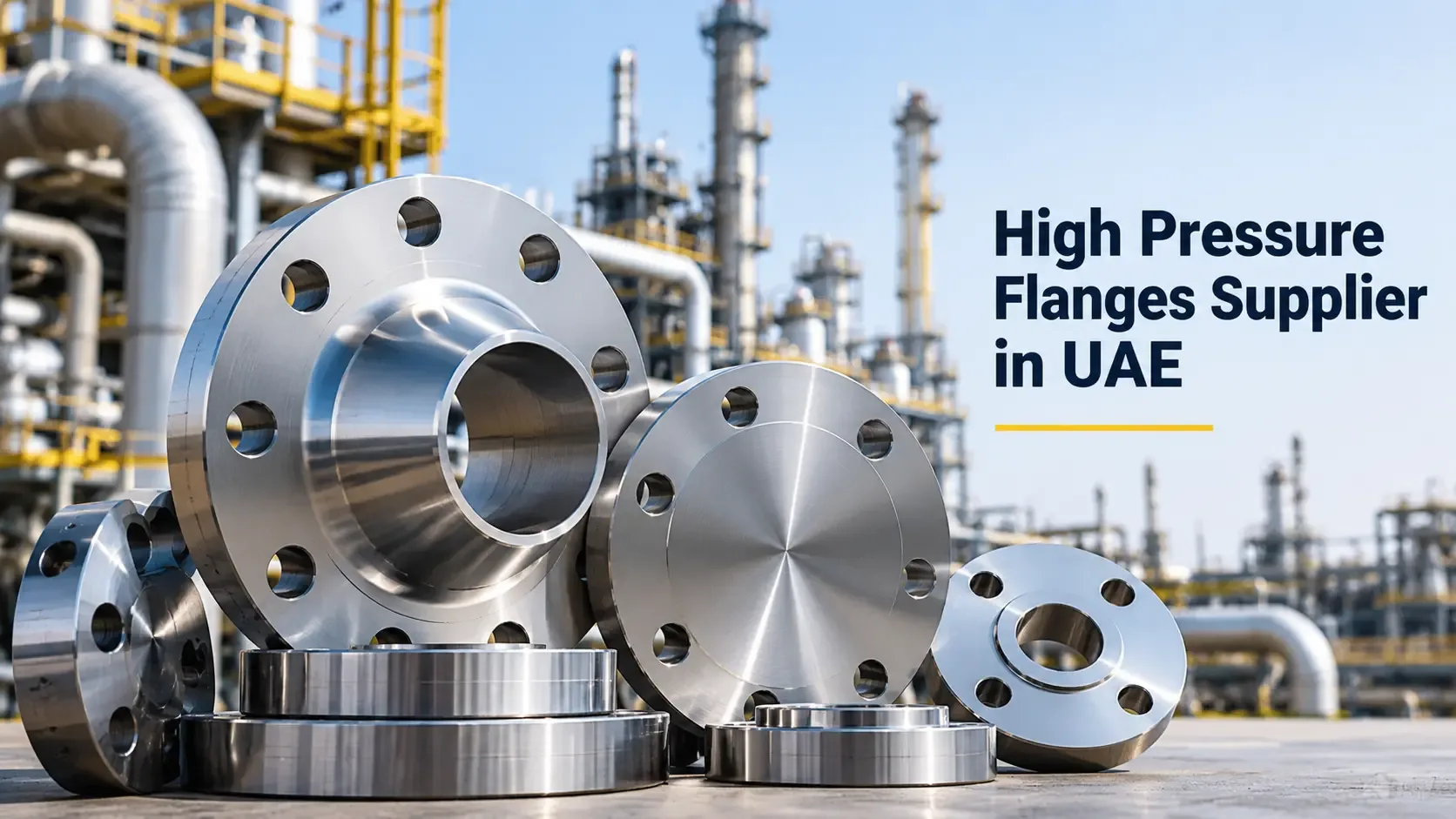
High-pressure piping systems are essential for industries that operate under demanding conditions, including oil and gas, petrochemicals, refineries, power generation, and offshore engineering. These systems require strong and reliable components to maintain secure connections between pipes, valves, pumps, and other equipment. Choosing a dependable high pressure flanges supplier in UAE is important for contractors, engineering companies, and industrial procurement teams looking for quality piping materials. High-pressure flanges are designed to withstand demanding pressure and temperature conditions while providing reliable connections in industrial piping networks. Their selection depends on several factors, including material composition, pressure class, flange dimensions, operating temperature, and project specifications.
What Are High Pressure Flanges?
High-pressure flanges are mechanical components used to connect sections of piping systems and industrial equipment. They provide detachable connections that allow easier inspection, maintenance, replacement, and equipment servicing. These flanges are manufactured in different sizes, materials, pressure ratings, and connection configurations to suit specific industrial requirements. They are commonly used in oil refineries, gas processing facilities, chemical plants, offshore platforms, and high-pressure pipeline installations.
Common Types of High Pressure Flanges
Different flange designs serve different piping requirements. Some commonly used types include:
- Weld Neck Flanges: Designed with a tapered hub and butt-weld connection, commonly used in demanding piping applications.
- Blind Flanges: Used to close pipeline openings, valves, and vessel connections.
- Socket Weld Flanges: Suitable for certain small-diameter, high-pressure piping systems.
- Threaded Flanges: Connected to pipes through threaded ends without requiring welding.
- Ring Type Joint Flanges: Designed for metal ring gasket arrangements in suitable high-pressure and high-temperature applications.
Selecting the correct flange type depends on pipeline design, operating conditions, installation requirements, and applicable engineering specifications.
Materials Used in High Pressure Flange Manufacturing
Material selection plays an important role in the performance and durability of industrial flanges. Different materials are selected according to pressure, temperature, fluid characteristics, and environmental exposure.
Carbon Steel: Commonly used in industrial piping systems because of its mechanical strength and suitability for many general applications.
Stainless Steel: Offers corrosion resistance and is frequently selected for applications involving moisture and certain corrosive environments.
Alloy Steel: Used in applications requiring specific mechanical properties and resistance to elevated temperatures.
Duplex and Super Duplex Steel: Considered for demanding environments where higher strength and corrosion resistance are required.
The appropriate material grade should always be selected according to project engineering requirements and relevant material specifications.
Important Standards for Industrial Flanges
International standards help ensure consistency in flange dimensions, pressure ratings, materials, and manufacturing requirements. Some commonly referenced standards include:
- ASME B16.5: Covers pipe flanges and flanged fittings within its specified size and pressure-class scope.
- ASME B16.47: Covers large-diameter steel flanges.
- ASTM A105: Specifies carbon steel forgings for piping applications.
- ASTM A182: Covers forged or rolled alloy and stainless steel pipe flanges and related components.
Before purchasing, buyers should verify the applicable standard, material grade, pressure-temperature rating, flange facing, and dimensional requirements.
How to Choose a Reliable High Pressure Flanges Supplier in UAE
Selecting an appropriate supplier is important for maintaining product quality and procurement efficiency. Industrial buyers should consider several factors before placing orders.
- Product specifications: Check whether the supplier can provide the required flange types, sizes, pressure classes, and material grades.
- Quality documentation: Request relevant material test certificates, inspection records, and traceability documents.
- Industry experience: Evaluate the supplier's experience in serving oil and gas, refinery, and industrial piping projects.
- Product availability: Confirm stock availability, manufacturing lead times, and delivery arrangements.
- Technical support: Choose suppliers who can help identify products according to project specifications.
These considerations help EPC contractors and procurement professionals make informed purchasing decisions.
Applications of High Pressure Flanges in the UAE
High-pressure flanges are used across several industrial sectors in the UAE. Oil and gas facilities use them in pipeline networks, processing units, and equipment connections. Refineries require suitable flange components for process piping and maintenance operations. Petrochemical plants use different flange materials and configurations according to fluid characteristics and operating conditions. Offshore installations may require specialized materials with suitable corrosion resistance.
Their versatility makes them important components in industrial construction, infrastructure development, equipment installation, and maintenance projects.
Conclusion
Choosing the right high pressure flanges supplier in UAE requires careful consideration of product quality, material specifications, pressure ratings, industry standards, and supplier reliability. From weld neck and blind flanges to stainless steel and alloy steel options, selecting suitable components is essential for dependable industrial piping connections. By verifying technical documentation and matching flange specifications with project requirements, businesses can support efficient installation, equipment reliability, and long-term performance across demanding industrial applications in the UAE.