
Blogging platforms are often overlooked because they seem simple. Many assume they are only for writers or personal blogs, but in reality, they play a major role in modern SEO.
When you publish content on platforms like Medium, WordPress, or Tumblr, you are creating indexed pages that can pass authority back to your main website.
This directly supports local SEO link building by improving trust signals in the eyes of search engines.
Instead of relying only on traditional backlinks, blogging platforms allow you to build a wider and more natural backlink profile.
How Blogging Platforms Help Local SEO
Blogging platforms support local SEO in several powerful ways:
- They help create relevant backlinks for your website
- They increase your brand visibility across multiple platforms
- They support keyword targeting for local searches
- They improve indexing speed for new content
When combined with proper strategy, they become a consistent source of authority signals for SEO services focused on local ranking growth.
Top Blogging Platforms for Link Building for SEO
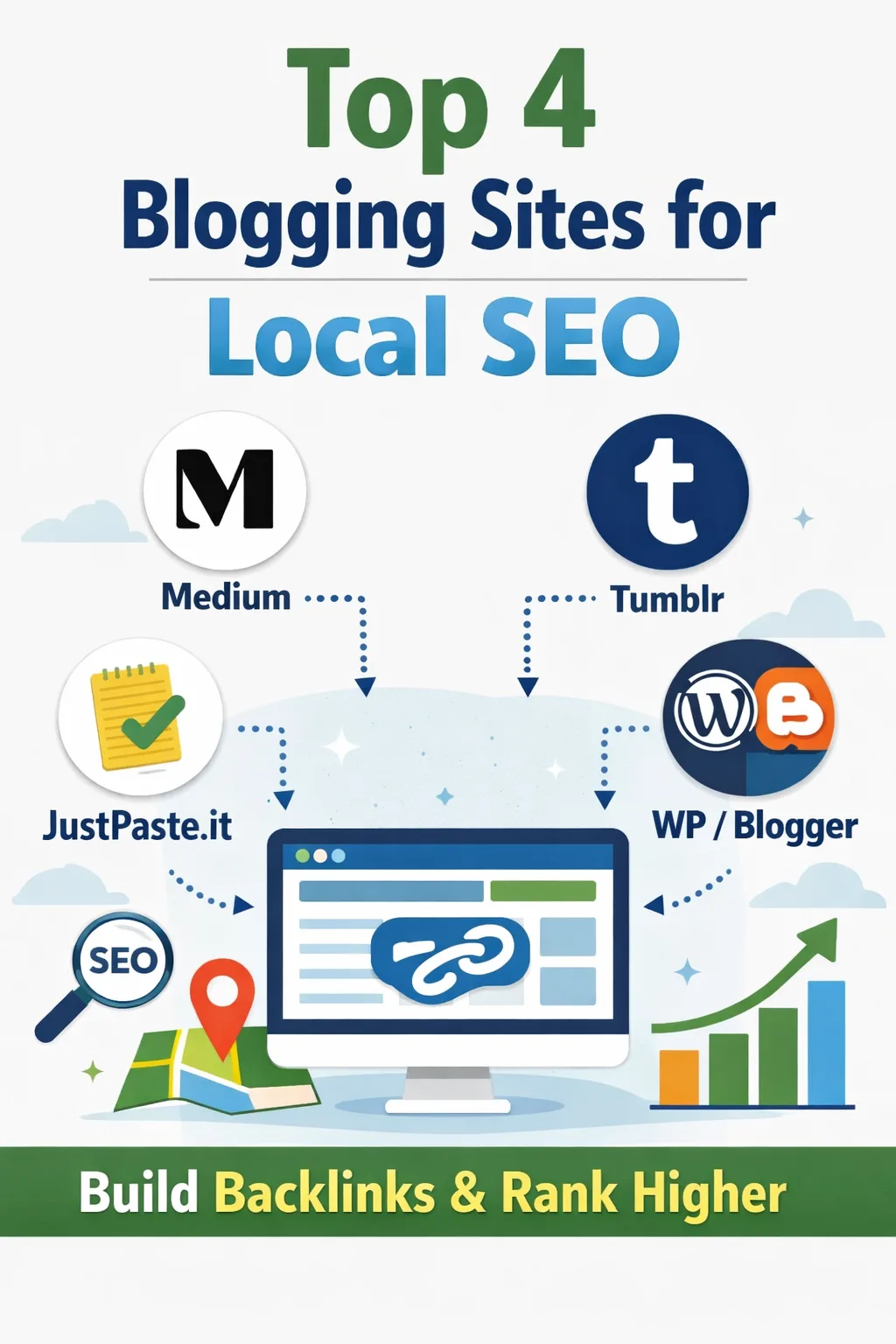
To fully use blogging platforms for link building for SEO, choosing the right platforms is essential.
1. Medium
Medium is one of the strongest platforms for SEO authority.
Why it works:
- High domain authority
- Fast indexing in Google
- Ideal for long-form content
Best use: Detailed SEO guides and authority-building articles
2. Tumblr
Tumblr is great for frequent posting and quick content distribution.
Why it works:
- Simple publishing system
- Supports multimedia content
- Easy backlink placement
Best use: Short posts and supporting SEO links
3. JustPaste.it
A fast and simple platform for instant publishing.
Why it works:
- No sign-up required
- Quick content uploads
- Easy link insertion
Best use: Fast backlink creation and short SEO content
4. WordPress.com and Blogger
These are powerful platforms for long-term SEO success.
Why they work:
- SEO-friendly structure
- Full content control
- Strong authority building over time
Best use: Building long-term blogging assets for local SEO link building
Smart Strategy for Local SEO Link Building
Random posting will not deliver strong SEO results. You need a structured approach.
Start by creating content that targets your local audience, such as:
- Local service guides
- Industry-specific tips
- Location-based informational content
Then publish across multiple blogging platforms with slight variations in content. This helps build a natural and diversified backlink profile.
This approach strengthens your link building for SEO strategy and improves local rankings over time.
Content Strategy That Actually Works
To make blogging platforms effective for SEO, focus on:
- Writing valuable and helpful content
- Using local keywords naturally in context
- Avoiding duplicate content across platforms
- Creating unique versions for each posting
Search engines prioritize originality and relevance, especially for local SEO performance.
Why Consistency Matters in SEO
SEO success does not happen overnight. Consistency is what builds authority.
Regular publishing on blogging platforms helps you:
- Build long-term domain authority
- Generate continuous backlinks
- Strengthen local search visibility
- Improve trust signals for your website
Over time, this leads to steady growth in rankings and organic traffic.
Conclusion
The hidden power of blogging platforms lies in their ability to support scalable and consistent local SEO link building. While many businesses ignore them, they offer a simple and effective way to build authority and improve search rankings.
When combined with a proper SEO strategy, blogging platforms become a long-term asset for visibility and growth.
Final Thoughts
In SEO, the strongest results come from strategies most businesses overlook. Blogging platforms are one of those hidden opportunities.
By using them strategically for link building for SEO, you can improve rankings, increase authority, and build a stronger local presence over time.