
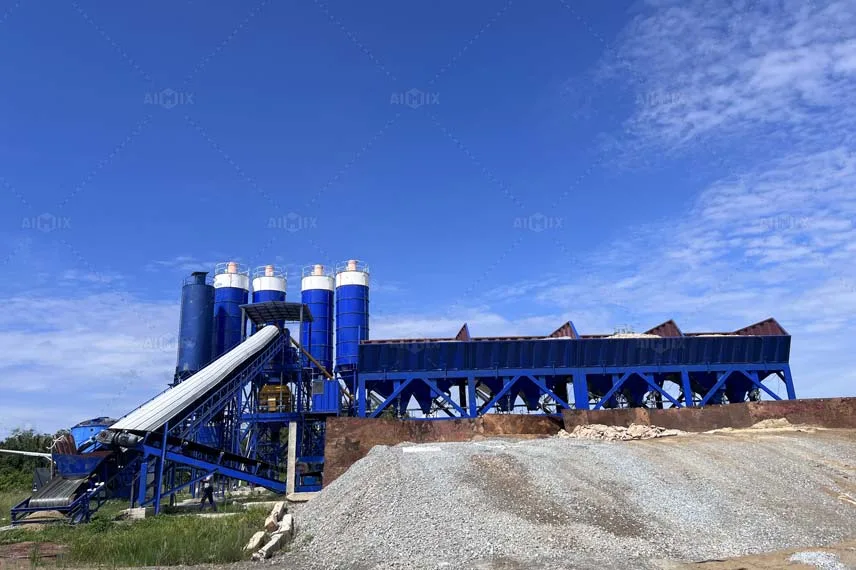
For construction companies, project schedules directly influence profitability. When investing in concrete production equipment, many contractors focus on equipment quality and purchase cost but underestimate the financial impact of installation time. A 3-4 week installation cycle for stationary concrete plants can create additional expenses that affect the overall project budget.
Compared with a mobile concrete plant(planta de concreto móvil) that can often be deployed faster, stationary solutions usually require more preparation, including foundation construction, equipment assembly, electrical connection, and commissioning. For contractors managing time-sensitive projects, understanding the real cost of installation delays is essential.
In Latin America, where infrastructure projects, housing developments, and industrial construction continue expanding, companies need to evaluate not only equipment investment but also the time required before production begins.
Why Installation Time Creates Additional Costs For Concrete Projects
The installation period of a stationary plant is not simply a technical process. It directly affects project scheduling, labor allocation, and concrete supply planning.
During a 3-4 week installation cycle, contractors may face several hidden costs, including:
- Delayed concrete production
- Additional labor expenses
- Extended equipment rental periods
- Increased project management costs
- Lost opportunities from postponed construction activities
For companies that depend on continuous concrete supply, every additional day before production starts can influence project efficiency.
A mobile concrete plant is often considered by contractors who need faster deployment because it reduces the amount of permanent construction work required before operation.
Main Stages Of Stationary Concrete Plant Installation
Understanding the installation process helps contractors estimate the real impact of the construction timeline.
Foundation Preparation And Site Development
Unlike mobile solutions, stationary plants usually require permanent installation areas.
Before equipment assembly, contractors may need to complete:
- Ground leveling
- Concrete foundation construction
- Drainage preparation
- Electrical infrastructure
- Material storage areas
This preparation stage can take significant time, especially when working in remote locations or areas with difficult site conditions.
Equipment Assembly And System Connection
After foundation completion, technicians begin assembling the main components.
The process typically includes:
- Installing the mixing system
- Connecting aggregate feeding equipment
- Setting up cement storage systems
- Installing control systems
- Testing electrical connections
Any delay in component delivery or site preparation can extend the installation schedule.
Testing And Commissioning
Before commercial production begins, the plant requires testing to ensure stable operation.
Commissioning usually involves:
- Empty operation tests
- Material feeding checks
- Concrete mixing tests
- Production parameter adjustment
Although this stage is essential for quality control, it adds additional time before the contractor can begin full operation.
How Installation Delays Affect Different Latin American Projects
The financial impact of installation time depends heavily on project type and location.
Infrastructure Construction
Roads, bridges, and public infrastructure projects often operate under strict deadlines.
A delay in establishing concrete production capacity may result in:
- Slower construction progress
- Higher transportation costs
- Reduced workforce efficiency
For projects requiring continuous concrete supply, a faster equipment deployment strategy can provide significant advantages.
Remote Construction Locations
Many Latin American projects are located far from urban centers.
For example, a mobile concrete plant Peru(planta de concreto móvil Perú) solution may be preferred for regional infrastructure or mining-related projects because it allows contractors to establish production closer to the construction site.
Reducing transportation distance can lower costs and improve project flexibility.
Comparing Stationary Plants With Faster Mobile Solutions
Different equipment solutions serve different construction requirements.
A stationary plant is usually suitable for:
- Long-term production facilities
- Large commercial concrete supply
- High-volume construction projects
A mobile concrete plant is often better for:
- Temporary projects
- Multiple construction locations
- Remote job sites
- Contractors requiring flexibility
The choice depends on project duration, production demand, and investment strategy.
The Financial Impact On Ready-Mix Concrete Production
Companies operating a ready-mix concrete factory(fábrica de concreto premezclado) need to consider how installation time affects business operations.
A delayed plant startup means:
- Later revenue generation
- Longer dependence on external concrete suppliers
- Increased logistics expenses
- Delayed return on investment
For commercial concrete producers, reducing the time between equipment purchase and production startup can significantly improve financial performance.
How To Reduce Installation Risks And Improve Project Efficiency
Although stationary plants require more installation work, proper planning can reduce delays.
Contractors should focus on:
Early Site Preparation
Completing foundations, utilities, and access planning before equipment arrival helps technicians begin installation immediately.
Supplier Technical Support
Experienced suppliers can provide:
- Installation guidance
- Technical documentation
- Remote assistance
- Operator training
Professional support reduces mistakes and improves commissioning efficiency.
Selecting Equipment Based On Project Needs
The best solution is not always the largest or most permanent option.
Companies should evaluate:
- Project duration
- Required production capacity
- Future construction plans
- Location conditions
For some contractors, a mobile concrete plant may provide faster returns because it can begin production sooner and adapt to changing project demands.
Making Installation Time Part Of The Investment Decision
A 3-4 week installation cycle for stationary concrete plants represents more than a technical schedule. It affects project costs, revenue timing, and construction efficiency. When comparing a stationary system with alternatives such as a mobile concrete plant, contractors should consider the complete lifecycle value rather than only the equipment price. Whether developing a mobile concrete plant Peru project or expanding a ready-mix concrete factory, selecting the right production solution and planning installation carefully can help companies reduce risks and achieve better long-term results in Latin America's competitive construction market.