As climate change continues to threaten ecosystems, agriculture, and human health, the search for sustainable solutions has become more urgent than ever. One plant that is gaining global attention for its environmental benefits is industrial hemp. In India, hemp has the potential to become a powerful tool in combating global warming while supporting sustainable farming and rural livelihoods.
Industrial hemp is a safe, non-intoxicating crop grown for its fiber, seeds, and stalks. Unlike marijuana, industrial hemp contains only trace amounts of THC and is cultivated for industrial, agricultural, and commercial purposes. With its rapid growth, low environmental impact, and ability to absorb carbon dioxide, hemp is increasingly recognized as one of the world's most sustainable crops.
What Makes Hemp a Safe Plant?
Industrial hemp is different from recreational cannabis because it contains very low levels of THC, the compound responsible for psychoactive effects. Hemp is grown for products such as textiles, paper, biodegradable plastics, food, construction materials, and personal care items—not for recreational use.
The plant is considered safe because:
- It is non-intoxicating when grown as industrial hemp.
- It supports sustainable agriculture.
- It reduces the need for harmful pesticides.
- Every part of the plant can be used, creating minimal waste.
- It provides renewable raw materials for multiple industries.
Hemp Farming and Climate Change
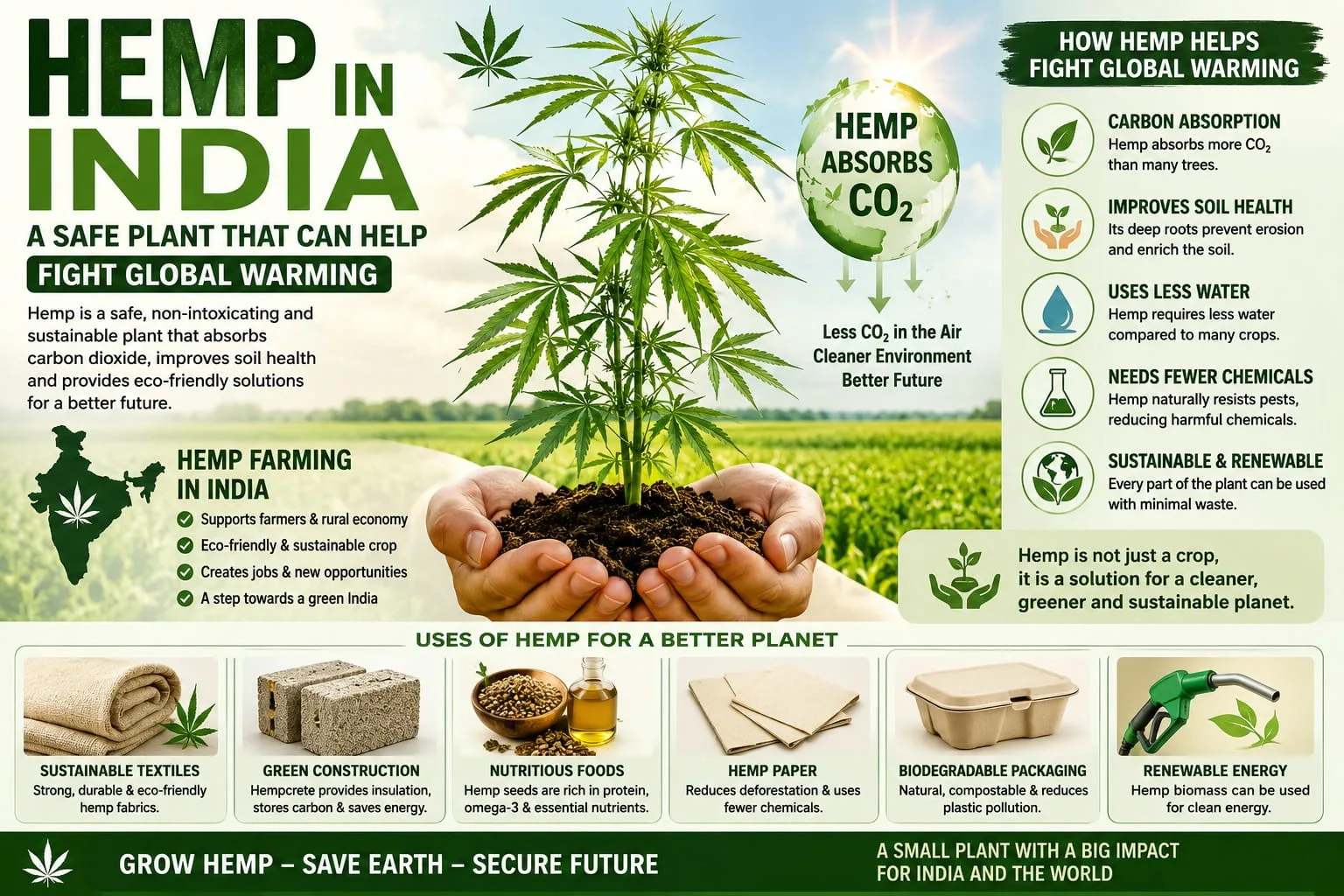
One of hemp's greatest environmental advantages is its ability to capture carbon dioxide (CO₂) from the atmosphere. As hemp grows, it absorbs CO₂ through photosynthesis and stores carbon in its fibers and stalks. When these fibers are used in long-lasting products such as building materials or furniture, part of that carbon remains stored for years.
Because hemp grows quickly—often reaching maturity within a few months—it can absorb significant amounts of carbon during each growing season. While the exact amount varies depending on climate, soil, and farming practices, research suggests hemp can be an effective carbon-sequestering crop.
How Hemp Helps Reduce Global Warming
1. Carbon Sequestration
Hemp absorbs carbon dioxide from the atmosphere during its growth cycle. This natural process helps reduce greenhouse gases, making hemp an important crop in climate-friendly agriculture.
2. Less Dependence on Fossil Fuel-Based Materials
Many products made from petroleum, such as certain plastics and synthetic fibers, can be replaced with hemp-based alternatives.
Examples include:
- Biodegradable packaging
- Hemp bioplastics
- Natural textiles
- Eco-friendly insulation
- Composite materials
These alternatives can help reduce dependence on fossil fuel-derived materials.
3. Sustainable Construction
Hemp is used to produce hempcrete, a lightweight building material made from hemp hurds and lime. Hempcrete provides insulation and, over its lifecycle, can store carbon within buildings.
Benefits include:
- Improved energy efficiency
- Lower carbon footprint
- Breathability
- Fire resistance
- Durable construction
4. Reduced Water Consumption
Compared to crops like cotton, hemp generally requires less irrigation, depending on local conditions. Lower water use helps conserve freshwater resources and supports sustainable farming practices.
5. Healthier Soil
Hemp develops deep roots that improve soil structure and help reduce erosion. Farmers also use hemp in crop rotations because it can contribute to better soil health and biodiversity.
Hemp Supports Sustainable Agriculture
Hemp farming can contribute to environmentally responsible agriculture by:
- Requiring fewer pesticides than many conventional crops.
- Producing large amounts of biomass.
- Supporting crop rotation systems.
- Helping protect soil from erosion.
- Encouraging regenerative farming practices.
These characteristics make hemp a valuable option for farmers looking to adopt more sustainable methods.
Uses of Hemp That Benefit the Environment
Industrial hemp can be transformed into thousands of products that reduce environmental impact.
Eco-Friendly Clothing
Hemp fabric is:
- Strong and durable
- Breathable
- Naturally biodegradable
- Long-lasting
Choosing hemp clothing can help reduce the environmental impact associated with fast fashion.
Hemp Paper
Paper made from hemp can reduce pressure on forests and offers a renewable alternative to wood-based paper in some applications.
Biodegradable Packaging
Hemp fibers can be used to create compostable and biodegradable packaging materials that may help reduce plastic waste.
Renewable Energy
Researchers continue to explore hemp biomass as a renewable source for biofuels and other energy applications, though its commercial use varies by region.
Healthy Foods
Hemp seeds are rich in:
- Plant protein
- Omega-3 fatty acids
- Omega-6 fatty acids
- Fiber
- Vitamins and minerals
These nutrient-dense seeds support healthy diets while coming from a renewable crop.
Hemp Farming Opportunities in India
India has suitable climatic conditions for cultivating industrial hemp in several regions, subject to state regulations. Hemp farming has the potential to support:
- Sustainable agriculture
- Rural employment
- Green manufacturing
- Eco-friendly textile production
- Renewable building materials
- Food processing industries
As policies evolve and awareness increases, industrial hemp could become an important part of India's green economy.
Challenges for Hemp in India
Despite its promise, the hemp industry faces several obstacles:
- Misconceptions that confuse industrial hemp with marijuana.
- Regulatory differences between states.
- Limited processing infrastructure.
- Need for more farmer education and research.
- Investment requirements for scaling production.
Addressing these challenges will be important for the industry's long-term growth.
The Future of Hemp in India
As governments, businesses, and consumers increasingly focus on sustainability, industrial hemp is expected to play a larger role in developing environmentally friendly
products and farming systems.
Future opportunities include:
- Carbon-smart agriculture
- Sustainable textiles
- Green construction
- Biodegradable packaging
- Renewable industrial materials
- Rural economic development
With continued research, supportive regulations, and public awareness, hemp can contribute meaningfully to India's environmental and economic goals.