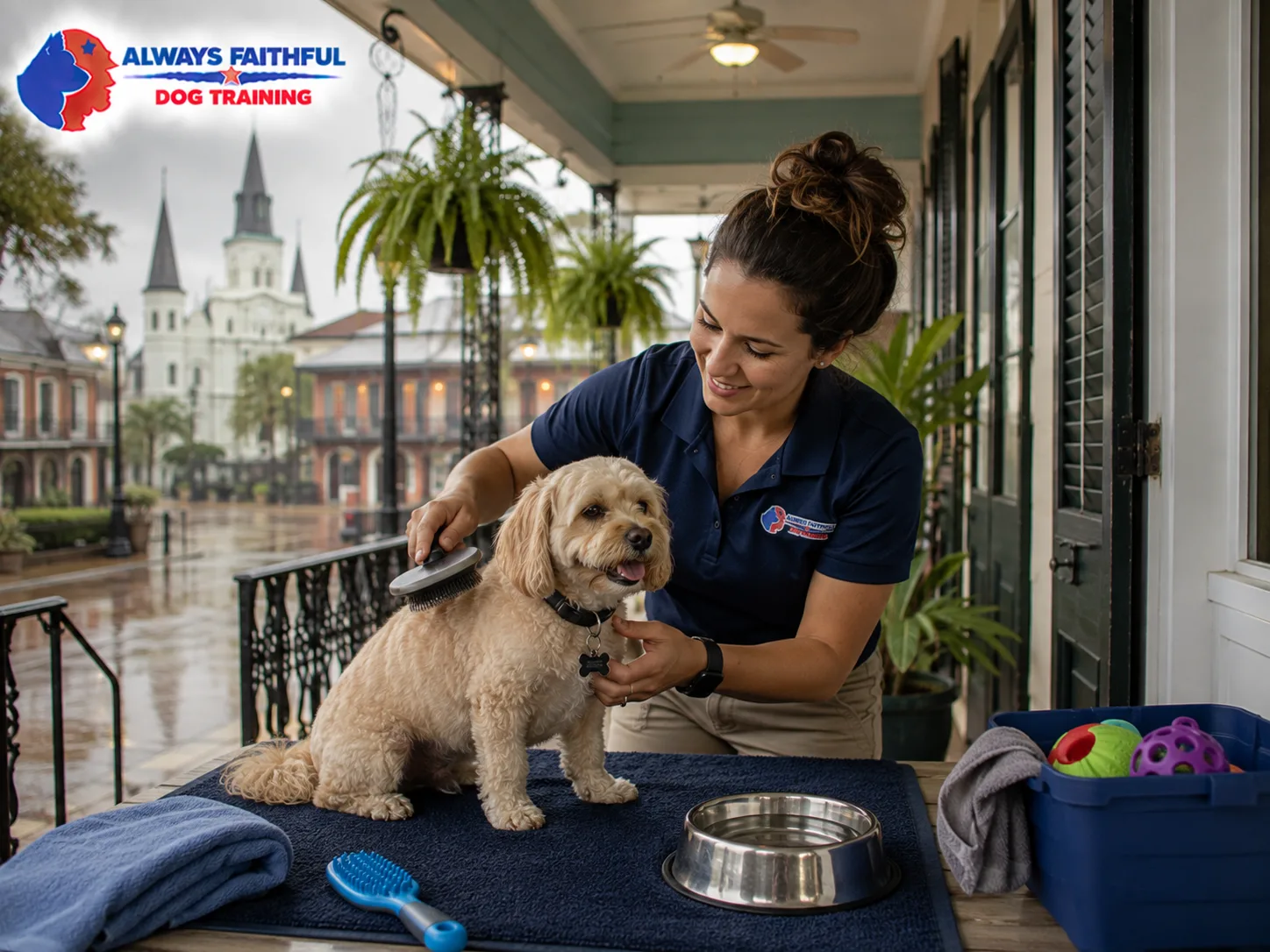
Dogs are social animals, and many enjoy spending time with their families throughout the day. However, learning to remain comfortable when people are busy, in another room, or temporarily away is also an important life skill. A dog that expects constant interaction may become restless, vocal, destructive, or overly dependent on its owner. A professional Dog Trainer can help owners understand how to encourage healthy independence without making the dog feel ignored or overwhelmed.
Independence Does Not Mean Isolation
Teaching a dog to spend some time independently is not about separating it from the family for long periods. Instead, the goal is to help the dog feel comfortable when direct interaction is temporarily unavailable.
A balanced routine can include play and companionship as well as quiet periods. Dogs can learn that their owner leaving the room does not mean something negative is about to happen.
This understanding can make everyday household situations easier, particularly when owners need to work, prepare meals, complete chores, or attend to other responsibilities.
Start With Short Periods of Separation
Dogs that are accustomed to constant attention may struggle when independence is suddenly introduced. A gradual approach can make the transition easier.
Owners can begin by creating very short periods in which the dog remains comfortable while the owner moves to another part of the home. The duration can increase gradually as the dog becomes more relaxed.
The key is to work within the dog's ability rather than immediately expecting it to remain alone for extended periods.
Creating a Comfortable Resting Area
A consistent resting location can give a dog a predictable place to relax. This might be a comfortable bed, mat, crate, or another suitable area of the home.
The space should be associated with calm experiences rather than punishment. When the dog voluntarily settles there, owners can allow quiet time without constantly calling the dog back for attention.
Over time, the dog can learn that relaxing independently is a normal part of the household routine.
Avoid Reinforcing Constant Attention-Seeking
Dogs may use barking, pawing, nudging, whining, or repeatedly bringing toys to get attention. While these behaviors can be difficult to ignore, owners should consider whether their responses are accidentally teaching the dog that persistent demands always produce interaction.
Teaching an alternative behavior can be more productive. For example, the dog can learn to settle calmly while the owner finishes an activity.
The objective is not to stop a dog from seeking affection. It is to establish a healthier balance between interaction and independent time.
Developing Predictable Daily Patterns
Dogs often respond well to predictable routines. Regular times for meals, walks, play, training, and rest can make the day easier to understand.
A dog that knows quiet periods are part of its normal schedule may be less likely to interpret them as unusual events.
Predictability can also reduce the need for constant stimulation. Instead of expecting something exciting to happen whenever the owner is nearby, the dog gradually learns that different parts of the day have different purposes.
Practicing Calm Departures
Some dogs become highly alert when their owners prepare to leave. Picking up keys, putting on shoes, opening a door, or reaching for a bag can become signals that trigger excitement or distress.
Owners can reduce the significance of these cues by practicing ordinary departure routines without always leaving immediately.
The purpose is to help the dog learn that these actions do not automatically require a strong emotional response.
Giving Dogs Appropriate Things to Do
Independent time can be easier when dogs have appropriate activities available. Depending on the individual dog, this might include a safe chew, a familiar toy, or a suitable enrichment activity.
The activity should be appropriate for the dog's size, age, behavior, and environment. Owners should also use their judgment about what can safely be left with a dog without direct supervision.
The goal is to provide constructive engagement without creating dependence on constant entertainment.
Why Mental and Physical Balance Matters
A dog that has insufficient opportunities for exercise or engagement may have greater difficulty settling. At the same time, keeping a dog constantly active is not a substitute for teaching calm behavior.
A balanced routine should include physical activity, learning, exploration, social interaction, and rest.
When these elements are appropriately combined, dogs have opportunities to use their energy while also learning how to relax when activity is not taking place.
Recognizing When a Dog Is Struggling
Some dogs may show stronger reactions when separated from their owners. Excessive vocalization, destructive behavior, escape attempts, pacing, or intense distress can indicate that the situation requires more careful attention.
Owners should avoid assuming that these behaviors are simply attention-seeking. There can be multiple reasons for separation-related difficulties, and severe cases may require guidance from an appropriately qualified professional.
Training should always progress at a level the dog can reasonably manage.
How Professional Training Can Help
A professional can evaluate the dog's routine and identify patterns that may be contributing to dependence or difficulty settling.
A Dog Trainer can help owners establish practical exercises that encourage calmness, improve communication, and gradually increase the dog's ability to remain comfortable without constant interaction.
When researching Dog training Near me, owners may benefit from looking for training programs that consider the dog's individual environment and daily routine rather than applying exactly the same strategy to every dog.
Independence Can Be Practiced During Normal Household Activities
Owners do not need to create a special event every time they want to practice independent behavior. Everyday activities can provide natural opportunities.
A dog can remain on its bed while someone prepares dinner, relax in another safe area while household chores are completed, or spend a short period calmly occupying itself while its owner works.
These ordinary experiences can help the dog understand that being near its owner does not always mean receiving direct attention.
Avoid Making Reunions Overly Exciting
When an owner returns home, it is natural to greet a dog enthusiastically. However, extremely dramatic arrivals and departures can make these moments emotionally intense.
A calm household routine can help normalize the transition. Owners can give attention once the dog is settled rather than automatically rewarding frantic jumping, barking, or rushing.
The objective is to make coming and going ordinary parts of daily life.
Progress Should Be Gradual
Every dog has a different level of comfort with independent time. Some dogs may adapt quickly, while others need considerably more gradual practice.
Owners should pay attention to changes in behavior and adjust the difficulty accordingly. If a dog becomes increasingly distressed, moving too quickly may undermine progress.
Successful training is not measured by how quickly independence is achieved. It is measured by whether the dog is developing a more comfortable and reliable response over time.
Building Confidence Through Routine
Confidence grows when dogs repeatedly experience predictable situations and discover that they can handle them successfully.
Small periods of independent activity can gradually become normal. The dog learns that its owner can move around the home, become temporarily unavailable, or leave and return without the world becoming unpredictable.
This can contribute to a more balanced relationship in which the dog enjoys companionship without needing constant access to its owner.
Final Thoughts
Helping a dog become comfortable with independent time requires patience, structure, and careful observation. Short periods of separation, predictable routines, appropriate resting areas, and calm household interactions can all contribute to healthier independence.
A knowledgeable Dog Trainer can provide valuable support when a dog has persistent difficulty settling or coping without constant interaction. For owners searching for Dog training Near me, finding guidance that considers the individual dog's behavior, environment, and routine can make the training process more practical.
With gradual practice and consistent expectations, dogs can learn that quiet time and independence are normal parts of everyday life while still maintaining a strong bond with their families.