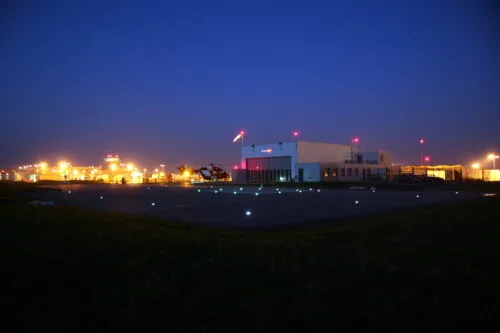
Helicopter landing pad lights play a critical role in ensuring safe takeoffs, landings, and ground operations, especially during nighttime or low-visibility conditions. Whether installed on hospital helipads, offshore platforms, commercial buildings, or private heliports, these specialized lighting systems help pilots identify landing zones accurately and reduce operational risks.
In this guide, we'll explore the different types of helicopter landing pad lights, their benefits, installation requirements, maintenance tips, and the regulations governing modern helipad lighting systems.
What Are Helicopter Landing Pad Lights?
Helicopter landing pad lights are aviation-grade lighting fixtures designed to outline, identify, and illuminate a helipad. They provide visual guidance to pilots during approach, landing, takeoff, and departure.
Unlike conventional outdoor lighting, LED helipad lights are engineered to withstand harsh weather, heavy loads, vibration, and continuous exposure while meeting aviation safety standards.
These lights are commonly found on:
- Hospital helipads
- Rooftop heliports
- Offshore oil and gas platforms
- Military bases
- Emergency response facilities
- Private helicopter landing pads
Types of Helicopter Landing Pad Lights
Choosing the right lighting depends on the type of heliport and operational requirements.
1. Perimeter Lights
Perimeter lights define the landing area's outer boundary, allowing pilots to accurately judge the landing zone from the air.
Key features include:
- Green illumination
- Low-profile design
- Impact-resistant construction
- Weatherproof housing
These lights are mandatory for many certified heliports.
2. Floodlights
Floodlights improve surface visibility without causing glare to pilots.
They help illuminate:
- Landing surfaces
- Safety zones
- Passenger walkways
- Equipment areas
Modern LED helicopter pad floodlights consume less energy while providing excellent visibility.
3. Final Approach and Takeoff Area (FATO) Lights
FATO lights identify the designated approach and departure area.
Benefits include:
- Improved nighttime navigation
- Enhanced obstacle awareness
- Better pilot orientation
4. Touchdown and Lift-Off Area (TLOF) Lights
TLOF lighting marks the exact touchdown location where helicopters safely land and lift off.
These lights are particularly important for:
- Hospital emergency helipads
- Offshore platforms
- High-rise rooftop heliports
5. Obstruction Lights
Tall buildings, cranes, antennas, and surrounding structures often require aviation obstruction lights.
These warning lights improve visibility and reduce collision risks during nighttime operations.
Why LED Helicopter Landing Pad Lights Are Preferred
Most modern heliports have transitioned from traditional halogen lighting to LED helipad lighting because of several advantages. To know more click here: https://www.aerolighting.swiss/heliport.
Energy Efficiency
LED fixtures consume significantly less electricity while delivering brighter illumination.
Longer Lifespan
Quality LED aviation lights can operate for over 50,000 hours, reducing replacement frequency.
Lower Maintenance
Fewer bulb replacements mean reduced maintenance costs and minimal operational disruptions.
Superior Visibility
LED lights provide consistent brightness even in rain, fog, snow, or dust.
Environmental Benefits
Lower energy consumption results in reduced carbon emissions and operating costs.
FAA and ICAO Lighting Requirements
Helicopter landing pads must comply with aviation safety regulations established by organizations such as:
- Federal Aviation Administration (FAA)
- International Civil Aviation Organization (ICAO)
- Civil Aviation Authority (CAA) in various countries
Typical requirements include:
- Correct perimeter light spacing
- Approved light color
- Proper intensity levels
- Low-profile fixtures
- Backup power availability
- Reliable emergency operation
Before installing any heliport lighting system, consult the applicable aviation regulations for your jurisdiction.
Installation Best Practices
Proper installation ensures maximum visibility and long-term performance.
Important considerations include:
Correct Light Placement
Lights should evenly outline the landing area without creating confusing visual patterns.
Secure Electrical Connections
Weather-resistant wiring protects against moisture, corrosion, and electrical failure.
Minimize Pilot Glare
Fixtures should direct light toward the landing surface rather than the pilot's eyes.
Backup Power Systems
Emergency generators or battery backups ensure continuous lighting during power outages.
Professional Installation
Certified aviation lighting specialists understand regulatory standards and installation procedures.
Maintenance Tips
Routine inspections help keep helicopter landing pad lighting operating safely.
Maintenance should include:
- Cleaning lenses regularly
- Checking light intensity
- Inspecting wiring connections
- Testing backup power systems
- Replacing damaged fixtures
- Confirming alignment and positioning
Preventive maintenance reduces downtime and extends equipment life.
Choosing the Right Helicopter Landing Pad Lights
When selecting lighting equipment, consider:
- LED technology
- FAA or ICAO compliance
- Weather resistance
- Corrosion protection
- Low-profile construction
- Energy efficiency
- Long service life
- Warranty coverage
For coastal or offshore installations, marine-grade corrosion resistance is especially important.
Common Applications
Reliable helicopter landing pad lights are essential across many industries.
Hospitals
Emergency medical helicopters rely on clearly illuminated helipads for life-saving operations.
Offshore Platforms
Oil and gas facilities require dependable lighting in challenging weather conditions.
Corporate Buildings
Executive rooftop heliports depend on precision lighting for safe arrivals and departures.
Military Installations
Military aviation operations require durable lighting systems capable of handling demanding environments.
Search and Rescue Operations
Emergency response teams often operate in darkness or adverse weather, making dependable lighting indispensable.
Benefits of High-Quality Helipad Lighting
Investing in premium aviation landing lights offers several long-term advantages:
- Enhanced pilot safety
- Improved landing accuracy
- Reduced maintenance expenses
- Greater operational reliability
- Lower energy consumption
- Compliance with aviation standards
- Increased equipment lifespan
These benefits make modern LED systems a cost-effective investment for both public and private heliports.
Final Thoughts
Helicopter landing pad lights are far more than simple illumination—they are a critical component of aviation safety. Properly designed helipad lighting systems provide clear visual guidance, improve operational efficiency, and help pilots perform safe landings in all lighting conditions.
Whether you're building a new heliport or upgrading an existing facility, choosing FAA-compliant LED helicopter landing pad lights ensures reliable performance, reduced maintenance, and long-term value. By selecting quality equipment, following proper installation practices, and maintaining the system regularly, operators can create a safer environment for pilots, passengers, and ground crews alike.