
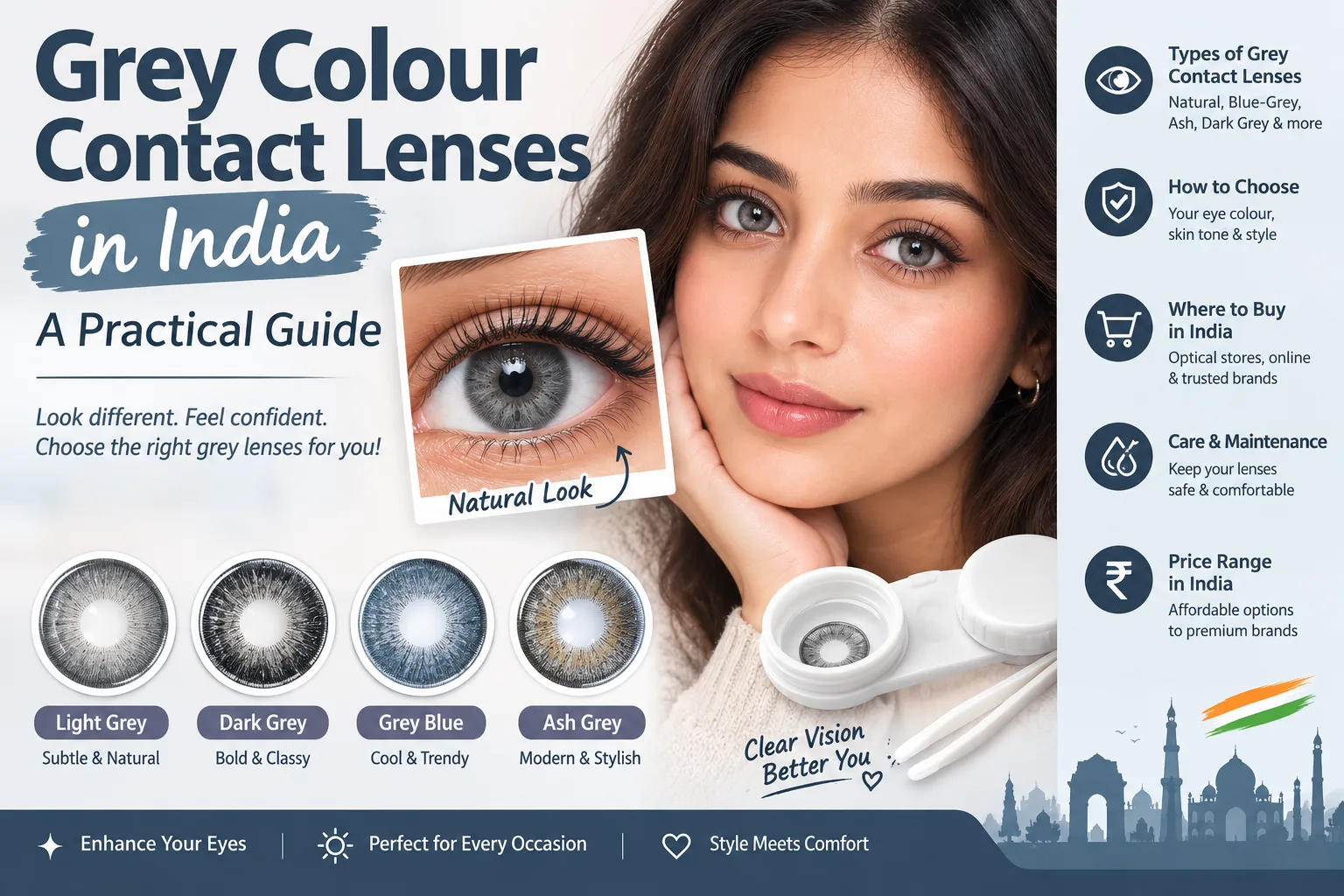
Grey has become one of the most sought-after coloured contact lens shades in India, valued for its ability to create a striking yet believable change in eye colour. Unlike brown, which often blends subtly with naturally dark eyes, grey offers a more noticeable transformation, making it a popular choice for those who want their eyes to stand out while still looking natural. This article looks at why grey lenses have gained such popularity, the variations available, and what buyers should consider before choosing a pair.
Why Grey Lenses Are Popular in India
Since the majority of Indians have naturally dark brown eyes, grey lenses tend to create a distinct and visible contrast, which is part of their appeal. This makes them a common choice for special occasions such as weddings, festivals, and photoshoots, where a bolder, more noticeable change in appearance is desired. At the same time, well-designed grey lenses can look surprisingly natural, especially when the shade and pattern are chosen thoughtfully, making them suitable for everyday wear as well for those who prefer a lighter-eyed look.
The growing influence of global beauty trends and increased exposure to varied eye colours through social media and entertainment has also contributed to the rising popularity of grey as a lens shade across India.
Understanding the Range of Grey Shades
Grey coloured contact lenses are available in several tonal variations, each producing a different visual effect:
Light grey lenses create a soft, almost silvery appearance and tend to produce the most dramatic contrast against naturally dark eyes, making them a popular choice for events and special occasions.
Charcoal or smoky grey lenses offer a deeper, more muted tone that can look slightly more natural in daily lighting conditions while still providing a noticeable change from dark brown eyes.
Grey-blue blends combine grey with subtle undertones of blue, offering a cooler, more dimensional look that some wearers find more flattering against certain skin tones.
Choosing between these variations often depends on how bold a transformation the wearer is looking for, as well as how the shade interacts with their skin's undertone.
What Makes Grey Lenses Look Natural
Because grey represents such a significant shift from naturally dark eyes, achieving a believable look depends heavily on lens design quality:
Limbal ring detail. A darker ring around the edge of the coloured area, mimicking the natural boundary of the iris, plays a significant role in how realistic a grey lens appears, particularly up close.
Layered pigment patterns. Lenses with subtle variations and texture within the grey tone tend to look more natural than a flat, uniform colour, since real irises have visible depth and detail.
Appropriate lens diameter. A lens that is well-matched to the wearer's natural iris size will sit more convincingly on the eye than one that is too large, which can create an unnatural, overly wide appearance.
Opaque Lenses Are Typically Necessary
Given that most Indian eyes are naturally dark, enhancement tints generally have very limited visible effect when it comes to grey, since a light tint cannot show through a dark natural iris. As a result, opaque grey lenses, which use a denser pigment layer capable of fully covering the natural eye colour, are usually required to achieve a visible and convincing grey appearance.
What to Check Before Buying
Certification and manufacturing standards. Since coloured contact lenses are classified as medical devices, it is worth confirming that a product has been manufactured according to recognised safety and quality standards, with this information clearly available from the seller.
Lens material. Breathable materials such as silicone hydrogel or hydrogel support better oxygen flow to the cornea, which is particularly relevant for grey lenses often worn for extended periods during events or daily use.
Pigment placement. Well-manufactured lenses embed the colour layer between layers of lens material rather than leaving it on the surface, reducing the risk of irritation from direct pigment contact.
Authentic packaging. Genuine lenses come in sealed blister packs with a visible batch number, manufacturing date, and expiry date, and this information should be clearly represented in product listings or physical packaging.
The Importance of a Proper Eye Examination
Regardless of how appealing a grey shade might look, an eye examination with a qualified optometrist should precede any lens purchase, particularly for first-time wearers. This step confirms that the eyes are healthy and suitable for lens wear, and where corrective power is required, ensures the correct power, base curve, and diameter are selected for a comfortable, properly fitted lens.
Choosing the Right Wear Schedule
Grey coloured contact lenses are commonly available as daily disposables or monthly wear options. Daily disposables are often a sensible choice for occasional wearers or those planning to use grey lenses for a specific event, since they reduce the risk of buildup and require no cleaning routine. Monthly lenses may suit more frequent wearers but require consistent cleaning and storage using an appropriate solution.
Making a Well-Informed Choice
Grey colour contact lenses offer a distinctive way to transform one's appearance, standing out as one of the more dramatic yet increasingly popular choices among Indian wearers. Selecting the right grey colour contact lens shade involves considering the level of contrast desired, skin undertone, and lens design details such as limbal rings and pigment pattern. As with any coloured lens, prioritising certified products, proper fit, and a genuine eye examination ensures that the visual impact of grey lenses comes without compromising comfort or long-term eye health.