
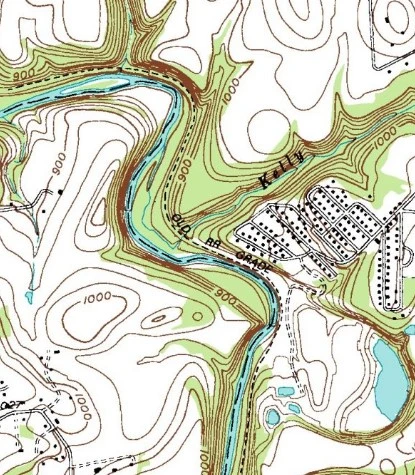
Topographic surveys have long been the cornerstone of construction planning, providing essential data for site analysis, design, and execution. However, as the construction industry embraces digital transformation, the role of topographic surveys is evolving to meet the demands of smart construction. This article explores the future trends shaping topographic surveys in the context of smart construction.
1. Integration of Drone Technology for Efficient Data Collection
Unmanned Aerial Vehicles (UAVs), commonly known as drones, have revolutionized the way topographic surveys are conducted. Equipped with high-resolution cameras and LiDAR sensors, drones can quickly capture detailed terrain data over large areas. This technology significantly reduces the time and labor required for traditional ground-based surveys, making it an invaluable tool in smart construction projects.
2. Advancements in LiDAR and 3D Scanning Technologies
Light Detection and Ranging (LiDAR) technology, along with 3D scanning, enables the creation of precise three-dimensional models of construction sites. These models provide detailed information on elevation, contours, and existing structures, facilitating accurate planning and design. The integration of LiDAR with drones further enhances data accuracy and efficiency in topographic surveys.
3. Adoption of Artificial Intelligence and Machine Learning
Artificial Intelligence (AI) and Machine Learning (ML) are increasingly being utilized to analyze the vast amounts of data collected during topographic surveys. These technologies can identify patterns, detect anomalies, and predict potential issues, allowing for proactive decision-making in construction planning. For instance, AI algorithms can process drone-captured images to create detailed 3D models, improving the accuracy and speed of surveys.
4. Real-Time Data Processing and Cloud-Based Collaboration
The future of topographic surveys lies in the ability to process and share data in real-time. Cloud-based platforms enable surveyors, architects, and engineers to access and collaborate on survey data instantaneously, regardless of location. This real-time collaboration enhances communication, reduces errors, and accelerates decision-making processes in smart construction projects.
5. Enhanced Safety and Accessibility
The use of drones and remote sensing technologies in topographic surveys improves safety by reducing the need for surveyors to access hazardous or hard-to-reach areas. This not only minimizes the risk of accidents but also allows for the collection of data from challenging terrains that would be difficult or impossible to survey using traditional methods.
6. Integration with Building Information Modeling (BIM)
Topographic survey data is increasingly being integrated into Building Information Modeling (BIM) systems. This integration allows for the creation of detailed digital representations of construction projects, facilitating better coordination, visualization, and management throughout the project lifecycle. By incorporating accurate topographic data, BIM enhances the precision and efficiency of construction planning and execution.
Conclusion
The evolving role of topographic surveys in smart construction reflects the industry's shift towards more efficient, accurate, and collaborative practices. By embracing advancements in drone technology, LiDAR, AI, real-time data processing, and BIM integration, construction professionals can enhance the planning and execution of projects, leading to improved outcomes and reduced costs. As these technologies continue to develop, the future of topographic surveys in smart construction looks promising, offering new opportunities for innovation and growth in the industry